Shunda Road, Lincheng Town Science and Technology Industrial Park, Xinghua City, Jiangsu Province
 English
 русский
 Español
 عربى
عربى
Heat treat baskets are specialized containers made from high-temperature alloys designed to hold and organize metal parts during heat treatment processes. These essential industrial components withstand extreme temperatures ranging from 1,200°F to 2,300°F (649°C to 1,260°C) while maintaining structural integrity through repeated thermal cycling. Whether you're processing aerospace components, automotive parts, or industrial fasteners, selecting the appropriate heat treat basket directly impacts your operational efficiency, part quality, and overall production costs.
Content
- 1 Understanding Heat Treat Basket Fundamentals
- 2 Critical Material Selection for Heat Treat Baskets
- 3 Cast vs. Fabricated Heat Treat Baskets: Making the Right Choice
- 4 Design Types and Configurations
- 5 Industry Applications and Use Cases
- 6 Heat Treatment Processes Supported
- 7 Maintenance Strategies for Extended Basket Lifespan
- 8 Design Optimization for Maximum Efficiency
- 9 Frequently Asked Questions About Heat Treat Baskets
- 9.0.1 Q: How long do heat treat baskets typically last?
- 9.0.2 Q: What is the best material for high-temperature vacuum heat treating?
- 9.0.3 Q: Should I choose cast or fabricated baskets for quenching operations?
- 9.0.4 Q: How do I prevent my heat treat baskets from warping?
- 9.0.5 Q: Can heat treat baskets be repaired when damaged?
- 9.0.6 Q: What causes heat treat baskets to fail prematurely?
- 9.0.7 Q: How do I calculate the true cost of a heat treat basket?
- 9.0.8 Q: Are custom heat treat baskets worth the investment?
- 10 Conclusion: Maximizing Your Heat Treat Basket Investment
Understanding Heat Treat Basket Fundamentals
Heat treat baskets serve as the critical interface between your valuable parts and the aggressive thermal environment of heat treatment furnaces. These baskets must simultaneously resist oxidation, thermal fatigue, mechanical stress, and chemical exposure while ensuring uniform heat distribution around every part they contain. The design and material selection determine not only the basket's lifespan but also the quality consistency of your heat-treated products.
In modern manufacturing facilities, heat treat baskets are rarely standalone investments—they integrate into broader production workflows. After heat treatment, parts often move directly into quench tanks, cooling stations, or cleaning systems. Designing baskets that integrate smoothly into downstream processes reduces handling time and minimizes part damage. Many facilities design baskets that allow parts to remain in controlled containers throughout multiple production stages, supporting lean manufacturing principles and improving traceability [^7^].
Critical Material Selection for Heat Treat Baskets
Material selection is the most critical factor determining heat treat basket performance and longevity. Different alloys offer varying temperature tolerances, oxidation resistance, and mechanical properties. While plain steel melts at approximately 2,500°F (1,370°C), its maximum recommended operating temperature is only 1,600°F (871°C) due to rapid loss of tensile strength at elevated temperatures [^23^]. This is why specialized high-temperature alloys are essential for demanding applications.
Premium Alloys for Extreme Temperatures
RA330® alloy represents the industry standard for heat treat baskets, offering oxidation resistance up to 2,100°F (1,150°C) with usable creep strength up to 1,800°F (980°C). With 35% nominal nickel content, RA330 is immune to sigma phase formation—a condition that causes brittleness in other alloys below 1,600°F (870°C). This immunity prevents catastrophic failures from minor impacts such as forklift hits [^11^].
| Material | Max Temperature | Key Properties | Best Applications |
| RA330® | 2,100°F (1,150°C) | Immune to sigma phase; excellent carburization resistance | General heat treating, carburizing atmospheres |
| Inconel 600 | 2,000°F+ (1,093°C+) | Superior oxidation resistance; high nickel content | Aerospace, extreme thermal cycling |
| RA 602 CA® | 2,300°F (1,260°C) | Highest creep strength; vacuum heat treating specialist | High-temperature vacuum operations |
| 330 Stainless Steel | 2,200°F (1,204°C) | Better high-temp strength than 304/316; high nickel | Heavy-duty applications, normalizing |
| 316 Stainless Steel | 1,600°F (871°C) | Good corrosion resistance; easier to form | Moderate temperature, wet environments |
| RA 253 MA® | 1,800°F (982°C) | Cost-effective; good creep strength | Neutral hardening, inert atmospheres |
RA330 fixtures typically last approximately one year in carburizing atmospheres and longer in nitriding environments. While they may warp from continued use, they remain resistant to thermal fatigue. For vacuum heat treating operations requiring temperatures just below 2,300°F (1,260°C), RA 602 CA® offers exceptional performance with one of the highest creep strengths among wrought products [^11^].
Cast vs. Fabricated Heat Treat Baskets: Making the Right Choice
The decision between cast and fabricated (wrought) heat treat baskets involves balancing initial cost against lifecycle performance and application requirements. Many heat treaters focus solely on initial purchase price while overlooking the critical metric: cost per pound of heat-treated product [^11^].
Cast Basket Advantages and Limitations
Cast heat treat baskets offer lower cost per unit, ability to incorporate beneficial elements like chromium and carbon, higher creep strength, and the capability to form complex shapes ready for immediate use. Cast materials maintain better dimensional stability under heavy loads and resist deformation at high temperatures. However, cast baskets contain higher carbon content, making them more susceptible to cracking from thermal shock and repeated temperature cycling [^11^][^15^].
Fabricated (Wrought) Basket Benefits
Wrought fabricated baskets can be produced in thinner sections, are repairable and weldable, resist thermal fatigue better, and offer superior surface finish. The wrought basket's lower carbon content and defined grain structure provide excellent thermal-shock resistance, allowing them to endure multiple quenching and heating cycles without cracking. The ability to use thinner sections results in lower-weight fixtures requiring fewer BTUs to heat, improving furnace efficiency [^11^][^15^].
| Comparison Factor | Cast Baskets | Fabricated/Wrought Baskets |
| Initial Cost | Lower per unit cost | Higher initial investment |
| Thermal Shock Resistance | Prone to cracking from thermal cycling | Excellent; withstands repeated quenching |
| Load Capacity | Superior for heavy loads | Moderate; suitable for standard loads |
| Weight | Heavier; more material required | Lighter; thinner sections possible |
| Repairability | Difficult to repair | Easily weldable and repairable |
| Design Flexibility | Complex shapes possible | Limited to fabricable geometries |
| Best Use Case | Heavy parts, static loading | Thermal cycling, quenching operations |
The economics of expected service life and cost per pound to heat treat should drive your decision between cast and fabricated baskets. Wrought baskets remain shock-resistant until case buildup occurs during case-hardening operations, while cast baskets eventually crack from thermal cycling despite their superior creep strength.
Design Types and Configurations
Heat treat baskets come in multiple configurations, each optimized for specific part geometries, furnace types, and handling requirements. Understanding these design variations helps ensure you select the most efficient solution for your operation.
Bar Baskets and Rod Frame Designs
Bar baskets, also called rod frame baskets, represent the most common wrought design—constructed entirely from round bar stock with wire mesh liners inserted on all five sides to prevent small parts from falling into furnaces. These baskets are either used as-is for larger parts or lined for hardware and small components. Simple bar baskets offer excellent airflow and thermal uniformity while remaining lightweight and easy to handle.
Heavy-Duty Cast Baskets and Grids
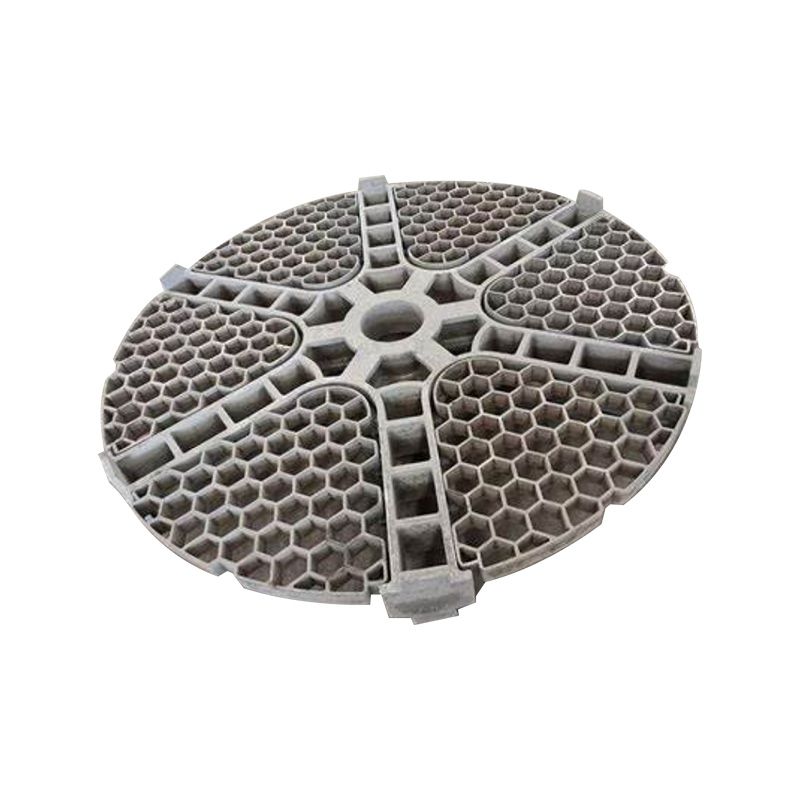
Heavy-duty circular cast baskets and grids are engineered for pit carburizing furnaces and applications requiring support of substantial weight. These baskets withstand frequent temperature cycling from high-temperature baths and are modified to improve life and wear resistance. Cast baskets and hybrids require more material, resulting in heavier fixtures capable of supporting loads beyond what wrought wire-bar baskets can handle.
Serpentine and Honeycomb Tray Designs
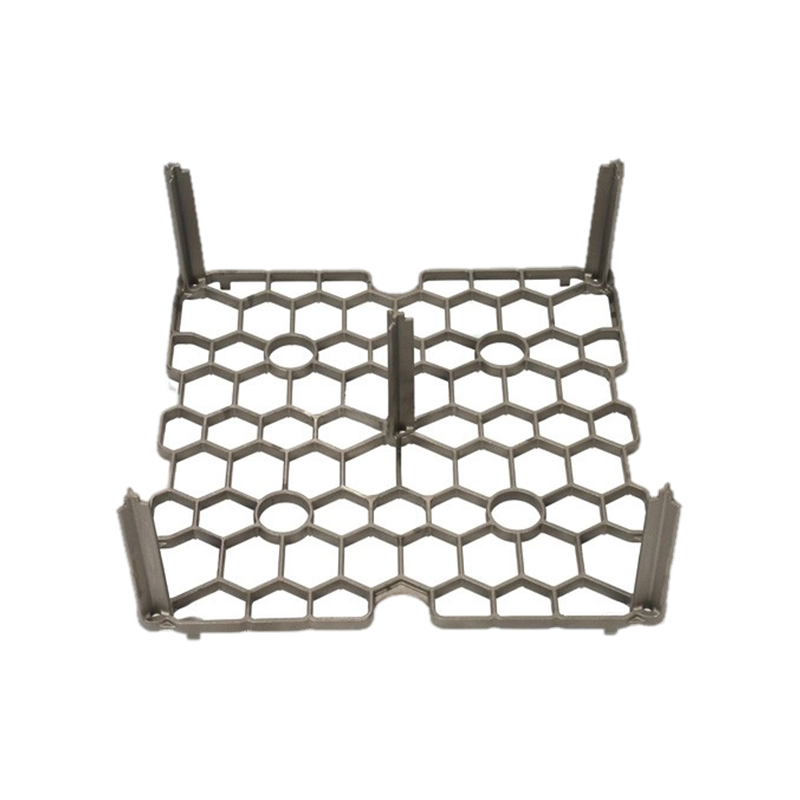
For supporting heavier parts, trays offer three primary design approaches. The traditional serpentine grid features snakelike bent pieces bordered by straight lengths, held together with threaded round bars allowing free thermal expansion. A newer honeycomb pattern design features relatively thick legs capable of supporting significantly heavier weights than traditional cast grids. These heavy-duty designs are increasingly common in heat treat shops due to their superior load-bearing capacity.
Industry Applications and Use Cases
Heat treat baskets are indispensable across multiple industries, each presenting unique challenges related to temperature, load, and part complexity. From aerospace precision components to automotive mass production, these baskets ensure consistent, efficient heat treatment while protecting valuable parts.
- Aerospace and Defense: Vacuum heat treating, precision component processing, and critical dimensional control applications requiring materials like Inconel and RA 602 CA®
- Automotive Manufacturing: High-volume production of gears, bearings, fasteners, and drivetrain components using carburizing and neutral hardening processes
- Heavy Equipment Production: Large structural components requiring heavy-duty cast baskets and trays
- Industrial Fasteners: Batch processing of screws, nuts, bolts, and hardware requiring wire mesh containment
- Tool and Die Manufacturing: Precision heat treatment of cutting tools, dies, and molds requiring consistent thermal profiles
- Medical Device Manufacturing: Clean, precision heat treatment of surgical instruments and implants
In aerospace applications, heat treat baskets must maintain critical straightness specifications and dimensional tolerances. When final part dimensions are critical, higher-strength alloys may be necessary despite their restriction to specific applications.
Heat Treatment Processes Supported
Heat treat baskets facilitate various thermal processing methods, each requiring specific basket characteristics to ensure optimal results. The basket design must accommodate process-specific requirements including temperature ranges, atmosphere types, and quenching methods.
| Process | Temperature Range | Basket Requirements |
| Annealing | 1,200-1,600°F (649-871°C) | Good thermal stability; oxidation resistance |
| Quenching | Rapid cooling from 1,550°F+ (843°C+) | Thermal shock resistance; wrought preferred |
| Tempering | 300-1,200°F (149-649°C) | Standard 330 SS or 316 SS suitable |
| Carburizing | 1,650-1,700°F (899-927°C) | Carbon penetration resistance; RA330 recommended |
| Nitriding | 950-1,100°F (510-593°C) | Nitrogen resistance; longer basket life expected |
| Vacuum Heat Treating | Up to 2,300°F (1,260°C) | RA 602 CA®; highest creep strength required |
Maintenance Strategies for Extended Basket Lifespan
Proper maintenance directly correlates with operational efficiency, maintenance costs, and overall production quality. When properly maintained, heat treat baskets deliver consistent performance over extended service periods, reducing replacement frequency and preventing unexpected failures.
Essential Maintenance Practices
Regular inspection is the foundation of basket longevity. Facilities should implement routine inspections to identify signs of wear, warping, cracks, or corrosion before they lead to catastrophic failure. Thermal cycling gradually degrades all basket materials, making periodic assessment critical for predicting replacement needs.
- Visual Inspection Schedule: Examine baskets weekly for distortion, cracking, or excessive scaling. Pay special attention to weld points and high-stress areas
- Cleaning Protocols: Remove scale, debris, oil residues, and contaminants after each use. Accumulated deposits can affect heat distribution and accelerate corrosion
- Dimensional Monitoring: Track basket dimensions over time to identify warping trends that could affect part quality or furnace fit
- Load Capacity Verification: Verify that baskets remain within specified load limits; overloaded baskets experience accelerated creep deformation
- Storage Conditions: Store baskets in dry, clean environments to prevent corrosion between uses
Common Failure Modes and Prevention
Forklifts represent the most common cause of basket failure, particularly during case hardening operations. Cast trays, while strong, are brittle and vulnerable to impact damage. Wrought materials offer superior impact resistance but may deform under excessive loads. Understanding these material behaviors helps prevent damage through proper handling procedures.
Sigma phase embrittlement affects certain alloys below 1,600°F (870°C), causing room-temperature brittleness. RA330's 35% nickel content provides immunity to this phenomenon, but lower-nickel alternatives like RA 253 MA® remain susceptible. Selecting appropriate materials for your specific temperature range prevents this failure mode.
Design Optimization for Maximum Efficiency
Optimal heat treat basket design balances part protection, thermal efficiency, and furnace capacity utilization. A fixture that is too small prevents filling the furnace to capacity, while an excessively heavy fixture limits the number of parts that can be processed per batch. The goal is achieving the best possible ratio of part weight to total weight.
Key Design Considerations
Support thickness directly correlates with load capacity but must be balanced against furnace weight limits. Thicker supports hold more weight, but if the combined weight of fixture and parts exceeds furnace capacity, the additional strength provides no benefit. Custom engineering ensures baskets are designed specifically for your part geometry, load weight, furnace dimensions, and process flow rather than adapted from generic designs.
- Mesh or Perforated Design: Open-mesh patterns allow uniform heat distribution and proper airflow, ensuring consistent treatment while preventing part distortion during heating and cooling
- Part Spacing: Prevents parts from touching each other, reducing damage risk and ensuring uniform thermal exposure
- Handling Features: Integrated handles, hooks, or lifting points enable safe transport using cranes or forklifts
- Stackability: Designs supporting vertical stacking maximize furnace volume utilization while requiring sufficient structural reinforcement
- Downstream Integration: Baskets designed to transition directly into washing, quenching, or cooling systems minimize part handling and damage risk
Frequently Asked Questions About Heat Treat Baskets
Q: How long do heat treat baskets typically last?
A: RA330 heat treat baskets typically last approximately one year in carburizing atmospheres and longer in nitriding environments. Wrought baskets generally outlast cast baskets in applications involving frequent thermal cycling, while cast baskets may provide longer service in static, high-load applications. Regular inspection and proper maintenance can extend these timeframes significantly.
Q: What is the best material for high-temperature vacuum heat treating?
A: RA 602 CA® has demonstrated exceptional performance for vacuum heat treating operations up to 2,300°F (1,260°C). This alloy offers one of the highest creep strengths among wrought products, making it ideal for applications where dimensional stability is critical. For temperatures below 1,800°F (982°C) in neutral atmospheres, RA 253 MA® provides a cost-effective alternative.
Q: Should I choose cast or fabricated baskets for quenching operations?
A: Fabricated (wrought) baskets are strongly preferred for quenching applications due to their superior thermal shock resistance. The wrought grain structure withstands rapid temperature changes during quenching, while cast baskets are prone to cracking from thermal cycling. Wrought baskets also offer repairability advantages when damage occurs.
Q: How do I prevent my heat treat baskets from warping?
A: Preventing warp requires proper material selection, load management, and thermal cycling control. Use alloys with appropriate creep strength for your maximum operating temperature. Never exceed rated load capacities, as overloading accelerates creep deformation. Allow baskets to cool gradually when possible, and avoid placing cold parts directly onto hot baskets. RA330 exhibits good resistance to thermal fatigue, though some warping is expected over extended service life.
Q: Can heat treat baskets be repaired when damaged?
A: Wrought fabricated baskets can typically be repaired through welding, making them more economical over long service periods. Cast baskets are generally not repairable once cracked. The repairability of wrought baskets depends on the extent of damage and the specific alloy used. Regular inspection helps identify repairable issues before they become catastrophic failures.
Q: What causes heat treat baskets to fail prematurely?
A: The most common causes of premature failure include material overheating, mechanical damage from forklifts, sigma phase embrittlement, and excessive thermal cycling. Operating above recommended temperature limits causes rapid oxidation and strength loss. Impact damage, particularly to cast baskets, creates stress concentrations that propagate cracks. Selecting appropriate materials and implementing proper handling procedures prevents most premature failures.
Q: How do I calculate the true cost of a heat treat basket?
A: Calculate cost per pound of heat-treated product rather than focusing solely on initial purchase price. Consider the basket purchase cost, expected service life, furnace efficiency impact (heavier baskets require more energy), maintenance requirements, and replacement frequency. A higher-priced basket with superior durability often delivers lower total cost of ownership than budget alternatives requiring frequent replacement.
Q: Are custom heat treat baskets worth the investment?
A: Custom-engineered baskets typically deliver superior value for demanding applications. Standard baskets may suffice for light-duty operations, but heat treating environments usually demand designs engineered around specific part geometry, load weight, furnace dimensions, and process flow. Manufacturers investing in custom fabrication typically see longer basket life, better part protection, and improved furnace efficiency.
Conclusion: Maximizing Your Heat Treat Basket Investment
Selecting the right heat treat basket requires careful analysis of your specific application requirements, process parameters, and long-term operational goals. The optimal choice balances initial investment against lifecycle costs, considering factors often overlooked such as energy consumption, maintenance requirements, and impact on part quality.
For general heat treating applications, RA330 remains the most economical alloy choice, offering excellent oxidation resistance and immunity to sigma phase formation. Applications involving extreme temperatures above 2,000°F (1,093°C) or requiring critical dimensional control justify investment in premium materials like Inconel or RA 602 CA®. When thermal cycling and quenching operations dominate your process, wrought fabricated baskets provide superior durability and repairability compared to cast alternatives.
Ultimately, treating heat treat baskets as strategic production assets rather than commodity consumables yields significant returns through improved efficiency, reduced downtime, and consistent part quality. Partnering with experienced manufacturers who understand the nuances of heat treating applications ensures your basket investment delivers maximum value across its service life.