Shunda Road, Lincheng Town Science and Technology Industrial Park, Xinghua City, Jiangsu Province
 English
 русский
 Español
 عربى
عربى
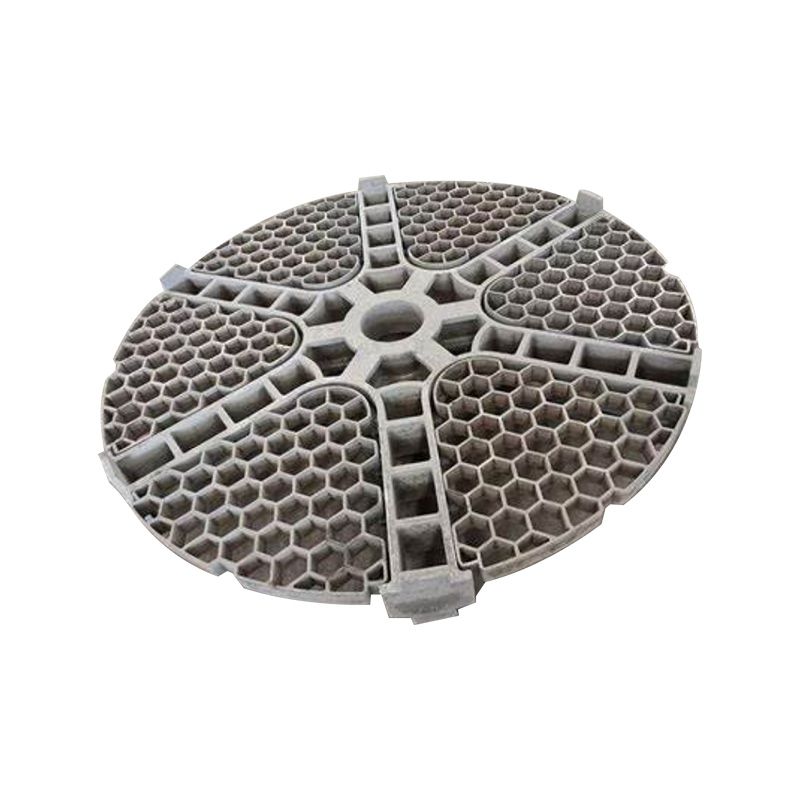
Heat treatment trays are industrial fixtures used to hold, support, and transport metal components or other workpieces through high-temperature furnace processes such as annealing, hardening, carburizing, nitriding, and tempering. The right heat treatment tray ensures uniform heat distribution, prevents part distortion, and survives repeated thermal cycling — directly impacting the quality of the finished product and the operational cost of the heat treatment process.
Choosing the wrong tray material or design is a costly mistake: premature tray failure disrupts production schedules, contaminates furnace atmospheres, and can compromise the metallurgical integrity of the parts being processed. This guide covers everything you need to know — from alloy selection and tray geometry to loading best practices, maintenance, and cost comparisons.
Content
- 1 Why Heat Treatment Trays Are Critical to Industrial Furnace Operations
- 2 Which Materials Are Used to Make Heat Treatment Trays?
- 3 How Do Different Heat Treatment Tray Materials Compare?
- 4 Which Heat Treatment Tray Design Is Right for Your Application?
- 5 How Are Heat Treatment Trays Used Across Different Processes?
- 6 How to Maximize the Service Life of Heat Treatment Trays
- 7 What Is the Total Cost of Ownership for Heat Treatment Trays?
- 8 Frequently Asked Questions About Heat Treatment Trays
- 8.1 Q: What is the most important factor when selecting a heat treatment tray?
- 8.2 Q: Can heat treatment trays be repaired or reconditioned?
- 8.3 Q: Why do heat treatment trays warp over time?
- 8.4 Q: Are there heat treatment trays suitable for vacuum furnaces?
- 8.5 Q: How do I know when a heat treatment tray needs to be replaced?
- 8.6 Q: What is the difference between a heat treatment tray and a heat treatment basket?
- 8.7 Q: Can I use stainless steel trays for heat treatment?
- 9 How to Specify Heat Treatment Trays: A Practical Checklist
Why Heat Treatment Trays Are Critical to Industrial Furnace Operations
Heat treatment trays are not passive carriers — they are engineered components that directly affect thermal uniformity, atmospheric consistency, and part quality throughout the heat treatment cycle. A tray that warps, oxidizes excessively, or conducts heat unevenly will produce inconsistent results even when the furnace itself is performing correctly.
In a high-volume automotive heat treatment operation, for example, a single batch of improperly supported gears can result in surface hardness variation of ±5 HRC or more — well outside the tolerances required for transmission components. The culprit is often not the furnace parameters but the tray design: parts stacked too densely, airflow blocked by solid tray floors, or thermal mass mismatched to cycle time.
Beyond part quality, heat treatment trays represent a significant recurring cost. In continuous pusher and belt furnace operations, trays may complete thousands of thermal cycles per year. Selecting a tray alloy or ceramic composition that extends service life from 200 cycles to 800 cycles can reduce annual fixture costs by 60% or more.
Which Materials Are Used to Make Heat Treatment Trays?
Heat treatment trays are manufactured from three primary material families: heat-resistant alloy steel (cast or wrought), ceramic and refractory materials, and silicon carbide composites — each suited to different temperature ranges, atmospheres, and load requirements. The selection decision hinges on maximum operating temperature, thermal cycling frequency, furnace atmosphere chemistry, and budget.
1. Heat-Resistant Alloy Steel Trays
Alloy steel heat treatment trays are the most widely used type in industrial furnace operations, offering an excellent balance of mechanical strength, thermal shock resistance, and cost-effectiveness at temperatures up to approximately 1,150°C (2,100°F). Common alloy families include:
- HH alloy (25Cr-12Ni): Suited for temperatures up to 1,090°C. Good oxidation resistance and moderate cost. Widely used in carburizing and neutral hardening applications.
- HK alloy (25Cr-20Ni): Higher nickel content improves creep resistance at elevated temperatures. Preferred for longer cycle times and heavier loads.
- HT alloy (15Cr-35Ni): Excellent resistance to thermal fatigue. Commonly used in carburizing atmosphere applications where carbon pickup by the tray itself must be minimized.
- HP alloy (25Cr-35Ni + Nb): Niobium additions improve strength at very high temperatures. Used in demanding gas carburizing and vacuum heat treatment applications up to 1,150°C.
- Ni-base superalloys (e.g., Inconel-type): Reserved for the most extreme temperature applications above 1,100°C where iron-base alloys approach their service limits.
2. Ceramic and Refractory Heat Treatment Trays
Ceramic heat treatment trays excel in very high temperature applications above 1,200°C and in chemically aggressive atmospheres where metal alloys would rapidly degrade, but they are brittle and must be handled carefully to avoid cracking. Common ceramic materials include:
- Alumina (Al₂O₃): Excellent chemical inertness and temperature capability up to 1,600°C. Used in sintering, brazing, and high-temperature annealing applications.
- Mullite (3Al₂O₃·2SiO₂): Good thermal shock resistance relative to pure alumina. A practical choice for applications with rapid temperature changes.
- Cordierite: Very low thermal expansion coefficient makes it highly resistant to thermal shock. Commonly used in kiln furniture and lower-temperature heat treatment fixtures.
- Zirconia (ZrO₂): Handles temperatures up to 2,200°C. Expensive, but indispensable where extreme heat and chemical resistance are required simultaneously.
3. Silicon Carbide (SiC) Composite Trays
Silicon carbide heat treatment trays combine high thermal conductivity with excellent oxidation resistance and mechanical strength at elevated temperatures, making them a premium option for applications demanding fast, uniform heat transfer. SiC trays are significantly more expensive than alloy trays but can deliver service lives several times longer in demanding applications, making them cost-effective over the long term in high-cycle operations.
How Do Different Heat Treatment Tray Materials Compare?
A direct side-by-side comparison of heat treatment tray materials reveals clear trade-offs between temperature capability, thermal shock resistance, weight, cost, and expected service life. The table below provides a structured overview to support selection decisions.
| Material | Max Temp (°C) | Thermal Shock Resistance | Relative Weight | Relative Cost | Typical Service Life |
| HH Alloy Steel | 1,090 | Good | Heavy | Low–Medium | 200–500 cycles |
| HK Alloy Steel | 1,120 | Good | Heavy | Medium | 300–600 cycles |
| HP Alloy Steel | 1,150 | Very Good | Heavy | Medium–High | 500–1,000 cycles |
| Cordierite Ceramic | 1,300 | Excellent | Light | Medium | Variable (brittle) |
| Alumina Ceramic | 1,600 | Moderate | Light–Medium | Medium–High | Long if handled carefully |
| Silicon Carbide (SiC) | 1,650+ | Excellent | Medium | High | 800–2,000+ cycles |
| Ni-Base Superalloy | 1,200+ | Good | Heavy | Very High | 1,000+ cycles |
Table 1: Comparative overview of heat treatment tray materials across key performance parameters including temperature capability, thermal shock resistance, weight, cost, and service life.
Which Heat Treatment Tray Design Is Right for Your Application?
The right heat treatment tray design depends on five key variables: the type of heat treatment process, maximum operating temperature, furnace atmosphere, part geometry and weight, and production volume. Tray geometry is as important as material selection — even the best alloy will underperform in a design that creates hot spots, restricts gas flow, or places excessive stress on weld joints.
Solid-Floor Trays vs. Grid/Mesh Trays
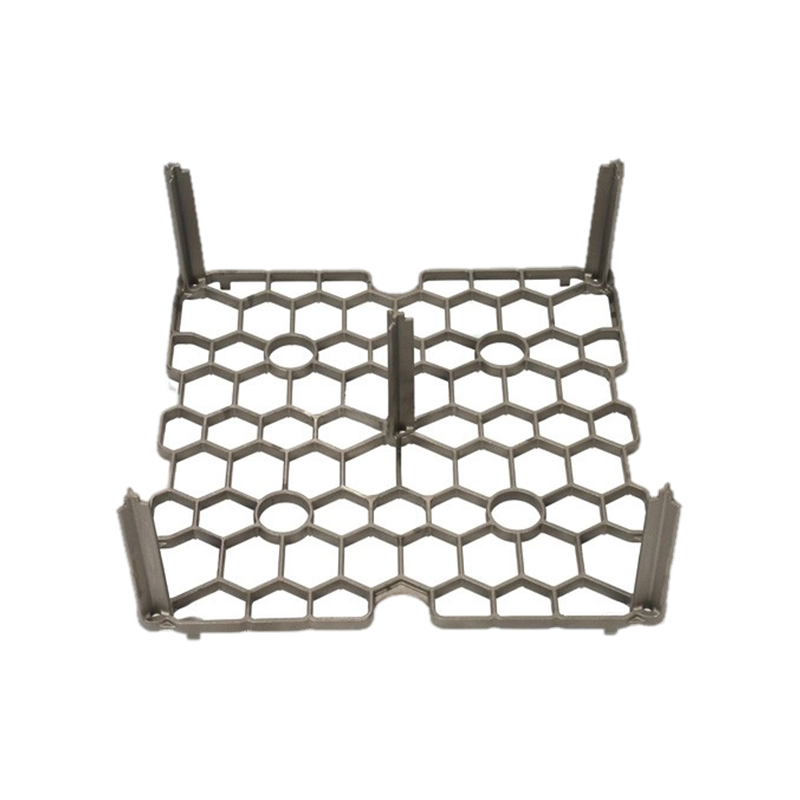
Solid-floor heat treatment trays provide maximum part support and are best for small or delicate components, while grid or mesh-floor trays allow superior gas and heat circulation and are preferred in atmosphere furnace applications such as gas carburizing or gas nitriding.
In a gas carburizing application, for example, a solid-floor tray can create a "shadow" zone directly beneath stacked parts, resulting in lower carbon potential at the part surface closest to the tray floor. Switching to a mesh-floor design in the same application has been shown to reduce case depth variation by 15–25% across the batch.
Tray Wall Height and Rim Design
Lower-sided trays with open rims allow better atmosphere circulation around the load, while deeper-walled trays offer better part containment for small or irregularly shaped components that might shift during handling. For quench-and-temper sequences where parts are basket-quenched directly in the tray, structural rim integrity under rapid thermal shock loading becomes paramount.
Cast vs. Fabricated Heat Treatment Trays
Cast heat treatment trays offer superior high-temperature creep resistance and can incorporate complex geometry in a single piece, while fabricated (welded) trays are lighter, easier to customize, and generally lower in initial cost. The weld joints in fabricated trays are typically the first failure point under repeated thermal cycling — a limitation that makes cast trays preferable in high-cycle, high-temperature applications despite their greater weight and cost.
How Are Heat Treatment Trays Used Across Different Processes?
Heat treatment trays serve different functional roles depending on the specific thermal process, and understanding those roles is essential for selecting the right tray specification for each application.
| Heat Treatment Process | Temperature Range | Recommended Tray Material | Key Tray Requirement |
| Gas Carburizing | 850–980°C | HT or HP alloy (mesh floor) | Carbon-resistant, open airflow |
| Gas Nitriding | 480–580°C | HH or 304 SS alloy | Nitrogen atmosphere compatibility |
| Neutral Hardening | 800–1,000°C | HK alloy or HP alloy | Thermal stability, load capacity |
| Annealing | 650–900°C | HH alloy or SiC | Uniform heat distribution |
| Vacuum Heat Treatment | 900–1,300°C | Molybdenum, graphite, or SiC | Low outgassing, vacuum stability |
| Sintering (PM Parts) | 1,100–1,400°C | Alumina or SiC ceramic | Chemical inertness, flatness |
| Tempering | 150–700°C | Standard alloy steel or SUS | Load capacity, flatness |
| Brazing | 600–1,200°C | Alumina ceramic or SiC | Non-reactivity with braze alloy |
Table 2: Recommended heat treatment tray materials and design priorities matched to common industrial heat treatment processes and their operating temperature ranges.
How to Maximize the Service Life of Heat Treatment Trays
Extending the service life of heat treatment trays requires correct loading practice, controlled heating and cooling rates, regular inspection, and matching tray material to actual operating conditions rather than theoretical maximums. Even premium-alloy trays fail prematurely when subjected to avoidable stresses.
Loading Best Practices
- Do not exceed the rated load capacity of the tray. Overloading accelerates creep deformation, particularly at temperatures above 900°C where alloy strength drops significantly.
- Distribute load evenly across the tray floor. Concentrated point loads create stress concentrations that initiate cracking at welds or casting defects.
- Never stack trays unless the design is specifically rated for stacking. Unstacked trays used in stacking applications frequently fail at the rim weld within 50–100 cycles.
- Use fixtures and separators to prevent direct metal-to-metal contact between parts and the tray surface in carburizing applications, reducing carbon transfer and surface contamination.
Thermal Cycling Management
- Avoid thermal shock by controlling heating and cooling rates, particularly for ceramic trays. A maximum ramp rate of 5–10°C per minute is recommended for cordierite and alumina trays.
- Allow trays to cool before quenching loaded components when the process permits. Direct quench with a full load applies maximum thermal stress to the tray in its most vulnerable state — fully soaked at peak temperature.
- Rotate tray orientation periodically in continuous furnaces to equalize wear from hot spots created by burner proximity or furnace geometry.
Inspection and Maintenance Schedule
- Inspect trays visually after every 50 cycles for warping, cracking at welds, surface spalling (ceramics), and excessive oxidation scaling (alloy trays).
- Measure tray flatness periodically using a straightedge. A deflection of more than 5mm across the tray width typically indicates the tray should be retired or resurfaced.
- Clean trays regularly to remove carbon deposits, oxide scale, and part residue that can act as thermal insulators or chemically react with tray materials at elevated temperatures.
- Track cycle count per tray using a tagging or coding system. Replace trays proactively based on alloy-specific life expectancy rather than waiting for visible failure.
What Is the Total Cost of Ownership for Heat Treatment Trays?
The total cost of ownership (TCO) for heat treatment trays extends well beyond purchase price and must account for service life, energy impact of tray thermal mass, handling costs, and the cost of production disruption from premature tray failure. A tray that costs three times more but lasts five times longer is almost always the better investment in high-volume operations.
| Cost Factor | HH Alloy Tray | HP Alloy Tray | SiC Composite Tray |
| Typical unit purchase price | $150–$400 | $350–$900 | $800–$2,500+ |
| Expected service life | 200–400 cycles | 500–1,000 cycles | 1,000–2,500 cycles |
| Cost per cycle (approx.) | $0.50–$1.50 | $0.45–$1.20 | $0.50–$1.40 |
| Thermal mass (energy impact) | High | High | Medium |
| Handling complexity | Low | Low | Medium (brittle risk) |
| Best value scenario | Low-volume, moderate temp | High-volume carburizing | Very high-cycle, high-temp |
Table 3: Total cost of ownership comparison for three common heat treatment tray types across purchase price, service life, cost per cycle, and operational factors.
One often-overlooked cost factor is tray thermal mass. Heavy cast alloy trays absorb significant energy during heat-up, increasing both cycle time and fuel or electricity consumption. In a facility running 500 cycles per year with 20 trays at an average tray weight of 25 kg, switching to a lighter SiC tray design (average weight 12 kg) can reduce furnace energy consumption per cycle by 8–15% — savings that compound rapidly over time.
Frequently Asked Questions About Heat Treatment Trays
Q: What is the most important factor when selecting a heat treatment tray?
The most important factor is matching the tray material's temperature and atmosphere compatibility to your actual process conditions — not the furnace's maximum rated temperature. Many operations run trays rated for 1,150°C in processes that never exceed 950°C, wasting money on unnecessary alloy content. Conversely, running a tray material at or near its limit dramatically accelerates degradation. Start with actual process temperature and atmosphere chemistry, then work backward to the appropriate alloy or ceramic family.
Q: Can heat treatment trays be repaired or reconditioned?
Alloy steel heat treatment trays can often be reconditioned by specialist welding using matching filler alloy, but the repaired zone will typically have lower fatigue resistance than the original casting or fabrication. Reconditioning is most cost-effective for large, complex trays where the repair cost is well below replacement cost. Ceramic and SiC trays generally cannot be meaningfully repaired — cracks propagate rapidly under thermal cycling, and a cracked ceramic tray should be retired immediately to avoid furnace contamination and part damage.
Q: Why do heat treatment trays warp over time?
Heat treatment tray warping is caused by accumulated creep deformation — the slow, permanent plastic deformation of metal under sustained stress at elevated temperature. Every time a tray is heated to process temperature under a load, the alloy experiences microscopic creep. Over hundreds of cycles, this accumulates into visible sagging or distortion. Higher process temperatures, heavier loads, and longer cycle times all accelerate creep. Using an alloy with higher creep resistance (e.g., HP vs. HH) or reducing the load per tray are the most effective countermeasures.
Q: Are there heat treatment trays suitable for vacuum furnaces?
Yes — vacuum heat treatment requires trays made from materials with very low outgassing rates and no volatile constituents that would contaminate the vacuum atmosphere or react with parts at elevated temperature. Molybdenum alloy trays, graphite trays, and certain grades of SiC are the preferred choices for vacuum applications. Standard iron-chromium-nickel alloys are unsuitable for high-vacuum use above approximately 1,000°C due to chromium volatilization. Ceramic trays with binders that contain volatile compounds must also be avoided in vacuum.
Q: How do I know when a heat treatment tray needs to be replaced?
Replace a heat treatment tray when it shows visible cracking at welds or casting walls, warping exceeding 5mm across its span, significant surface oxidation scaling that reduces structural section, or when part quality data shows increasing variability that correlates with tray condition. Proactive replacement based on tracked cycle count is always preferable to reactive replacement after failure — a tray that collapses mid-cycle can damage parts, contaminate the furnace, and cause hours of unplanned downtime.
Q: What is the difference between a heat treatment tray and a heat treatment basket?
A heat treatment tray has a flat base and low sides optimized for loading flat or layered components, while a heat treatment basket has higher walls and an open mesh or wire structure designed for bulk loading of small parts such as fasteners, bearings, or stampings. Baskets allow excellent atmosphere penetration and can be used directly in quench tanks. Trays provide better part support and stack-loading capability. Many operations use both — trays for precision components requiring specific positioning, and baskets for bulk commodity parts processed in large volumes.
Q: Can I use stainless steel trays for heat treatment?
Standard austenitic stainless steel grades (such as 304 or 316) are suitable only for low-temperature heat treatment applications below approximately 800°C and are not recommended for carburizing, high-temperature hardening, or other demanding processes. Above 800°C, standard stainless loses strength rapidly and undergoes carbide precipitation in carburizing atmospheres. For moderate-temperature applications such as aging, stress relieving, or low-temperature annealing, stainless steel trays offer a cost-effective solution with good corrosion resistance in air atmospheres.
How to Specify Heat Treatment Trays: A Practical Checklist
When specifying heat treatment trays for a new or existing application, working through a structured checklist ensures that no critical parameter is overlooked and that the final specification balances performance, service life, and cost.
- Define the process: What heat treatment operation will the tray be used for? What is the maximum temperature and typical cycle time?
- Identify the furnace atmosphere: Air, endothermic gas, nitrogen, hydrogen, vacuum, or ammonia? Each atmosphere imposes different chemical demands on the tray material.
- Specify the load: What is the maximum part weight per tray? What are the part dimensions? Are parts fragile or prone to distortion?
- Determine floor design: Does the process require gas circulation through the tray floor? If yes, specify mesh or grid floor rather than solid.
- Select the material: Based on temperature, atmosphere, and life requirements, choose the appropriate alloy or ceramic family from a comparative material table.
- Choose cast vs. fabricated: For high-temperature, high-cycle applications, prefer cast construction. For lighter loads or budget-constrained projects, fabricated trays are acceptable.
- Calculate TCO: Compare total cost per cycle across candidate tray specifications, not just purchase price.
- Plan inspection and replacement intervals: Document tray cycle count tracking, inspection criteria, and retirement thresholds before the trays enter service.
Investing time in proper heat treatment tray specification upfront pays dividends across the entire service life of the fixtures — in consistent part quality, reduced downtime, lower energy costs, and fewer unplanned production interruptions. Whether your operation processes automotive gears, aerospace fasteners, medical implants, or general industrial components, the right heat treatment tray is one of the most leveraged investments in your thermal processing operation.