Shunda Road, Lincheng Town Science and Technology Industrial Park, Xinghua City, Jiangsu Province
 English
 русский
 Español
 عربى
عربى
430FR is a free-machining ferritic stainless steel engineered for solenoid valves, relay armatures, and other soft-magnetic components. It combines the machinability of a sulfur-bearing chromium steel with tight residual-element control, so a properly bright-annealed part delivers consistent magnetic performance: high permeability, low coercivity, and a stable saturation point. For engineers and buyers, it is the practical default when a component must be machined in volume, carry magnetic flux reliably, and resist corrosion in moderate service environments.
Content
- 1 What Is 430FR Stainless Steel?
- 2 Why 430FR Is the Standard Choice for Solenoid Components
- 3 430 vs. 430F vs. 430FR: How the Grades Compare
- 4 Heat Treatment: What Actually Creates the Magnetic Properties
- 5 Machining and Precision Fabrication of 430FR
- 6 Typical Applications Across Industry
- 7 Sourcing and Specification Checklist
- 8 Frequently Asked Questions About 430FR
- 9 Final Thoughts
What Is 430FR Stainless Steel?
430FR is a controlled-residual variant of 430F, the standard free-machining ferritic stainless steel. It belongs to the 430 family: roughly 16 to 18 percent chromium, low carbon, and ferromagnetic at room temperature. Sulfur is added deliberately to improve chip breakage and surface finish during machining, while the R designation signals that residual elements such as nickel, copper, and molybdenum are kept to tighter limits than in ordinary 430F, protecting the magnetic response of the finished part.
European suppliers often list the grade as 1.4105 (X6CrMoS17), and some catalogs add the suffix IL for the solenoid-quality variant. Legacy national specifications may reference A838-2-1. In the industry you will also hear the terms solenoid-quality steel and free-cutting magnetic stainless used for the same material.
| Element | Typical range (%) |
|---|---|
| Chromium (Cr) | 16.0 to 18.0 |
| Sulfur (S) | 0.15 to 0.35 |
| Carbon (C) | 0.12 max |
| Manganese (Mn) | 1.25 max |
| Silicon (Si) | 1.00 max |
| Phosphorus (P) | 0.06 max |
| Molybdenum (Mo) | 0.60 max |
| Nickel (Ni) | 0.60 max |
| Iron (Fe) | Balance |
Why 430FR Is the Standard Choice for Solenoid Components
430FR wins in solenoid applications because it is one of the few stainless steels that satisfies three requirements at once: machinability, corrosion resistance, and predictable magnetic behavior. Nickel-iron and cobalt-iron soft-magnetic alloys reach higher permeability, but they can cost two to five times more and machine far more slowly, so they are reserved for high-end instrumentation rather than volume-produced valves and relays.
- High maximum permeability, typically 800 to 1,200 after a correct anneal, produces strong magnetic force per amp-turn.
- Low coercivity, commonly below 1.2 oersteds (about 95 A/m), lets the part release quickly when current stops and reduces hysteresis loss in alternating-current service.
- Stable saturation induction keeps the pull-force curve consistent from batch to batch, which matters for proportional valves and actuators.
- Free-cutting machinability generates short, broken chips and good tool life, making high-volume machining of armatures and pole pieces economical.
- Moderate corrosion resistance is sufficient for air, water, fuel, and many hydraulic fluids, so carbon-steel plating or coating is not needed.
430 vs. 430F vs. 430FR: How the Grades Compare
The three grades share the same base alloy but target different priorities: general corrosion resistance, machining throughput, or magnetic consistency. The table below summarizes the practical differences.
| Grade | Primary design goal | Sulfur range | Residual control | Machinability | Magnetic consistency |
|---|---|---|---|---|---|
| 430 | General corrosion-resistant ferritic stainless | 0.030% max | Standard | Fair | Moderate |
| 430F | Free-machining stainless for screwed parts and small components | 0.15% to 0.35% | Standard | Excellent | Moderate |
| 430FR | Soft-magnetic free-machining stainless for solenoids | 0.15% to 0.35% | Tight (Ni, Cu, Mo restricted) | Excellent | Best of the three |
If the part carries no magnetic flux, 430F is usually the lower-cost choice because its residual requirements are less strict. If the part must perform as a magnet, 430FR closes the gap between machinability and magnetic stability.
Heat Treatment: What Actually Creates the Magnetic Properties
The magnetic performance of 430FR is not fully established at the mill; it is created in the annealing furnace. A core that is not annealed correctly will show poor permeability and high coercivity, no matter how clean the melt is.
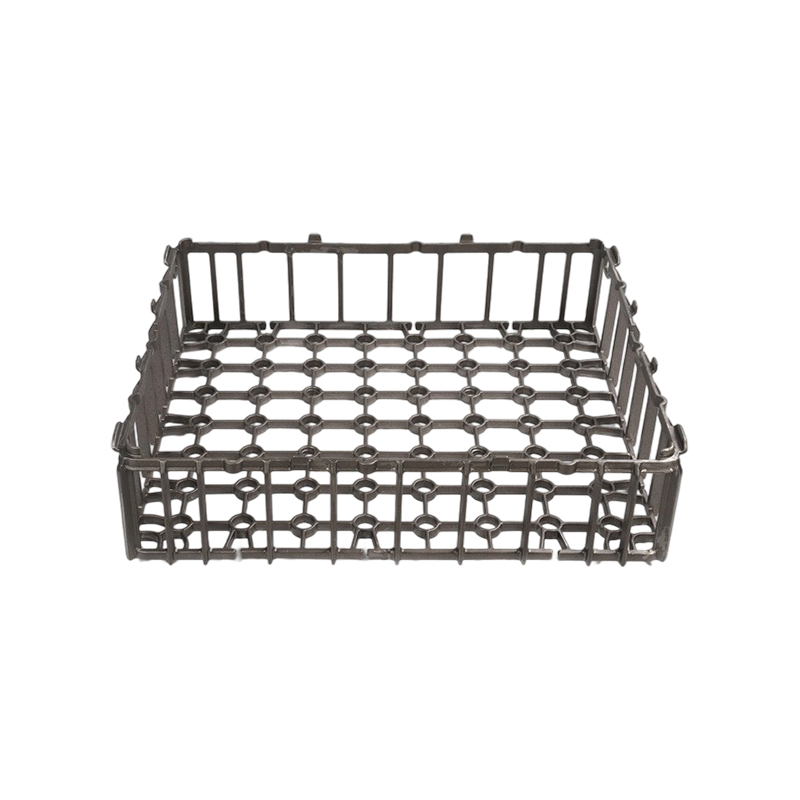
Bright annealing in a hydrogen or dissociated-ammonia atmosphere, typically around 750 to 830 degrees Celsius followed by slow uniform cooling, is the standard route. Two variables deserve close attention: temperature uniformity across the furnace load and atmospheric purity. Both are influenced by how the charge is arranged inside the furnace, and tray or basket geometry can create temperature gradients that leave some parts softer than others. This is exactly the problem that furnace-load optimization with well-designed heat-treatment trays is meant to solve.
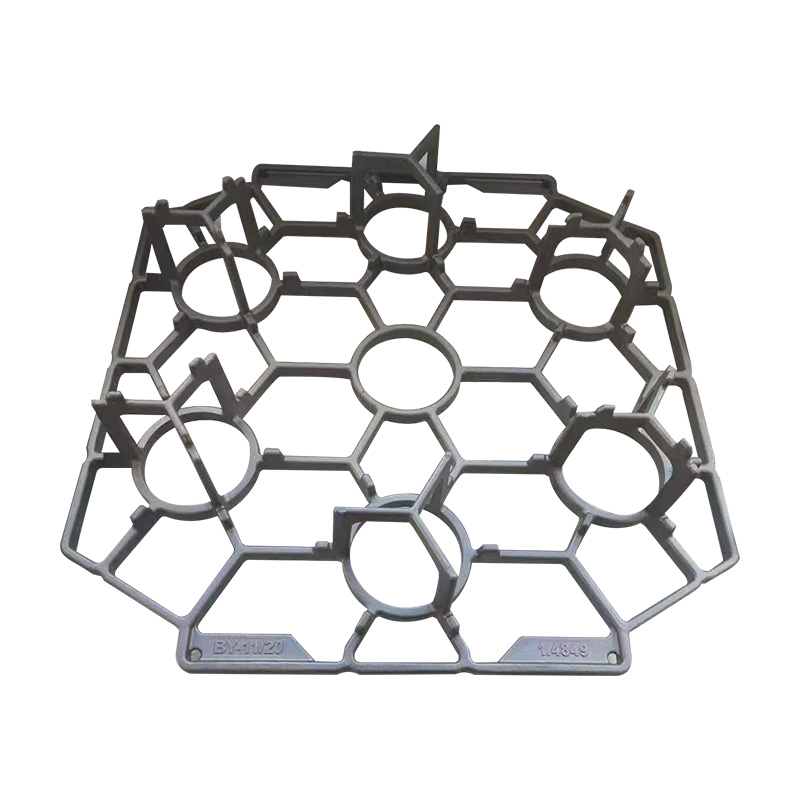 Stainless Steel Cast Base Tray for Heat Treatment FurnacesThis cast tray keeps furnace loads elevated and evenly spaced, supporting uniform temperature distribution during bright annealing. Its precision-cast construction provides strength for handling heavy charges.View Product →
For foundries and heat-treatment shops running batch furnaces, a stainless-steel cast base tray keeps the charge elevated, evenly spaced, and mechanically stable, which directly affects the anneal quality of 430FR components.
Machining and Precision Fabrication of 430FR
430FR is one of the easiest stainless steels to machine, but the same sulfur that improves chip control limits welding and can affect edge quality, so plan the fabrication route around machining rather than joining.
Plungers, cores, armatures, pole pieces, and small housings dominate the 430FR part list. Most shops rate its machinability at 70 to 80 percent of AISI 1212 carbon steel, which is far better than standard 304 or 316. Carbide tooling, moderate cutting speeds, and a positive rake angle work well, and the short, brittle chips evacuate easily from automatic lathes.
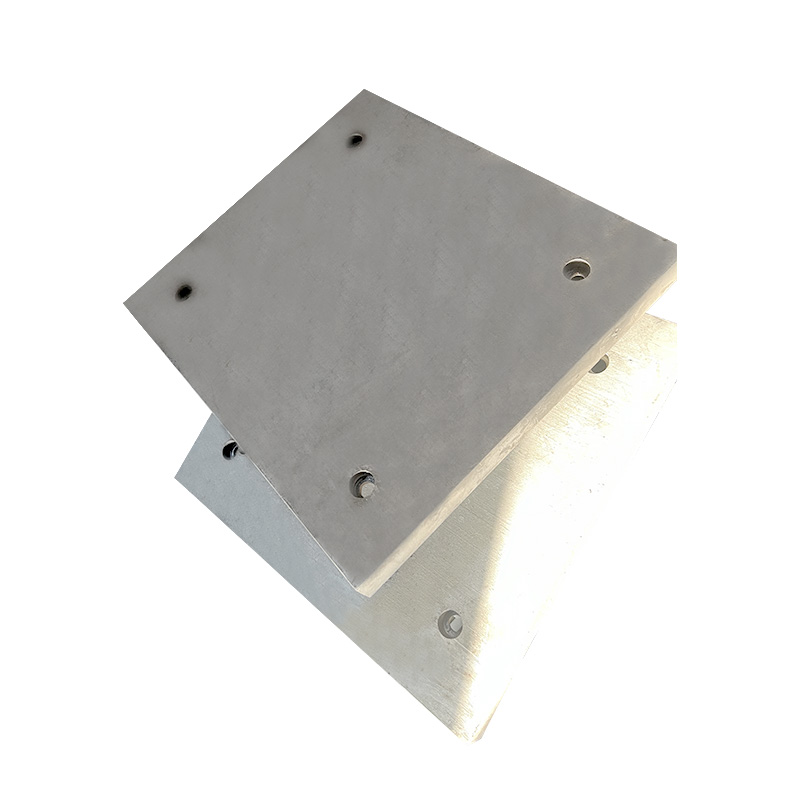
When a solenoid assembly uses non-magnetic spacers, shims, or parallels to set the working air gap, those parts do not need magnetic response. Near-net-shape precision casting of such small components reduces material waste and avoids long machining cycles, making it a practical alternative to cutting expensive bar stock.
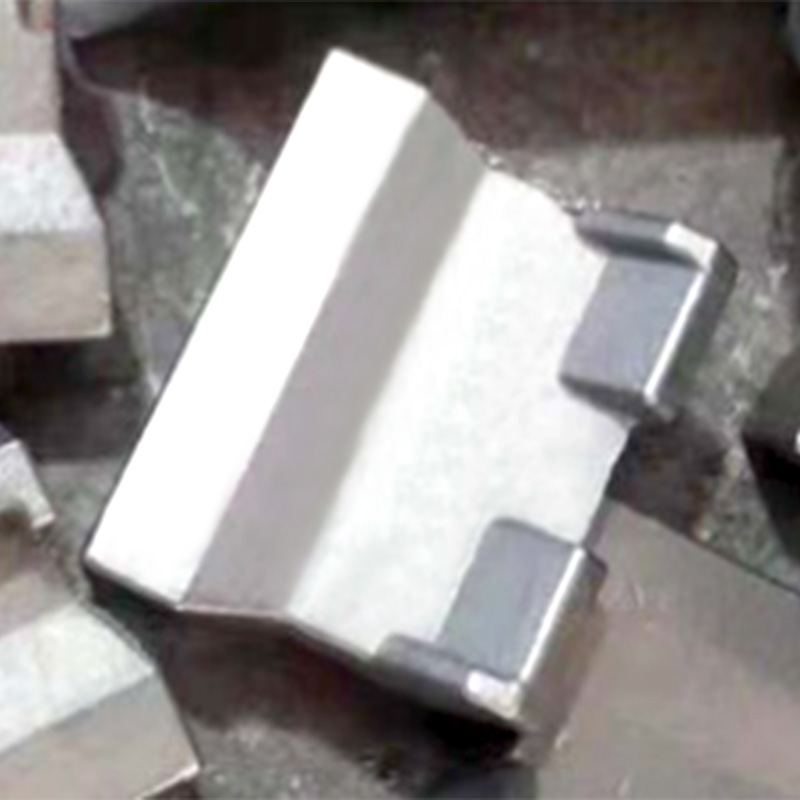 Precision Casting Spacer Parallel for Non-Magnetic ApplicationsNear-net-shape casting offers a practical way to produce small spacers or shims with precise dimensions and surface finish, reducing material waste compared to machining bar stock for solenoid air-gap settings.View Product →
Welding of 430FR should be avoided whenever possible, because the high sulfur content causes hot cracking and porosity. If a welded joint is unavoidable, keep the heat input low and use a matching ferritic filler, or review a low-sulfur grade such as 430Ti for weld-intensive designs.
Typical Applications Across Industry
430FR appears wherever an electromagnet needs a corrosion-resistant, machined core: from industrial solenoid valves to rail brake actuators and automotive fuel-injection components.
- Industrial solenoid valves for water, air, steam, and hydraulic fluid, with plungers, pole pieces, and magnetic frames in 430FR.
- Proportional and on/off valves for process control in chemical and food plants, where repeatable magnetic force is critical.
- Relay and contactor armatures, cores, and complete magnetic circuits in switching devices.
- Automotive parts such as fuel-injector cores, ABS actuator valves, and transmission solenoid valves.
- Magnetic sensors, safety switches, and interlocks that need a corrosion-resistant ferromagnetic part near the sensing element.
- Brake and clutch solenoids in material-handling and packaging equipment.
The valve body itself is a different material story. 430FR is not cast or welded into bodies; the body is normally a casting or forging in a weldable stainless or brass grade. For corrosive-media service, cast stainless pump cases and similar pressure housings have been the established solution for decades.
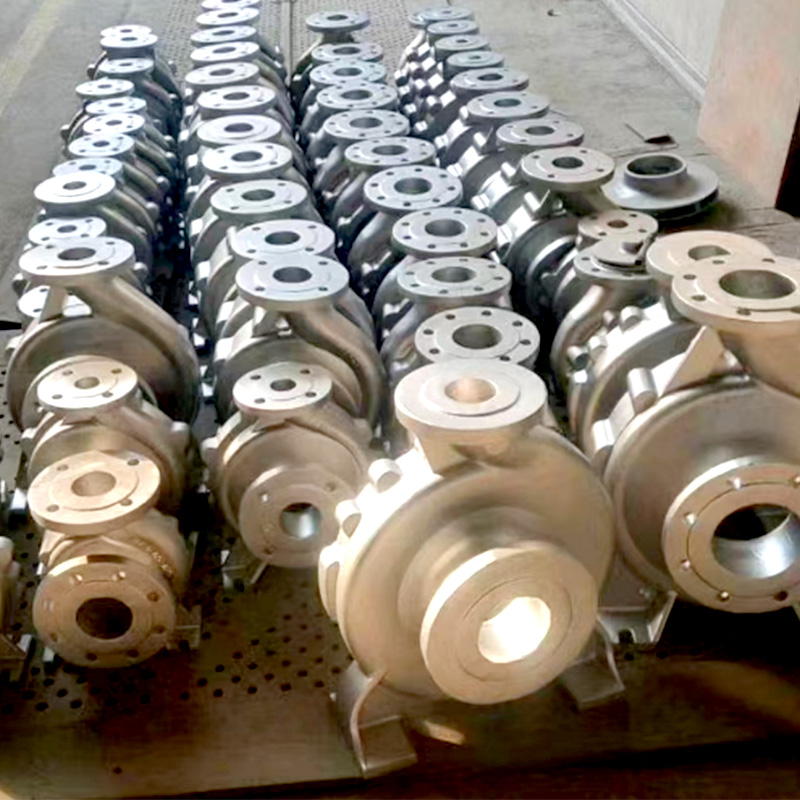 Pump Case Resin Sand Casting for Industrial PumpsThis resin sand cast pump case delivers strength, dimensional accuracy, and resistance to pressure and corrosion, making it a reliable option for bodies in water treatment, oil and gas, and chemical processing systems.View Product →
Sourcing and Specification Checklist
The purchase of 430FR should be based on the mill certificate, not on the grade name alone. The real differences between good and poor magnetic performance sit in residual limits and in the supplier's annealing practice.
- Request a mill test certificate with the heat number, and check that sulfur and residual elements (Ni, Cu, Mo) fall inside the limits of the applicable specification.
- Confirm the delivery condition: bright annealed or annealed-and-pickled, with hardness typically in the range of 150 to 180 HB.
- Ask whether the producer measures magnetic properties per heat, and request maximum relative permeability and coercivity values if available.
- Define the required form: round bar, hexagon, wire coil, or strip, because magnetic behavior can differ slightly between hot-rolled and cold-drawn conditions.
- For high-volume machining, verify dimensional tolerance and straightness, since free-cutting grades tend to distort more during drawing.
- For European markets, confirm RoHS compliance and the correct EN designation (1.4105) on the declaration of conformity.
Frequently Asked Questions About 430FR
Is 430FR magnetic?
Yes. 430FR is a ferritic stainless steel, so it is ferromagnetic at room temperature. It is specified for solenoid and relay parts precisely because it magnetizes and demagnetizes predictably after a correct bright-annealing cycle.
What is the difference between 430F and 430FR?
430F is the general-purpose free-machining grade. 430FR adds tighter control of residual elements that would otherwise scatter magnetic properties. Both contain the same sulfur-based machinability addition, but 430FR delivers more consistent permeability and coercivity from heat to heat.
Can 430FR be welded?
Not as a first choice. The high sulfur content that makes it machine well also causes hot cracking and porosity in welds. Design the assembly with mechanical fastening, staking, or interference fits. If a welded joint is mandatory, review a low-sulfur ferritic grade instead.
Can 430FR be supplied as a casting?
Commercially, 430FR is a wrought product supplied as bar, wire, and strip, because the sulfur addition targets machining. If the part geometry favors casting, discuss residual limits and the final anneal with a foundry; a controlled-residual ferritic casting with a bright anneal can approximate 430FR behavior but will not carry the same wrought-grade specification.
What annealing temperature does 430FR require?
Most producers recommend bright annealing around 750 to 830 degrees Celsius in a reducing atmosphere with slow cooling. The exact cycle must be validated against the supplier's recommended band: excessive temperature produces coarse grains and softer material, while under-annealing leaves distorted grains that poison magnetic response.
Final Thoughts
430FR is the workhorse of the solenoid industry. It earns its place because it balances the four things a production designer actually cares about: machinability, magnetic consistency, corrosion resistance, and cost. The critical control points are the metallurgy of the incoming material, especially residual limits, and the discipline of the annealing process. Get both right, and the component will perform reliably through millions of cycles. Ignore either one, and valves will pull too weakly, release too slowly, or drift from batch to batch.
When you compare suppliers, do not evaluate them on quoted price alone. Ask for the mill certificate, ask for hysteresis data, and ask how the annealing furnace is controlled and monitored. Those three answers reveal more about 430FR supply consistency than any marketing sheet.