Shunda Road, Lincheng Town Science and Technology Industrial Park, Xinghua City, Jiangsu Province
 English
 русский
 Español
 عربى
عربى
ASTM A494/A494M is the governing specification for nickel and nickel alloy castings produced for corrosion-resistant service. It defines chemical composition limits, mechanical property minimums, heat-treatment conditions, and repair-welding rules for grades that range from pure nickel to nickel-copper, nickel-molybdenum, and nickel-chromium-molybdenum alloys. If you are ordering pump casings, valve bodies, impellers, or fittings for chemical processing, petrochemical plants, marine systems, or pollution-control equipment, citing ASTM A494 in the purchase order is the clearest way to fix the material, the testing, and the acceptance criteria before manufacturing starts.
Content
- 1 What ASTM A494/A494M Covers
- 2 Nickel Alloy Grades in ASTM A494 and Their Typical Applications
- 3 Chemistry, Mechanical Testing, and Certification Obligations
- 4 How to Specify ASTM A494 Castings Correctly
- 5 Evaluating a Foundry for ASTM A494 Nickel Alloy Castings
- 6 Frequently Asked Questions About ASTM A494
What ASTM A494/A494M Covers
The standard applies to castings made from nickel-based and nickel-rich solid-solution alloys, where the primary design requirement is corrosion resistance rather than high-temperature strength. It covers the alloy families used in the most aggressive process environments:
- Nickel: CZ100
- Nickel-copper and nickel-copper-silicon: M35-1, M35-2
- Nickel-copper-carbon: M30C
- Nickel-molybdenum: N7M, N12MV
- Nickel-chromium: CY40
- Nickel-molybdenum-chromium: CW-6M, CW-12MW
- Nickel-molybdenum-chromium with niobium: CW-6MC
The specification also sets general requirements for test coupons, machining, inspection, certification, and the conditions under which castings are supplied. As with most ASTM material standards, A494 is a consensus document: producers and buyers use it as the shared technical language during quotation, manufacturing, and final acceptance.
ASTM revises A494/A494M on a regular schedule, so the edition matters. The 2024 revision, for example, was withdrawn in April 2026, which is why procurement teams should always confirm which edition is active at the time of ordering. The specification is also widely adopted outside private industry; the U.S. Department of Defense officially adopted it in October 2021 for use across military equipment contracts.
Nickel Alloy Grades in ASTM A494 and Their Typical Applications
Each ASTM A494 designation targets a specific corrosion mechanism, so the practical conclusion is simple: match the alloy family to the process chemistry, temperature, and chloride level before ordering. Choosing the wrong grade is the most common cause of premature failure in nickel alloy castings.
| Designation | Alloy Family | Typical Service Conditions | Common Cast Components |
|---|---|---|---|
| CZ100 | Commercially pure nickel | Hot caustic soda, caustic potash, dry chlorine | Pump casings, valve bodies, evaporator shells, diaphragm-cell parts |
| M35-1, M35-2 | Nickel-copper | Seawater, dilute hydrofluoric acid, moderate sulfuric acid | Valve bodies, pump bodies, flanges, pipe fittings |
| M30C | Nickel-copper-carbon | Similar to nickel-copper, with controlled carbon for specific process conditions | Valve and pump trim, process equipment |
| N7M, N12MV | Nickel-molybdenum | Reducing acids, especially hydrochloric acid under low-oxidation conditions | Impellers, valve trim, agitators, reactor internals |
| CW-6M, CW-12MW | Nickel-molybdenum-chromium | Both oxidizing and reducing media; broad chemical and petrochemical exposure | Scrubbing systems, chemical pump parts, pressure-containing components |
| CW-6MC | Ni-Cr-Mo with niobium | Chloride service, pitting and stress-corrosion resistance required | Pump casings, marine hardware, pollution-control equipment |
| CY40 | Nickel-chromium | Elevated-temperature caustic service, halogen gases, heat-treating atmospheres | Furnace parts, chemical processing equipment, soap and detergent hardware |
A common misconception is that the standard guarantees a specific corrosion rate. It does not. ASTM A494 defines composition, properties, and testing; selecting the correct grade remains part of the engineering design, and no casting specification can replace that duty.
Chemistry, Mechanical Testing, and Certification Obligations
The confidence in an A494 casting comes from documented verification, not from the alloy name alone. The standard requires chemistry to be checked as a heat analysis, and the foundry must report the mechanical properties that apply to the grade. Buyers can also add supplementary verification, but those checks must be stated explicitly in the request for quotation.
| Verification Step | What It Confirms | When to Require It |
|---|---|---|
| Heat analysis | Melt composition meets the grade limits | Every heat, mandatory under the standard |
| Product analysis | Composition of the finished casting is within tolerance | Whenever traceability of a specific casting is critical |
| Tensile, yield, elongation | Mechanical performance of the heat-treated material | Every heat, reported in the material certificate |
| Hardness test | Heat-treatment condition | For grades with specified hardness ranges |
| Repair-welding procedure review | Weld metal matches grade chemistry and corrosion performance | When welded repairs are allowed |
| Radiographic examination | Internal soundness and absence of shrinkage defects | For pressure-retaining or safety-critical components |
| Positive material identification (PMI) | Confirms the final part is the intended grade | For mixed-material risk control in large alloy inventories |
Leaving these checks out of the order usually saves a little money at the start and can cost far more later. A mislabeled heat or an unfound shrinkage cavity inside a chemical pump casing is expensive to fix once the equipment is in service.
How to Specify ASTM A494 Castings Correctly
A correctly written specification leaves no room for interpretation, so every RFQ should lock down six points:
- Reference the standard and edition: ASTM A494/A494M-22, or the edition currently in force at the time of ordering.
- State the exact grade designation, such as CW-6MC, M35-1, or N7M, and any supplementary heat-treatment condition.
- Define the delivery form: as-cast, sandblasted, machined, or with test coupons attached.
- List the required verification: PMI, radiography, dye-penetrant examination, hydrostatic pressure test, or hardness mapping.
- Require full traceability from heat number to individual casting, with a signed material test report.
- Agree on repair-welding policy: which grades may be welded, and whether re-heat treatment is mandatory after welding.
A clear specification also helps the foundry price the job realistically. When the buyer and the foundry start from the same reference document, the quotation, the manufacturing route, and the final inspection all stay aligned.
Evaluating a Foundry for ASTM A494 Nickel Alloy Castings
The foundry's capability decides whether the standard is actually met, so evaluate the facility rather than the brochure. Look for evidence of four things: in-house chemistry and mechanical testing, documented experience with nickel-rich melts, a casting process that suits the part geometry, and a disciplined inspection system.
- In-house laboratory equipment for chemistry verification and mechanical testing, so results are not delayed by third-party waits.
- Melting experience with high-nickel and nickel-based alloys, including control of melt temperature, deoxidation, and pouring practice.
- Process flexibility: resin-sand casting for large housings, investment casting for precision trim, lost foam for complex thin-wall shapes, and centrifugal casting for tubular parts.
- Heat-treatment and finishing capability, so the standard's heat-treatment conditions are controlled internally.
- Quality records that trace every casting to a heat number and include the required dimensional and NDT reports.
Pump components are a good starting point for evaluating a supplier, because they combine pressure integrity, dimensional control, and corrosion resistance in one part. Chemical-service pump casings are routinely cast in nickel-copper and nickel-molybdenum-chromium grades under A494, and the same foundry should be able to machine the sealing faces in house.
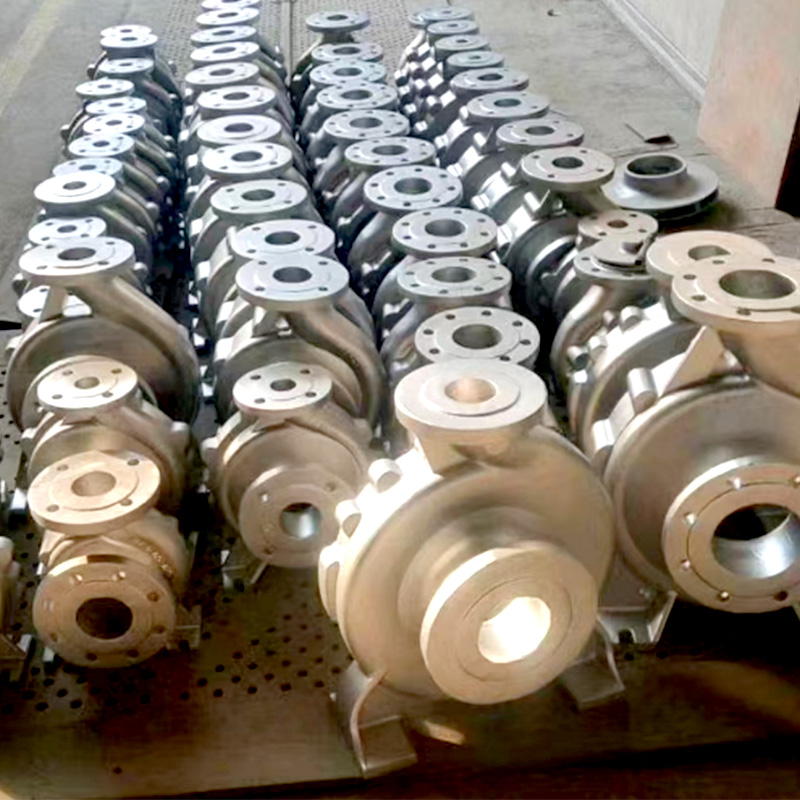 Resin Sand Cast Pump Case for Industrial ApplicationsThis resin sand cast pump case demonstrates the foundry's ability to combine pressure integrity, dimensional control, and corrosion resistance, making it a key part to inspect when evaluating a supplier's casting and machining capabilities.View Product →
Valves and flow-control devices follow the same logic. A flap valve in a corrosive or abrasive process line is usually a casting with a pressure rating and a tight mating surface, so the foundry's pattern shop and machining department determine the final quality.
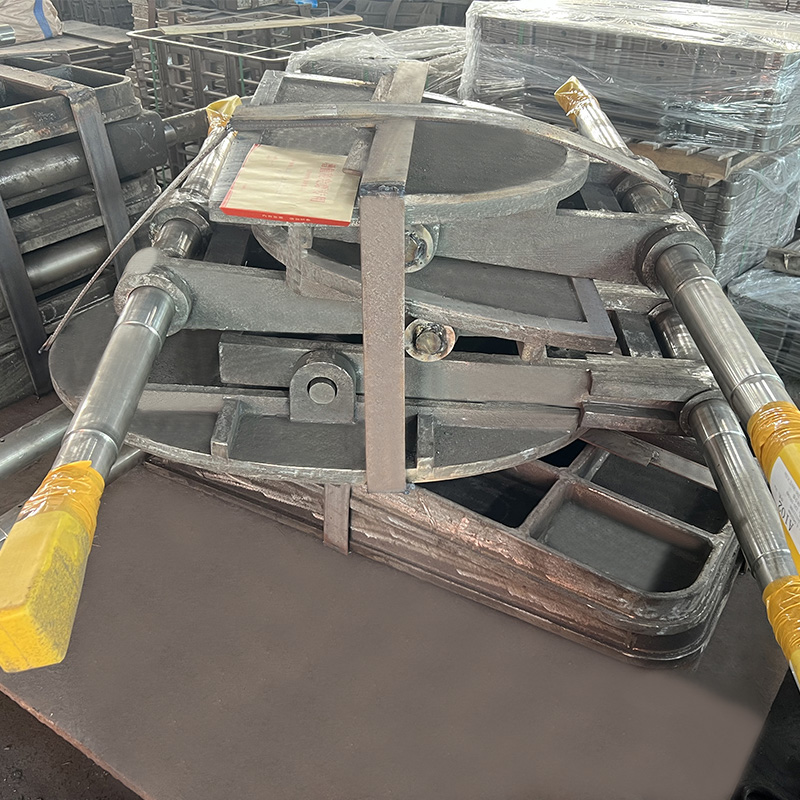 Lost Foam Cast Flap Valve for Fluid Control SystemsThis flap valve is produced by lost foam casting for complex geometries and precise dimensions, offering reliable sealing in high-pressure service, making it a suitable example of the supplier's capability in flow-control components.View Product →
For piping, buyers often combine A494 cast fittings with centrifugally cast tube stock. When the line carries heat as well as corrosive media, a cast stainless steel pipe produced on a centrifugal machine is a practical companion to the nickel alloy castings.
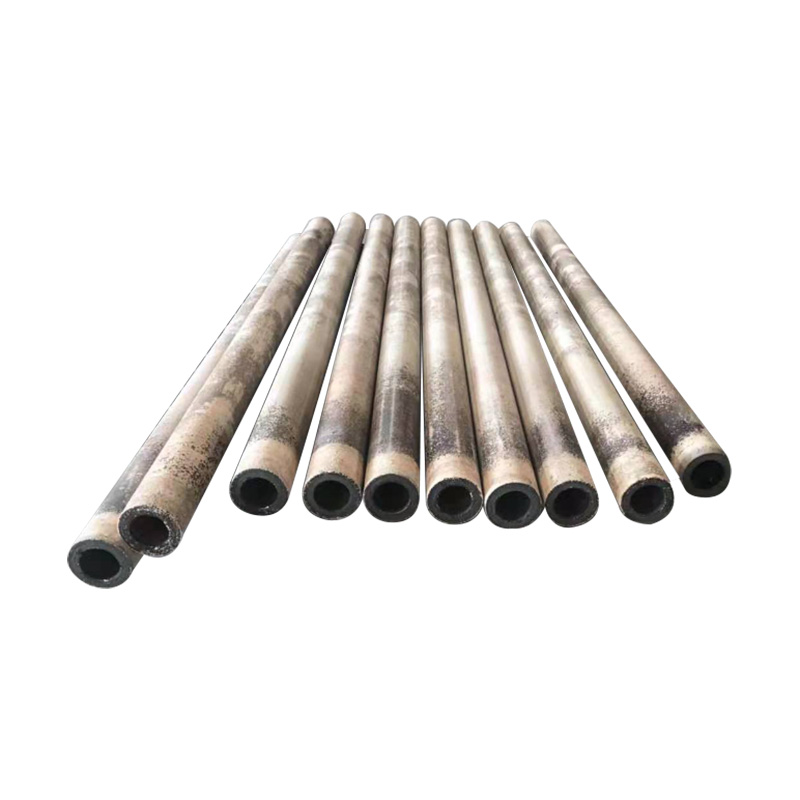 Centrifugal Cast Heat-Resistant Stainless Steel PipeThis heat-resistant stainless steel pipe is made by centrifugal casting to ensure uniform density and strength in high-temperature and high-pressure lines, complementing nickel alloy fittings in corrosive piping systems.View Product →
Process choice influences quality records. Foundries that control the pattern-to-pour sequence, such as those using the lost foam casting process, can hold wall thickness on complex geometries without expensive machining. For small nickel alloy components, defect control in the precision lost wax casting process matters just as much, so ask how the supplier prevents common investment-casting defects.
Certifications such as ISO 9001:2015 are a baseline rather than a guarantee. What matters more in a nickel alloy order is the foundry's track record with corrosion-resistant material, its willingness to share test data and procedure records, and its ability to answer a technical query with detail rather than vague assurance.
Frequently Asked Questions About ASTM A494
What is the difference between ASTM A494 and ASTM A743?
A743 is the general specification for corrosion-resistant iron-chromium, iron-chromium-nickel, and nickel-base castings; A494 is limited to nickel and nickel-rich alloy castings with more tightly controlled chemistry and mechanical testing. Use A494 when the component is a true nickel alloy part and the environment requires that level of alloy.
Are ASTM A494 castings weldable?
Yes. The standard permits qualified repair welding with matching filler metal. The main concern is localized corrosion at the weld zone, so repairs should be carefully controlled, and grades that require post-weld heat treatment must be re-treated and re-tested.
Is heat treatment mandatory for all A494 grades?
No. Some grades are acceptable in the as-cast condition, while others are ordered in the annealed or solution-treated condition. The foundry certificate should state the delivered condition and the associated mechanical results.
Are PMI and radiography included in ASTM A494?
Not automatically. PMI and radiography are supplementary measures that the purchaser can add to the purchase order. For pressure-retaining nickel alloy castings, both checks are strongly recommended.
Which grade is best for seawater service?
Nickel-copper grades such as M35-1 and M35-2 have a long history in seawater, while CW-6MC is preferred where chloride pitting and stress-corrosion cracking are the governing risks. The final decision depends on temperature, crevice geometry, velocity, and oxygen content.
Specifying ASTM A494 is the first step, but the real assurance comes from the foundry's daily execution. A supplier that can manage the entire manufacturing chain, from pattern design and melting through casting, heat treatment, machining, and inspection in one facility, is far more likely to produce nickel alloy castings that pass both the standard and the test of time in corrosive service.