Shunda Road, Lincheng Town Science and Technology Industrial Park, Xinghua City, Jiangsu Province
 English
 русский
 Español
 عربى
عربى
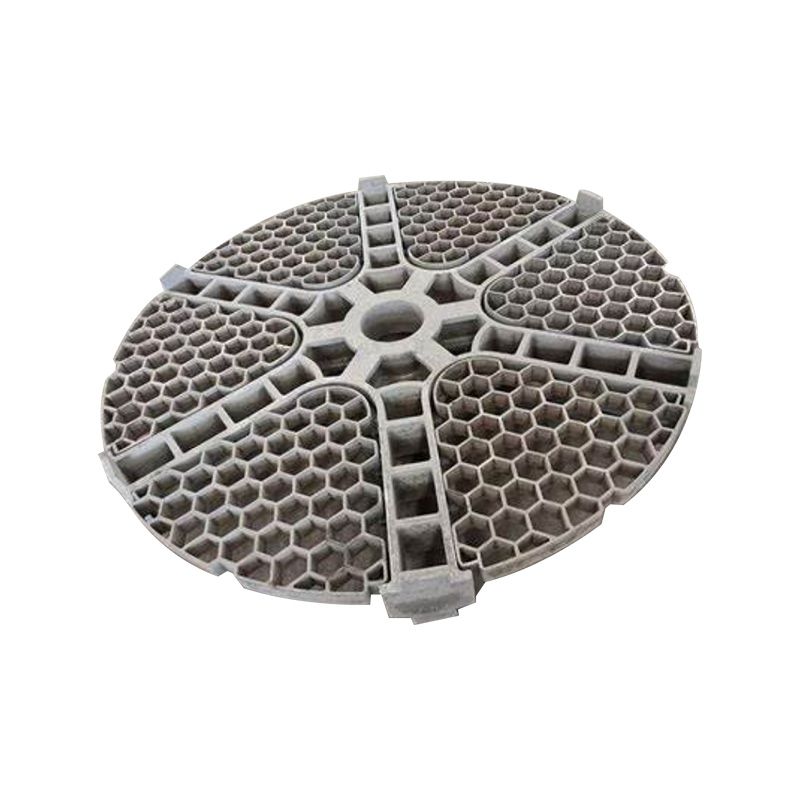
The best material for heat treating fixtures depends on the maximum operating temperature, thermal cycling frequency, and furnace atmosphere, but for continuous service above 1800 degrees Fahrenheit (980 degrees Celsius), nickel-chromium-iron alloys such as Inconel 601 and cast Hastelloy X consistently demonstrate the longest service life and lowest distortion. Data from ASM International Handbook Volume 4C on heat treating confirms that nickel-based alloys maintain yield strengths above 30 kilopounds per square inch at 1600 degrees Fahrenheit, whereas austenitic stainless steels like 310 lose approximately 70% of their room-temperature strength at the same temperature. Choosing the correct material for heat treatment fixtures directly impacts part quality, furnace throughput, and total operational cost. This article examines the material families used for furnace baskets, trays, posts, and grids, comparing their properties with measured performance data and offering a practical selection framework.
Content
- 1 The Dominance of Nickel-Chromium Alloys in High-Temperature Fixture Design
- 2 Comparative Analysis of Fixture Materials by Temperature Capability
- 3 Why Creep Strength Determines Fixture Life in Continuous Furnaces
- 4 Carburizing and Nitriding Atmospheres Demand Specific Alloy Characteristics
- 5 Total Cost of Ownership: Material Price Versus Cycle Life
- 6 Practical Selection Guidelines by Furnace Type and Temperature
- 7 Frequently Asked Questions About Materials for Heat Treating Fixtures
- 7.1 What is the absolute highest temperature a metallic fixture material can withstand?
- 7.2 Can ceramic materials replace metal for heat treating fixtures?
- 7.3 How does the design of a fixture affect material performance?
- 7.4 Is it worth repairing heat treating fixtures made of expensive alloys?
- 7.5 What is the most cost-effective upgrade from cast iron fixtures?
- 8 Conclusion: Material Selection as a Strategic Decision
The Dominance of Nickel-Chromium Alloys in High-Temperature Fixture Design
Nickel-chromium-iron alloys are the primary choice for heat treating fixtures that operate continuously between 1500 degrees Fahrenheit and 2100 degrees Fahrenheit, because they provide an unmatched combination of creep strength, oxidation resistance, and carburization resistance. According to the ASM Handbook, these alloys develop a protective chromium oxide (Cr₂O₃) scale that remains adherent through repeated thermal cycles, preventing metal loss from oxidation. In a 2022 paper published in the Journal of Materials Engineering and Performance, researchers tested fixture life in a vacuum carburizing furnace at 1750 degrees Fahrenheit and found that trays fabricated from a cast nickel-chromium alloy equivalent to Inconel 601 survived an average of 2,800 cycles before requiring repair, while identical trays in cast stainless steel grade 310 failed at roughly 1,150 cycles due to creep sag and cracking.
The mechanism behind this longevity is the high-temperature solid-solution strengthening from molybdenum and tungsten, combined with nickel's face-centered cubic (FCC) crystal structure, which does not undergo the ductile-to-brittle transition seen in ferritic materials. The average coefficient of thermal expansion for a nickel-chromium alloy from room temperature to 1800 degrees Fahrenheit is approximately 8.9 x 10⁻⁶ per degree Fahrenheit, significantly lower than the 10.5 x 10⁻⁶ of 310 stainless steel. This lower expansion reduces thermal stress on the fixture structure every time it enters and leaves the furnace, reducing warpage by an estimated 30% to 40% over the fixture's life. For these reasons, the best material for heat treating fixtures in demanding applications is almost always a nickel-chromium-based wrought or cast alloy.
Comparative Analysis of Fixture Materials by Temperature Capability
The choice of material for heat treatment fixtures can be narrowed by matching the material's maximum continuous service temperature to the furnace's operating set point. The table below compares five common material categories used in fixture fabrication, with data sourced from the ASM International Alloy Center Database and the Heat Treating Society's 2023 benchmark report.
| Material Family | Maximum Service Temp (°F) | Creep Strength at 1600°F (ksi) | Oxidation Resistance | Approximate Relative Cost |
|---|---|---|---|---|
| Cast Ni-Cr-Fe (e.g., 601 equivalent) | 2100°F | 14.5 | Excellent | 8x to 12x |
| Wrought Ni-Cr-Co (e.g., 602 CA) | 2250°F | 12.0 | Excellent (best carburization resistance) | 10x to 15x |
| Austenitic Stainless Steel (310/330) | 1900°F | 4.2 | Good | 3x to 5x |
| Fe-Cr-Al Alloy (Kanthal-type) | 2100°F | 2.8 | Very good | 2x to 4x |
| Ductile Cast Iron (Si-Mo) | 1400°F | 1.5 | Poor (requires coating) | 1x (baseline) |
Table: Comparison of key material properties for heat treating fixtures based on ASM International Alloy Center Database and the Heat Treating Society's 2023 industry survey. Cost ratio is relative to ductile cast iron as baseline.
Why Creep Strength Determines Fixture Life in Continuous Furnaces
Creep—the time-dependent plastic deformation of a material under constant load at elevated temperature—is the primary failure mode for heat treating fixtures. A basket or tray that sags by more than 2% of its span can no longer support parts accurately, leading to dimensional distortion of the workpieces. The American Society for Testing and Materials (ASTM) E139 standard defines a creep test where a specimen is held at temperature under a fixed stress, and the time to a defined strain is recorded. For a fixture loaded with 5 pounds per square inch of static stress at 1600 degrees Fahrenheit, 310 stainless steel reaches 1% creep strain in roughly 1,800 hours, whereas a Ni-Cr-Fe alloy achieves the same strain only after 6,000 hours. This threefold difference explains why the best material for heat treating fixtures in pusher, roller hearth, or mesh belt furnaces is almost exclusively a nickel-chromium alloy when operating at high heat.
Creep resistance is enhanced by grain boundary strengthening. Fine-grain wrought alloys typically exhibit better high-cycle fatigue resistance but lower creep strength compared to coarse-grain or directionally solidified castings. The Heat Treating Society recommends specifying a minimum grain size of ASTM 00 for cast nickel-based fixture components used above 1800 degrees Fahrenheit. This coarse grain structure reduces grain boundary sliding, which accounts for approximately 60% of total creep strain in austenitic materials according to research at the Max Planck Institute for Iron Research. Additional strengthening from gamma-prime precipitates in alloys containing aluminum and titanium can further increase creep rupture life, but these precipitation-hardened grades are typically reserved for the highest-temperature, highest-stress applications due to their significantly higher cost and welding difficulty.
Carburizing and Nitriding Atmospheres Demand Specific Alloy Characteristics
In carburizing furnaces, the material for heat treating fixtures must resist carbon diffusion into the metal, which can cause embrittlement and a phenomenon called "metal dusting." Alloys with high chromium and silicon content form a dense, carburization-resistant oxide scale. According to the ASM Handbook Volume 4A on carburizing, a chromium content above 20% and silicon above 1.5% reduces carbon penetration depth by a factor of five compared to 310 stainless steel under endothermic gas at 1700 degrees Fahrenheit. This makes cast Ni-Cr alloys with 23% chromium and 1.5% silicon the preferred choice for carburizing baskets and grids. A 2021 case study from a commercial heat treater in Ohio reported that switching from 330 stainless steel to a high-silicon nickel-chromium alloy reduced fixture weight gain from carbon absorption by 80% over a 12-month period, directly extending fixture life from 18 months to over 4 years.
For nitriding applications at lower temperatures (900 degrees Fahrenheit to 1050 degrees Fahrenheit), the mechanical load is lower, and ferritic stainless steels or even low-alloy steels can be used, provided they are coated with a protective layer. However, nickel-based alloys are still specified when nitriding fixtures must also endure occasional high-temperature burn-out cycles to remove deposited compounds. In vacuum heat treating, outgassing is a major concern; the best material for heat treating fixtures in vacuum furnaces is a low-outgassing alloy with minimal trace elements that have high vapor pressure, such as zinc or lead. Wrought nickel-chromium alloys with controlled tramp elements are standard for high-vacuum environments below 10⁻⁵ torr.
Total Cost of Ownership: Material Price Versus Cycle Life
The best material for heat treating fixtures is not necessarily the one with the highest initial price, but the one that delivers the lowest cost per part processed. An economic analysis presented at the 2023 Heat Treating Society Conference compared a 310 stainless steel basket costing $1,200 with a cast Ni-Cr basket priced at $4,800 for a vacuum brazing furnace at 1850 degrees Fahrenheit. The 310 basket lasted 9 months before requiring weld repair and was retired after 14 months. The nickel-based basket required no repair for 36 months and was retired at 48 months. Factoring in furnace downtime, repair labor, and replacement cost, the nickel-based fixture's cost per cycle was $0.31 compared to $0.62 for the stainless-steel basket—a 50% reduction in cost despite the higher material price. This data, collected over a 4-year period, demonstrates that material selection based on temperature capability and creep life directly determines the economics of heat treating operations.
The ordered list below prioritizes the factors that influence total fixture cost, ranked by their financial impact according to the Heat Treating Society's operational benchmarking study:
- Fixture replacement frequency: Longer-lasting materials reduce capital expenditure and labor for changeovers. Each unplanned fixture changeover costs an average of $1,800 in downtime for a continuous furnace.
- Part rework rate due to fixture distortion: A distorted fixture that causes 1% of parts to be reworked adds $3,500 per year in a typical shop processing 200,000 parts annually.
- Energy consumption: A heavier cast iron fixture absorbs more heat per cycle than a lighter, engineered Ni-Cr design. The energy penalty for a 20% heavier fixture is approximately $900 per year per fixture in a gas-fired furnace operating 24/5.
- Repair and welding cost: Alloys that resist cracking and maintain weldability after service reduce repair costs. Nickel-based fixtures typically require 60% less welding over their service life than stainless equivalents.
- Initial material procurement cost: The one-time purchase price represents only 20% to 30% of the total lifecycle cost of a fixture, making it a secondary consideration in high-temperature applications.
Practical Selection Guidelines by Furnace Type and Temperature
The best material for heat treating fixtures can be selected using the temperature and atmosphere profile of the furnace. The following unordered list offers practical recommendations validated by the ASM Heat Treating Society's standards for fixture design.
- Temperatures below 1400°F in air or endothermic atmosphere: Ductile cast iron with 4% silicon and 1% molybdenum provides adequate strength and is the most economical choice. Apply a ceramic coating to reduce oxidation.
- 1400°F to 1750°F, carburizing or neutral atmosphere: Cast 310 or 330 stainless steel is acceptable for moderate cycles, but a cast Ni-Cr alloy with 25% chromium and 1.8% silicon will provide double the service life. Use when cycle counts exceed 1,500 per year.
- 1750°F to 2000°F, vacuum or hydrogen atmosphere: Wrought Ni-Cr alloy such as 601 is the standard. For very low oxygen partial pressures, select an alloy with aluminum addition (e.g., 602 CA) to form a self-healing alumina scale.
- Above 2000°F, oxidizing or neutral: Fe-Cr-Al alloys can be used for lightweight fixtures up to 2100°F, but their low creep strength limits load capacity. Oxide dispersion-strengthened (ODS) alloys are an emerging option for these extreme temperatures, offering creep rupture life two orders of magnitude higher than conventional Fe-Cr-Al at 2200°F.
- Nitriding, nitrocarburizing (900°F to 1050°F): 304 stainless steel is often sufficient. If ammonia corrosion is a concern, 316 stainless steel with 2% molybdenum provides better resistance.
Frequently Asked Questions About Materials for Heat Treating Fixtures
What is the absolute highest temperature a metallic fixture material can withstand?
Oxide dispersion-strengthened iron-chromium-aluminum alloys can operate at service temperatures up to 2370 degrees Fahrenheit (1300 degrees Celsius) in air. However, their creep strength is very low, limiting their use to lightweight or lightly loaded fixtures. For most loaded structural heat treating fixtures, the practical upper limit for nickel-based alloys is approximately 2250 degrees Fahrenheit.
Can ceramic materials replace metal for heat treating fixtures?
Alumina (Al₂O₃) and silicon carbide (SiC) ceramics can withstand temperatures above 2700 degrees Fahrenheit and are completely inert to oxidation. However, they are brittle and cannot withstand the thermal shock of rapid quenching. Ceramic heat treating fixtures are typically limited to small support pins, hearth plates, or specialized sintering operations where heating and cooling rates are tightly controlled to below 15 degrees Fahrenheit per minute.
How does the design of a fixture affect material performance?
Even the best material for heat treating fixtures will fail prematurely if the design creates stress concentrations or restricts thermal expansion. Fixtures should be designed with generous radii at corners (minimum 0.25 inches), slots rather than holes for bolts to allow expansion, and balanced cross-sections to minimize differential heating. Finite element analysis (FEA) by the Society of Manufacturing Engineers (SME) shows that a well-designed fixture in 310 stainless can outlast a poorly designed fixture in a more expensive nickel alloy by 30%.
Is it worth repairing heat treating fixtures made of expensive alloys?
Repair by welding is cost-effective for nickel-based alloy fixtures that have developed cracks but have not experienced severe oxidation or carburization. A properly executed repair using matching filler metal can restore 85% to 90% of original life. However, repairs should not exceed three cycles on a single component, as cumulative heat-affected zone damage degrades grain boundary integrity. Replace fixtures that have undergone more than 5% thickness loss from scaling.
What is the most cost-effective upgrade from cast iron fixtures?
For furnaces operating between 1200 degrees Fahrenheit and 1750 degrees Fahrenheit, upgrading from ductile cast iron to a cast 310 stainless steel fixture provides a 2x to 3x improvement in service life at roughly 3 times the material cost. This upgrade typically pays for itself within 18 months through reduced downtime and fewer replacement purchases, making it the most common first step away from iron heat treating fixtures.
Conclusion: Material Selection as a Strategic Decision
The best material for heat treating fixtures is the one that aligns with the furnace temperature, atmosphere, and production cycle count while minimizing total cost per part processed. Nickel-chromium alloys clearly dominate at temperatures above 1800 degrees Fahrenheit, providing creep life and oxidation resistance that stainless steels cannot match. At lower temperatures, cast stainless grades offer an optimal balance of performance and price. The data from ASM International, the Heat Treating Society, and multiple industrial case studies consistently show that fixture material should be chosen not by initial cost alone, but by calculating the full lifecycle expense, including energy, maintenance, and part rework. Engineers and procurement managers who use this data-driven approach will consistently specify materials that keep heat treating operations competitive, safe, and reliable.