Shunda Road, Lincheng Town Science and Technology Industrial Park, Xinghua City, Jiangsu Province
 English
 русский
 Español
 عربى
عربى
The industries that rely most on heat treatment baskets for quality control include aerospace, automotive, medical device manufacturing, metalworking, electronics, and energy. These sectors depend on precision thermal processing — annealing, hardening, tempering, sintering, and more — where consistent part positioning, airflow, and contamination prevention are critical. Heat treatment baskets serve as the primary workholding solution to ensure uniform heat distribution and protect component integrity throughout these high-stakes processes.
Content
- 1 What Are Heat Treatment Baskets?
- 2 Top Industries That Rely on Heat Treatment Baskets
- 3 Industry Comparison: Heat Treatment Basket Requirements
- 4 Common Materials Used in Heat Treatment Baskets
- 5 How Heat Treatment Baskets Directly Impact Quality Control
- 6 Frequently Asked Questions About Heat Treatment Baskets
- 7 Conclusion
What Are Heat Treatment Baskets?
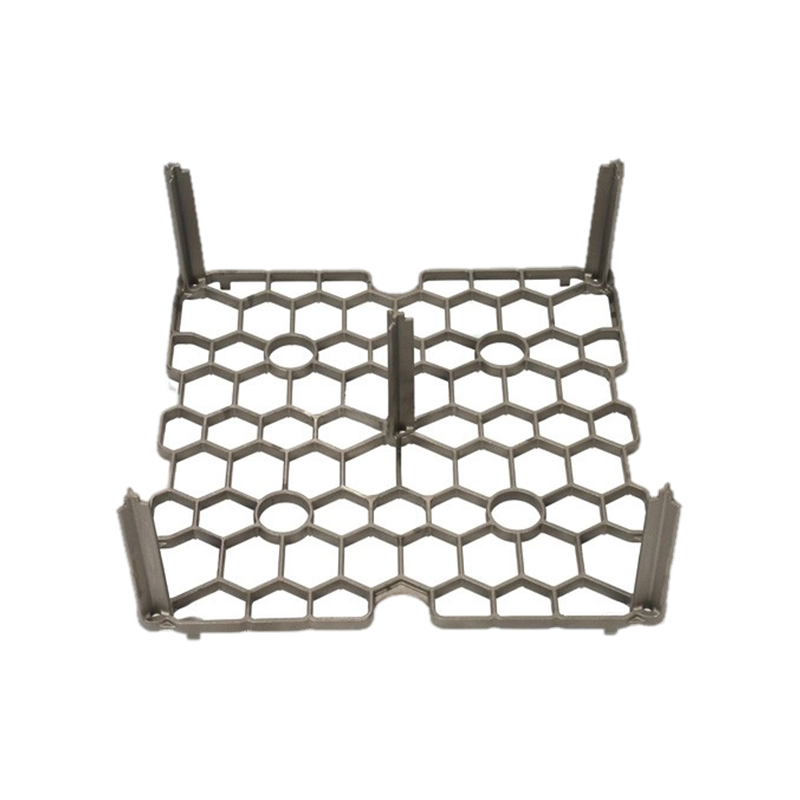
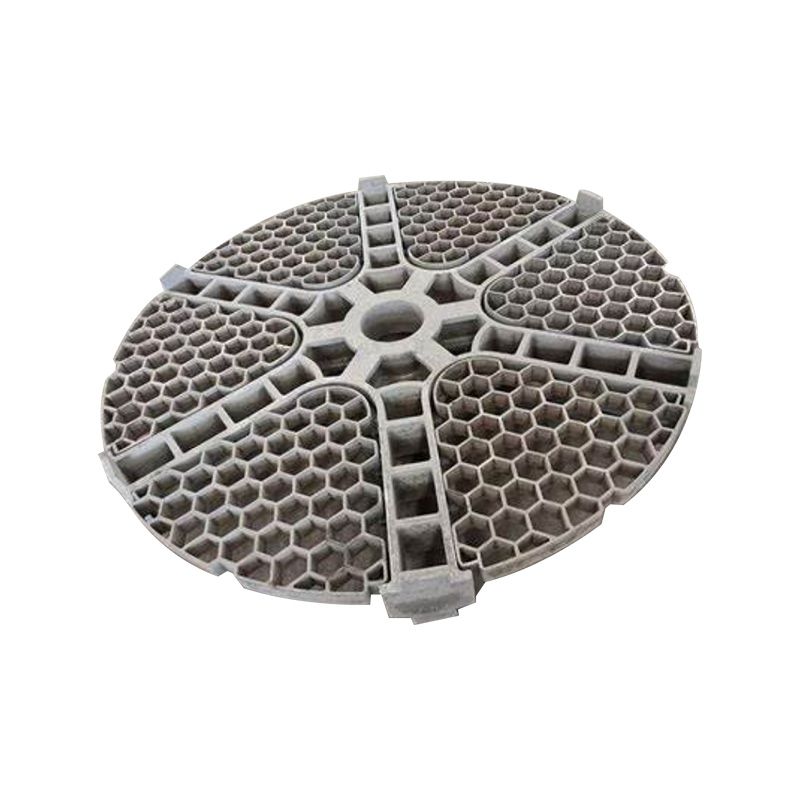
Heat treatment baskets — also called furnace baskets, wire mesh baskets, or thermal processing baskets — are industrial fixtures designed to hold, transport, and organize metal parts during high-temperature processes such as:
- Annealing – softening metals for improved ductility
- Hardening & Quenching – increasing surface hardness of steel components
- Tempering – reducing brittleness after hardening
- Sintering – bonding powder metals into solid structures
- Carburizing & Nitriding – surface enrichment treatments
- Stress Relieving – eliminating internal residual stresses
Manufactured from high-alloy steels (such as 314 stainless, Inconel, or Kanthal), these baskets withstand temperatures ranging from 300°C to over 1200°C. Their open mesh or perforated structure allows gases, quench media, and heat to circulate evenly around every part — a non-negotiable requirement for repeatable metallurgical outcomes.
Top Industries That Rely on Heat Treatment Baskets
1. Aerospace & Defense
The aerospace industry operates under some of the strictest metallurgical standards in the world. Heat treatment baskets used in this sector must meet AS9100 and NADCAP specifications, ensuring that turbine blades, landing gear components, fasteners, and structural airframe parts are thermally processed with zero part-to-part variation. Even microscopic deviations in hardness or microstructure can result in catastrophic failures at altitude.
Aerospace baskets are typically fabricated from Inconel 601 or 330 stainless steel to survive repeated thermal cycling without warping or oxidation contamination that could transfer to critical parts.
2. Automotive Manufacturing
Automotive is the highest-volume user of heat treatment baskets globally. Gears, camshafts, crankshafts, bearing races, brake components, and transmission parts all require case hardening, induction hardening, or carburizing. The sheer production volumes — millions of parts annually per plant — demand baskets with exceptional fatigue resistance that can withstand thousands of furnace cycles.
The use of continuous furnace baskets and mesh belt trays in automotive lines allows seamless integration into automated conveyor-fed heat treatment systems, minimizing downtime and labor costs while maintaining IATF 16949 quality standards.
3. Medical Device & Implant Manufacturing
Medical-grade components — surgical instruments, orthopedic implants, dental tools, and needle blanks — demand absolute cleanliness and dimensional accuracy post-treatment. Heat treatment baskets in this industry are often electropolished or fabricated from 316L stainless steel to prevent any metallic contamination or particulate transfer onto implant-grade materials.
ISO 13485 compliance requires documented traceability for each thermal cycle. Baskets with embedded part identification systems or designated loading patterns facilitate this batch tracking.
4. Metalworking & Tool Manufacturing
Cutting tools, dies, punches, molds, and drill bits constitute the backbone of metalworking output. These tools undergo rigorous hardening and tempering cycles before use, and the performance of heat treatment baskets directly influences tool life and cutting geometry accuracy. Inconsistent heat distribution caused by poor basket design leads to soft spots, warpage, or premature edge failure.
5. Electronics & Semiconductor Manufacturing
In electronics manufacturing, sintering and diffusion bonding processes for connectors, lead frames, and ceramic substrates require precisely controlled thermal environments. Heat treatment baskets here are often made from molybdenum or high-purity alumina to avoid trace metal contamination that could compromise semiconductor performance. Clean-room compatible baskets with electrostatic discharge (ESD) safe properties are increasingly specified.
6. Oil, Gas & Energy
Valves, pipeline fittings, drill bit inserts, and downhole tool components used in oil and gas extraction face extreme operational pressures and corrosive environments. The stress-relieving and precipitation hardening of these components requires heavy-duty heat treatment baskets capable of supporting large, dense loads without deflection at temperatures exceeding 900°C. The energy sector also includes nuclear component manufacturing, where material traceability is legally mandated.
7. Firearms & Defense Hardware
Barrel blanks, receivers, bolts, and trigger assemblies in firearms manufacturing are routinely case-hardened or stress-relieved. Heat treatment baskets designed for this niche must accommodate irregular geometries and ensure no surface-to-surface contact that could cause soft spots or case depth variation — both safety-critical defects.
8. Powder Metallurgy & Additive Manufacturing
As metal 3D printing (AM) and powder metallurgy grow, sintering heat treatment baskets have become essential. Green parts are extremely fragile and must be supported uniformly during debinding and sintering cycles. Purpose-designed setter plates and sintering trays — a specialized category of heat treatment baskets — prevent sagging and maintain dimensional tolerances as the part densifies.
Industry Comparison: Heat Treatment Basket Requirements
Different industries impose unique demands on basket design, material selection, and certification requirements. The table below provides a structured comparison:
| Industry | Primary Processes | Typical Basket Material | Max Temp (°C) | Key QC Standard | Volume |
| Aerospace | Solution treat, age, anneal | Inconel 601, 330 SS | 1200 | NADCAP, AS9100 | Low–Medium |
| Automotive | Carburize, harden, temper | 314 SS, cast alloy | 1050 | IATF 16949 | Very High |
| Medical | Anneal, stress relieve | 316L SS (electropolished) | 900 | ISO 13485 | Low–Medium |
| Metalworking | Harden, temper, nitride | Heat-resistant alloy steel | 1100 | ISO 9001 | High |
| Electronics | Sinter, diffusion bond | Molybdenum, alumina | 1400 | IPC, JEDEC | Medium |
| Oil & Gas | Stress relieve, age harden | Cast heat-resistant alloy | 1050 | API, ASME | Medium |
| Additive Mfg. | Sinter, debound | Ceramic setter plates | 1300 | ASTM, ISO/ASTM | Growing |
Common Materials Used in Heat Treatment Baskets
Selecting the right basket material is as important as basket geometry. The wrong alloy will oxidize, creep, or contaminate your parts within a few thermal cycles.
Stainless Steel Alloys
- 310 Stainless Steel – Up to 1100°C; good oxidation resistance; cost-effective for medium-duty applications
- 314 Stainless Steel – Silicon-enhanced for better carburizing resistance; preferred in automotive furnaces
- 330 Stainless Steel – Superior creep resistance; excellent for repeated thermal cycling
- 316L Stainless Steel – Low carbon, electropolishable; ideal for medical and food-grade applications
Nickel & Specialty Alloys
- Inconel 601 – Outstanding oxidation resistance up to 1230°C; aerospace standard
- Incoloy 800H – Excellent high-temperature strength; used in petrochemical and heat treatment applications
- Kanthal (FeCrAl alloys) – Ultra-high temperature up to 1400°C; lightweight; used in resistance heating elements and baskets
Refractory & Ceramic Materials
- Molybdenum – Used in vacuum sintering furnaces for electronics; high purity, no contamination
- Alumina (Al₂O₃) – Ceramic setter plates for powder metallurgy and ceramic sintering
- Silicon Carbide (SiC) – Extreme temperature endurance; semiconductor and advanced ceramics processing
| Material | Max Temp (°C) | Oxidation Resistance | Cost Level | Best For |
| 310 SS | 1100 | Good | Low–Medium | General metalworking |
| 330 SS | 1150 | Very Good | Medium | Automotive, cycling loads |
| Inconel 601 | 1230 | Excellent | High | Aerospace, extreme temps |
| Molybdenum | 1600 (vacuum) | N/A (vacuum only) | Very High | Electronics, semiconductors |
| Alumina Ceramic | 1700 | Excellent | Medium | Powder metallurgy, AM |
How Heat Treatment Baskets Directly Impact Quality Control
1. Ensuring Uniform Heat Distribution
The open mesh structure of quality heat treatment baskets ensures that hot gases or radiant heat reach every surface of every part simultaneously. Dense solid-floor trays create thermal shadows — zones where heat transfer is delayed — resulting in inconsistent hardness gradients. ASTM AMS 2750 (Pyrometry) compliance depends substantially on basket design allowing proper thermocouple placement and airflow modeling.
2. Preventing Cross-Contamination
When processing different alloy families in the same furnace, dedicated heat treatment baskets assigned to specific alloy types prevent cross-contamination. For example, running stainless steel parts in a basket previously used for carbon steel will cause carbon pickup on the stainless surface — a defect that renders aerospace parts non-conforming.
3. Dimensional Stability During Processing
Slender components (shafts, needle blanks, long punches) are prone to gravity-induced sag at temperature. Custom-designed heat treatment baskets with integrated support rails or dividers maintain part orientation, preventing distortion that would otherwise require costly straightening or result in scrap.
4. Traceability & Batch Control
In regulated industries, each basket load must be traceable to a specific thermal cycle record. Heat treatment baskets with laser-etched or cast serial numbers enable furnace operators to link every part to its exact time-temperature history — essential for meeting AS9100, IATF 16949, and ISO 13485 audit requirements.
5. Load Capacity & Furnace Efficiency
Correctly designed heat treatment baskets maximize furnace load density without compromising airflow. Oversized baskets that crowd parts together reduce throughput quality; undersized baskets waste furnace capacity. Finite element analysis (FEA) is increasingly used to optimize basket geometry for maximum load/quality balance.
Frequently Asked Questions About Heat Treatment Baskets
Conclusion
Heat treatment baskets are far more than passive containers — they are precision quality control instruments that directly influence metallurgical outcomes, regulatory compliance, and production economics across a wide range of industries.
From the uncompromising tolerances of aerospace turbine components to the high-volume demands of automotive gear manufacturing, from the contamination-zero requirements of medical implant processing to the emerging needs of additive manufacturing sintering, every industry that thermally processes metal parts depends on the right heat treatment basket to deliver consistent, repeatable, and traceable results.
Investing in correctly specified, high-quality heat treatment baskets — matched to your alloy system, temperature range, atmosphere chemistry, and load requirements — is one of the most cost-effective quality control decisions any thermal processing operation can make. The alternative — inadequate baskets, inconsistent heat distribution, contamination events, and part distortion — costs far more in scrap, rework, customer returns, and audit failures.