Shunda Road, Lincheng Town Science and Technology Industrial Park, Xinghua City, Jiangsu Province
 English
 русский
 Español
 عربى
عربى
Quick Answer: A heat treatment basket is a high-temperature-resistant metal fixture used to hold, support, and transport workpieces through industrial furnaces during thermal processing operations such as annealing, hardening, tempering, carburizing, and nitriding. It ensures uniform heat distribution, protects parts from direct contact with furnace elements, and enables efficient batch processing.
Content
- 1 Understanding the Heat Treatment Basket: Definition and Purpose
- 2 How Does a Heat Treatment Basket Work in Industrial Furnaces?
- 3 Materials Used in Heat Treatment Baskets
- 4 Types of Heat Treatment Baskets
- 5 Comparison: Wire Mesh vs. Perforated Sheet Heat Treatment Baskets
- 6 Key Factors to Consider When Selecting a Heat Treatment Basket
- 7 Industrial Applications of Heat Treatment Baskets
- 8 Maintenance, Inspection, and Service Life of Heat Treatment Baskets
- 9 Custom Heat Treatment Basket Design and Engineering
- 10 Frequently Asked Questions About Heat Treatment Baskets
- 11 Conclusion
Understanding the Heat Treatment Basket: Definition and Purpose
In modern industrial manufacturing, heat treatment baskets are indispensable fixtures within thermal processing systems. They are purpose-engineered containers or trays—most commonly fabricated from heat-resistant alloy steel or stainless steel wire mesh—designed to hold components securely while they undergo temperature-driven metallurgical transformation inside furnaces, retorts, or salt baths.
The fundamental purpose of a heat treatment basket is threefold:
- Part containment: Keeps multiple workpieces organized and prevents them from shifting, colliding, or becoming distorted during rapid heating and quenching cycles.
- Uniform heat exposure: Open mesh or perforated designs allow hot gases, controlled atmospheres, and radiant heat to reach all surfaces of the contained parts equally.
- Safe handling and transfer: Provides a stable, graspable unit that can be moved by cranes, conveyor systems, or robotic arms between furnace zones, quench tanks, and wash stations.
Without reliable heat treatment baskets, batch thermal processing would be impractical, unsafe, and economically inefficient at industrial scale.
How Does a Heat Treatment Basket Work in Industrial Furnaces?
The working principle of a heat treatment basket is closely tied to the thermal cycle it must endure and support. Here is a step-by-step overview of the operational process:
Step 1 – Loading the Basket
Operators or automated loading systems place workpieces—such as gears, fasteners, springs, castings, or stampings—into the heat treatment basket. Parts are arranged to avoid nesting tightly, which would block atmosphere circulation. Proper loading is critical: overcrowding leads to inconsistent hardness and case depth across the batch.
Step 2 – Furnace Entry and Heating
The loaded basket enters the furnace chamber—typically a continuous belt furnace, pusher furnace, roller hearth furnace, or batch box furnace. Temperatures commonly range from 150°C for low-temperature tempering up to 1,200°C or beyond for high-alloy steel hardening. The basket material must withstand these extremes without warping, oxidizing severely, or transferring contaminants to the workpieces.
In atmosphere furnaces (endothermic gas, nitrogen-methanol, or ammonia environments), the mesh or perforated structure of the heat treatment basket allows the protective or reactive gas to flow freely around every part, enabling processes like carburizing and nitriding to proceed uniformly.
Step 3 – Soaking (Hold at Temperature)
Once the target temperature is reached, the parts and basket are held (soaked) for a specified time to allow complete thermal penetration. The basket's open geometry ensures that even dense parts at the center of the load reach the correct temperature, ensuring metallurgical consistency throughout the batch.
Step 4 – Quenching or Controlled Cooling
After soaking, the basket—still containing the hot parts—is transferred into a quench medium (oil, water, polymer solution, or gas quench). The basket must maintain structural integrity under the sudden thermal shock of quenching, which can involve temperature drops of several hundred degrees within seconds. Robust construction prevents the basket from deforming and trapping parts.
Step 5 – Post-Treatment Handling
After quenching, the basket carries the parts through washing, tempering, or inspection stations. Its standardized dimensions ensure compatibility with conveyor systems, robots, and storage racks across the entire production line.
Materials Used in Heat Treatment Baskets
Material selection is the single most important engineering decision when specifying a heat treatment basket. The material must balance oxidation resistance, creep resistance, thermal fatigue life, and cost.
| Material | Max Service Temp | Key Advantage | Typical Application |
| 304 / 316 Stainless Steel | 700–800 °C | Low cost, widely available | Tempering, washing, low-temp annealing |
| 310 Stainless Steel | 1,000 °C | High chromium for oxidation resistance | Hardening, carburizing |
| Alloy 330 (RA330) | 1,100 °C | Excellent carburization resistance | Atmosphere furnaces, nitriding |
| Inconel 601 / 625 | 1,150–1,200 °C | Superior creep and oxidation resistance | High-alloy steel hardening, sintering |
| Retort / Cast Heat-Resistant Alloy | 1,200+ °C | Maximum load-bearing at extreme temp | Vacuum furnaces, ceramic sintering |
Types of Heat Treatment Baskets
There is no one-size-fits-all solution. Manufacturers produce several distinct configurations of heat treatment baskets to match different furnace types, part geometries, and process requirements.
1. Wire Mesh Baskets
The most common type for small-to-medium parts. Woven or welded wire mesh provides maximum open area (often 60–80%), ensuring excellent atmosphere penetration and rapid heat transfer. Ideal for carburizing, nitriding, and quench hardening of fasteners, springs, and small precision components.
2. Perforated Sheet Baskets
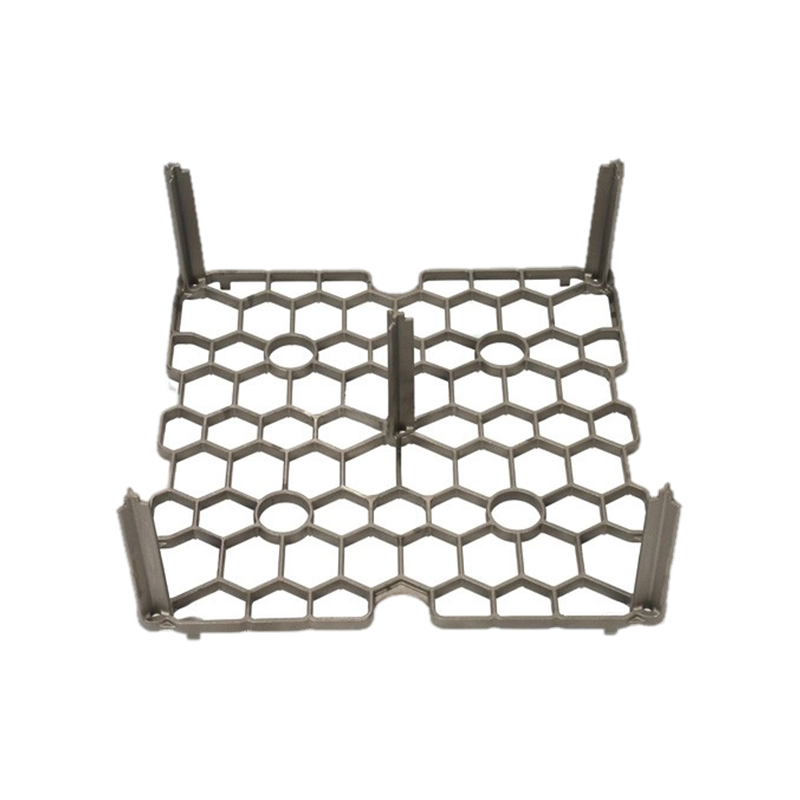
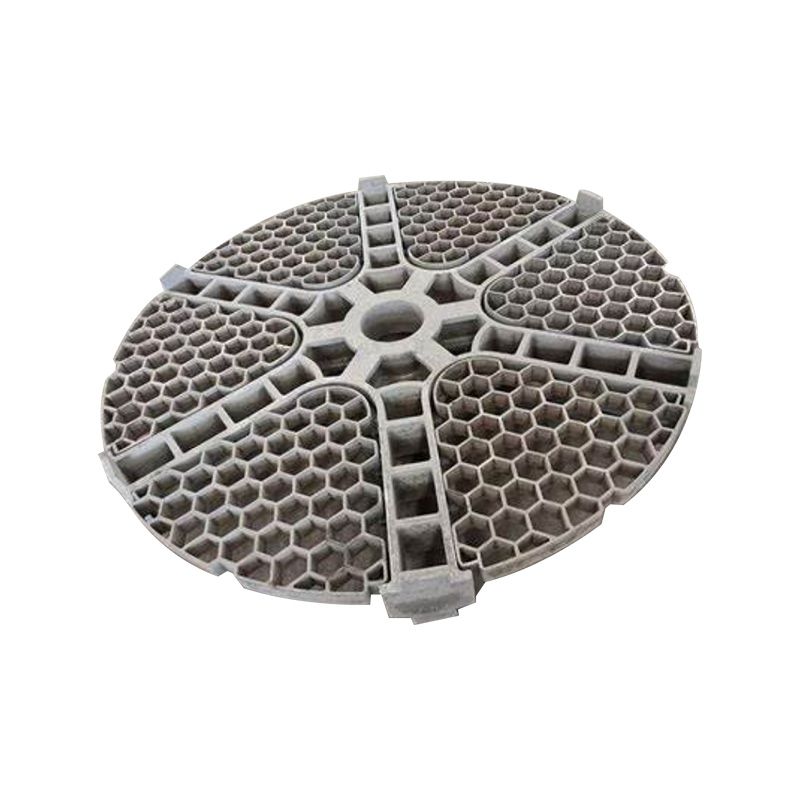
Made from punched or laser-cut heat-resistant sheet, these offer a more solid base structure suitable for heavier or irregularly shaped parts that could fall through wire mesh. The perforation pattern (circular, slotted, or hexagonal) is engineered to balance structural rigidity with gas flow.
3. Fabricated Bar / Rod Baskets
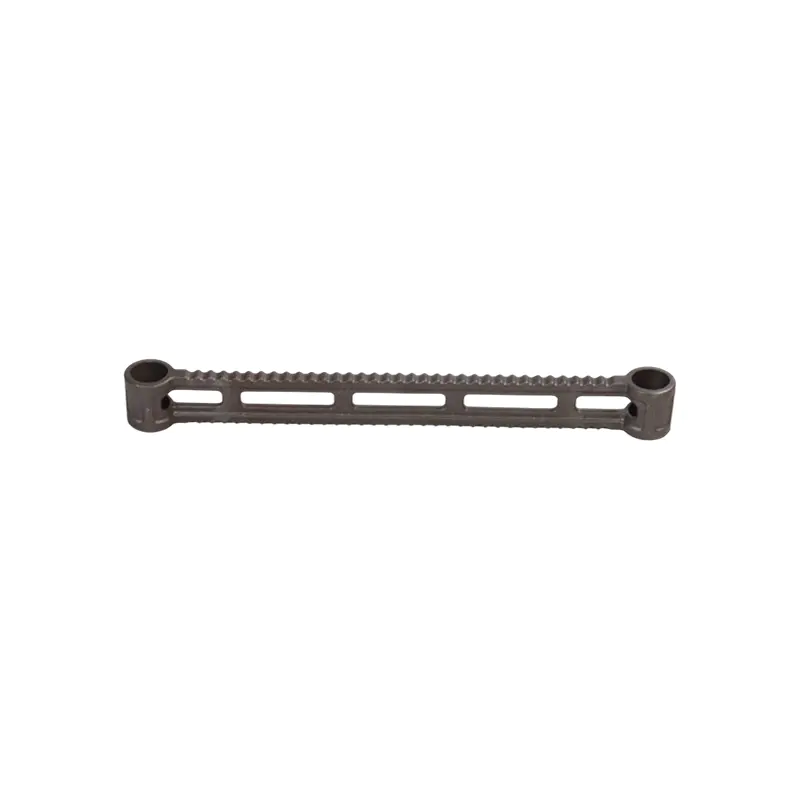
Heavy-duty bar or rod construction is chosen for large castings, gear blanks, or forgings that would crush mesh structures under their own weight. The open bar frame still allows adequate heat circulation while supporting loads that may exceed several hundred kilograms.
4. Stackable Tray Baskets
Designed with interlocking features that allow multiple trays to be stacked within a single furnace load, maximizing throughput per cycle. Common in continuous belt and pusher furnaces processing small mass-produced parts.
5. Custom-Engineered Fixtures
For aerospace, medical device, and precision tooling applications, heat treatment baskets are custom designed using CAD/FEA analysis to hold components in a specific orientation, prevent distortion during quenching, and meet exacting dimensional tolerances.
Comparison: Wire Mesh vs. Perforated Sheet Heat Treatment Baskets
| Feature | Wire Mesh Basket | Perforated Sheet Basket |
| Open Area % | 60–80% | 30–50% |
| Structural Strength | Moderate | High |
| Heat Transfer Rate | Excellent | Good |
| Part Size Suitability | Small to medium | Medium to large |
| Weight | Lighter | Heavier |
| Atmosphere Process Suitability | Excellent | Good |
Key Factors to Consider When Selecting a Heat Treatment Basket
Choosing the right heat treatment basket requires a systematic evaluation of several interdependent factors:
- Operating Temperature Range: The basket alloy must be rated above the maximum furnace temperature with a safety margin. Selecting an under-specified alloy leads to premature creep, sagging, and basket failure.
- Furnace Atmosphere: Carburizing atmospheres aggressively attack certain stainless grades. Nitriding environments require alloys with high chromium or aluminum content. Vacuum furnaces prohibit materials that outgas significantly.
- Load Weight and Distribution: Calculate the total batch weight and ensure the basket's structural frame can carry it without deflection across its full operating temperature range.
- Thermal Cycling Frequency: High-frequency cycling (multiple loads per shift) creates fatigue stress at welds and joints. Baskets intended for continuous furnaces need superior weld quality and joint design.
- Part Geometry and Fall-Through Risk: Mesh aperture size must be smaller than the smallest dimension of the workpiece to prevent parts from falling through during quenching agitation.
- Quench Compatibility: Oil quench baskets must not react with quench oil at elevated temperatures, and polymer quench or salt bath processes may require specific alloy compositions.
- Handling System Compatibility: Basket outer dimensions must match furnace conveyor pitch, robotic gripper spans, and storage rack standardization within the plant.
Industrial Applications of Heat Treatment Baskets
Heat treatment baskets serve virtually every industry that performs thermal processing of metal components:
| Industry | Parts Processed | Common Process |
| Automotive | Gears, shafts, fasteners, bearings | Case hardening, carburizing, tempering |
| Aerospace | Turbine blades, structural brackets | Annealing, precipitation hardening |
| Tooling & Die | Punches, dies, molds, drills | Hardening, cryogenic treatment, tempering |
| Medical Devices | Surgical instruments, implants | Vacuum annealing, passivation |
| Springs & Fasteners | Bolts, nuts, coil springs | Stress relieving, hardening, nitriding |
| Powder Metallurgy | Sintered components, PM parts | High-temperature sintering |
Maintenance, Inspection, and Service Life of Heat Treatment Baskets
Even the highest-quality heat treatment basket degrades over time due to thermal fatigue, oxidation, and mechanical stress. Proactive maintenance significantly extends service life and prevents costly furnace downtime.
- Visual Inspection After Every Use: Check for wire breakages, mesh tearing, cracked welds, or visible distortion. Any basket showing structural compromise should be taken out of service immediately.
- Dimensional Verification: Measure basket outer dimensions periodically to ensure they still meet conveyor and rack tolerances. Warping of even 3–5 mm can jam automated handling systems.
- Scale and Carbon Deposit Removal: Accumulated oxide scale and carbon deposits reduce thermal efficiency and can contaminate parts. Periodic cleaning by shot blasting or controlled burnout cycles restores performance.
- Weld Repair: Cracked welds can be repaired with matching filler alloy, but baskets with widespread weld failures should be retired. Repaired welds in high-temperature zones may have reduced fatigue life.
- Load History Tracking: Implement a log of cycles per basket to predict end-of-life before failure occurs rather than after a catastrophic event.
Typical service life ranges from 200 to 2,000+ thermal cycles depending on basket material, operating temperature, quench severity, and maintenance quality.
Custom Heat Treatment Basket Design and Engineering
Standard off-the-shelf baskets cover the majority of industrial needs, but there is a strong and growing demand for custom-engineered heat treatment baskets. Custom solutions are justified when:
- Standard basket dimensions do not fit the furnace chamber or conveyor system.
- Parts have complex geometries requiring dedicated supports or partitions to prevent contact marks or distortion.
- Process specifications require tighter control of part orientation (e.g., vertical vs. horizontal) to achieve consistent hardness profiles.
- Multi-zone or hybrid material construction is needed to optimize both high-temperature performance and quench shock resistance in different basket sections.
Custom design typically involves FEA (Finite Element Analysis) modeling to simulate thermal stress distribution, load-bearing performance, and creep behavior across the expected service temperature range. Prototypes are often produced and tested in-plant before full production orders are placed.
Frequently Asked Questions About Heat Treatment Baskets
Q: What is the difference between a heat treatment basket and a furnace tray?
A: A heat treatment basket is typically an open-sided, three-dimensional container with mesh or perforated walls designed to allow maximum gas and heat circulation. A furnace tray is a flat or shallow platform used more for supporting large flat or heavy parts. Baskets are preferred when atmosphere penetration is critical; trays are used when part stability and support are the primary concern.
Q: How do I know when a heat treatment basket needs to be replaced?
A basket should be replaced when it shows visible structural cracks, significant weld failures, warping that exceeds dimensional tolerances, or mesh damage that would allow parts to escape during quenching. Establishing a maximum cycle count limit based on the alloy and process is also recommended as a proactive measure.
Q: Can the same heat treatment basket be used for carburizing and nitriding?
Not ideally. Carburizing exposes the basket to carbon-rich atmospheres that can cause internal carburization of the alloy over time, altering its mechanical properties. Nitriding uses ammonia atmospheres that can affect different alloy grades differently. It is best practice to dedicate specific heat treatment baskets to specific processes to prevent cross-contamination of the furnace atmosphere and to optimize basket service life for each thermal cycle type.
Q: What mesh wire diameter is typical for heat treatment baskets?
Wire diameters typically range from 1.0 mm to 5.0 mm depending on load requirements. Fine-pitch mesh (1.0–2.0 mm wire) is used for small precision parts such as fasteners, pins, and needles. Heavier mesh (3.0–5.0 mm wire) is used for medium components like gears and sprockets. The aperture opening is always chosen to be smaller than the smallest cross-section of the parts being processed.
Q: Are heat treatment baskets recyclable at end of life?
Yes. Because heat treatment baskets are fabricated from high-value nickel-chromium alloys (such as 310SS, Alloy 330, or Inconel), they have significant scrap metal value. Retired baskets are typically sold to specialist metal recyclers who recover the alloy content, providing a partial offset against replacement costs.
Q: How does basket design affect carbon potential in atmosphere furnaces?
The open area percentage of the basket directly influences atmosphere uniformity. A basket with low open area creates localized zones with depleted carbon potential, leading to inconsistent case depth across the batch. High open-area mesh designs (60%+) maintain consistent carbon potential throughout the load, ensuring uniform metallurgical results across every part in the basket.
Conclusion
The heat treatment basket is far more than a simple metal container—it is a precision thermal process component that directly influences the quality, consistency, and economics of every batch that passes through an industrial furnace. From material selection and structural design to maintenance protocols and end-of-life recycling, every aspect of heat treatment basket management contributes to the overall performance of a heat treatment operation.
Whether you are processing millions of automotive fasteners per month or manufacturing small batches of aerospace-grade components, investing in the right heat treatment basket—properly specified, rigorously maintained, and methodically replaced—is one of the most cost-effective improvements available to any heat treatment facility.
Summary: A heat treatment basket holds and transports metal parts through industrial furnaces, enabling uniform heating, controlled atmosphere exposure, and efficient quenching. Selecting the correct material, construction type, and maintenance schedule ensures maximum throughput, metallurgical quality, and service life for your thermal processing operation.