Shunda Road, Lincheng Town Science and Technology Industrial Park, Xinghua City, Jiangsu Province
 English
 русский
 Español
 عربى
عربى
253 MA stainless steel is an austenitic heat-resistant grade that keeps its strength and oxidation resistance at temperatures up to about 1150°C. In practical terms, this means furnace rollers, radiant tubes, kiln seals, and heat-treatment fixtures last longer before showing scale, sag, or fatigue cracks. If your equipment runs continuously above 900°C or cycles between room temperature and process temperature, the choice of alloy is a total-cost-of-ownership decision, not just a line-item cost. For procurement teams, the key is to know what the material actually delivers, what it does not, and how to make sure the delivered component matches the intended alloy spec.
Content
What Is 253 MA Stainless Steel?
253 MA is the trade name for an austenitic chromium-nickel stainless steel registered as UNS S30815 and EN 1.4835 (X9CrNiSiNCe21-11-2). The composition is deliberately balanced with nitrogen and rare-earth elements, especially cerium, to improve high-temperature creep strength and the stability of the protective oxide layer under thermal cycling.
Nitrogen provides solid-solution strengthening and raises the yield strength of the austenitic matrix, which is why 253 MA carries load better than standard 310S at elevated temperature. Cerium, added in a very small range (0.03–0.08%), improves the adherence of the chromium oxide scale. This matters in cycling service, because scaling is the main failure mode of heat-resistant steel when the furnace is repeatedly shut down and started.
| Element | Composition (%) |
|---|---|
| Cr | 20.0–22.0 |
| Ni | 10.0–12.0 |
| Si | 1.4–2.0 |
| Mn | 0.80 max |
| C | 0.050–0.100 |
| N | 0.140–0.200 |
| Ce | 0.030–0.080 |
| P | 0.040 max |
| S | 0.030 max |
| Fe | Balance |
The nickel content is kept in the 10–12% range, which is lower than nickel-based superalloys, while silicon (1.4–2.0%) and nitrogen (0.14–0.20%) contribute to oxidation resistance and strength. The result is a lean heat-resistant alloy that offers a longer service window than standard 304H or 321H, at a cost that sits well below nickel alloys.
Key Properties and Service Limits
The value of 253 MA comes from the combination of three properties: resistance to scaling, high creep strength, and tolerance of repeated thermal cycling.
At room temperature, the alloy has a tensile strength around 600 MPa and a 0.2% proof strength of about 300 MPa. More importantly, it retains useful strength in the 900–1000°C range, where standard austenitic grades soften significantly and undergo rapid deformation under load.
The practical service limit in dry air is about 1150°C for continuous exposure. In cyclic service, the limit is closer to 1050°C, because repeated expansion and contraction stress the oxide scale. Cerium promotes rapid scale re-healing, but engineers should still design for thermal fatigue.
Key characteristics in brief:
- Oxidation and scale resistance up to roughly 1150°C in dry air
- Excellent creep rupture properties in the 800–1000°C range
- Better cyclic oxidation resistance than 310S
- Good weldability with matching or nickel-based filler metals
- Not suitable for sulfur-rich or heavily reducing atmospheres above 1000°C
- Lower nickel content than Inconel-type alloys, keeping material cost moderate
253 MA vs. 310S and Other Heat-Resistant Grades
When you compare 253 MA with 310S, the practical conclusion is clear: 253 MA delivers superior creep strength and better cyclic oxidation resistance across the 800–1100°C range, with roughly the same chromium content.
| Property | 253 MA (S30815) | 310S (S31008) | 304H (S30409) |
|---|---|---|---|
| Max continuous service temp, °C | 1150 | 1050–1100 | 850 |
| Typical tensile strength, MPa | 600 | 515–550 | 515 |
| 0.2% proof strength, MPa | 300 | 205–230 | 205 |
| Creep strength at 900°C | Excellent | Good | Limited |
| Cyclic oxidation resistance | Excellent | Fair | Poor |
| Relative cost | Moderate | Low | Low |
The table above shows typical room-temperature values, but the decisive difference is at high temperature. At 900°C, 310S can lose more than half of its short-time yield strength, while 253 MA retains considerably more. For applications with cyclic heating, 310S oxide scale tends to crack and spall on each thermal cycle, exposing fresh metal to oxidation. 253 MA, with cerium in the matrix, re-forms the scale faster, reducing net metal loss over a campaign.
This comparison matters because selecting a grade on price alone usually ends in premature failure. If a component carries load at 950°C and experiences regular thermal cycling, a grade like 304H will not last, and the cost of replacement and production downtime will exceed the material savings.
Typical Applications in High-Temperature Industries
253 MA is used in components that face both oxidation and mechanical stress, mainly in metallurgy, cement production, waste incineration, chemical processing, and heat treatment.
In metallurgical roller hearth furnaces, the furnace roller must carry continuous mechanical load at 900–1000°C while resisting scale. A heat-resistant centrifugal casting furnace roller produced from the 253 MA family is engineered for exactly this duty.
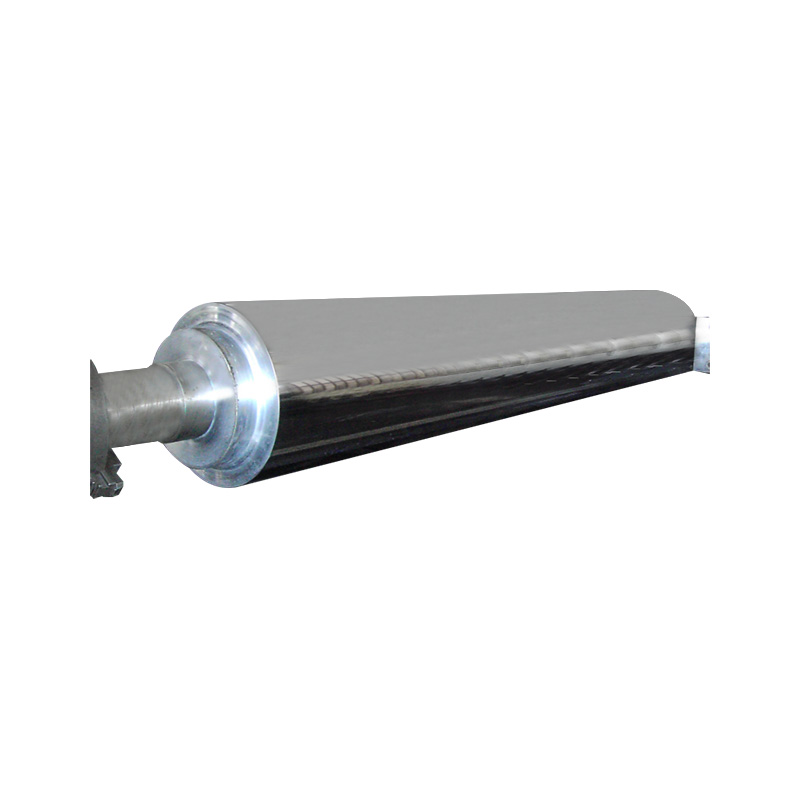 Centrifugal Casting Furnace Roller Made of Heat-Resistant AlloyThis roller supports continuous mechanical load at 900–1000°C in roller hearth furnaces while resisting scale, engineered from advanced heat-resistant alloys for high thermal loads and wear resistance.View Product →
In cement kilns, waste incineration lines, and chemical plants, process piping and radiant tubes transport hot gases at high temperature. Heat-resistant stainless steel pipe made from this type of alloy keeps wall strength against oxidation and occasional thermal shocks.
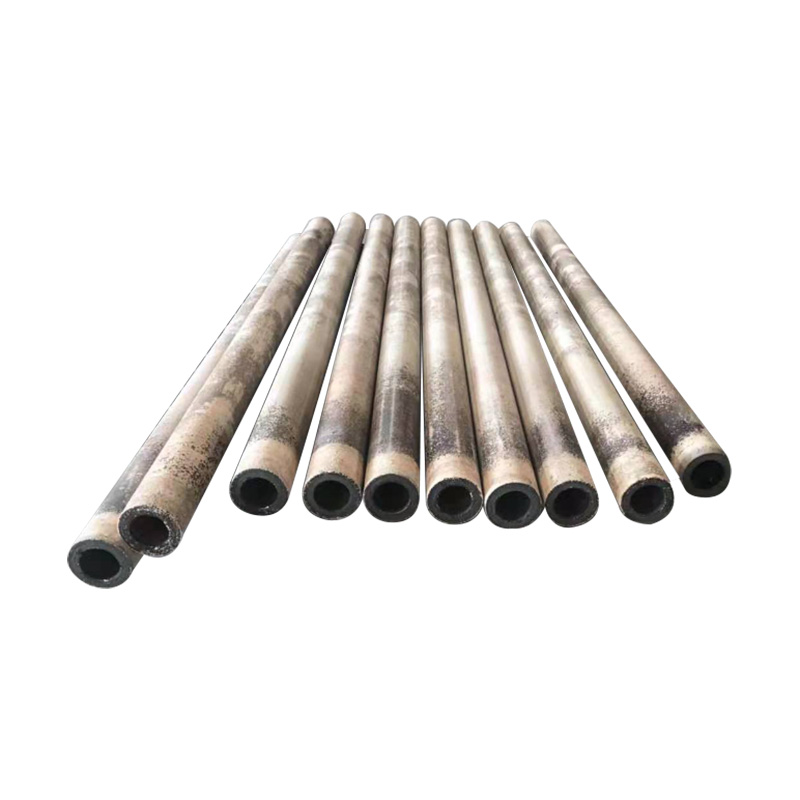 Heat-Resistant Stainless Steel Pipe for High-Temperature Gas TransportThis pipe uses centrifugal casting for uniform density and strength, maintaining wall integrity against oxidation and thermal shocks in cement kilns, waste incineration lines, and chemical plants.View Product →
In waste-to-energy furnaces, the combination of corrosive flue gas and high temperature makes material selection harder than simple oxidation tests suggest. Components in the upper furnace zone typically run at 850–1000°C and face both oxidizing and chemically reducing conditions. For these zones, 253 MA is a common material for grate bars, overfire air nozzles, and support beams.
Other common uses include heat-treatment fixtures, kiln seals, burner parts, and support components in waste-to-energy plants. The common theme is that the component must retain geometry and structural integrity while exposed to oxidizing gas and cyclic heat.
How to Source 253 MA Cast Components
Sourcing reliable 253 MA cast components depends more on the foundry's process control than on the material grade alone. A supplier that casts heat-resistant austenitic alloys is responsible for keeping chemistry within spec, controlling solidification, and delivering a part that performs in service.
Ask for a heat analysis or mill certificate confirming UNS S30815 / EN 1.4835.
Choose precision lost-wax casting for complex thin walls, lost-foam casting for large multi-cavity parts, or centrifugal casting for cylindrical components.
Agree on machining allowance, casting distortion, and final tolerances before production.
Require surface or volumetric inspection for load-bearing parts.
Disclose hydrogen, sulfur, or reducing conditions that affect alloy life.
A typical pitfall in procurement is assuming that because the material grade is correct, the component will behave as expected. Insufficient casting design, wrong gating, or improper heat treatment can undermine an otherwise correct alloy. For example, a large cast pipe with thick walls may develop centerline shrinkage if the foundry does not feed the casting correctly. Shrinkage cavities act as stress concentrators and become initiation points for thermal fatigue cracks after only a few weeks of service.
When you request a quote, give the supplier the full operating context: the maximum temperature, the furnace atmosphere, the mechanical load, the dimensional requirements, and the current failure mode you are trying to solve. A supplier that only asks for the alloy name and quantity is unlikely to deliver a component that lasts.
For load-bearing and rotating assemblies, the bearing cap inside a high-temperature fan or furnace carriage sees concentrated mechanical stress combined with heat. A heat-resistant stainless steel bearing cap cast by a qualified supplier maintains its load capacity over many thermal cycles instead of deforming after a few hundred hours.
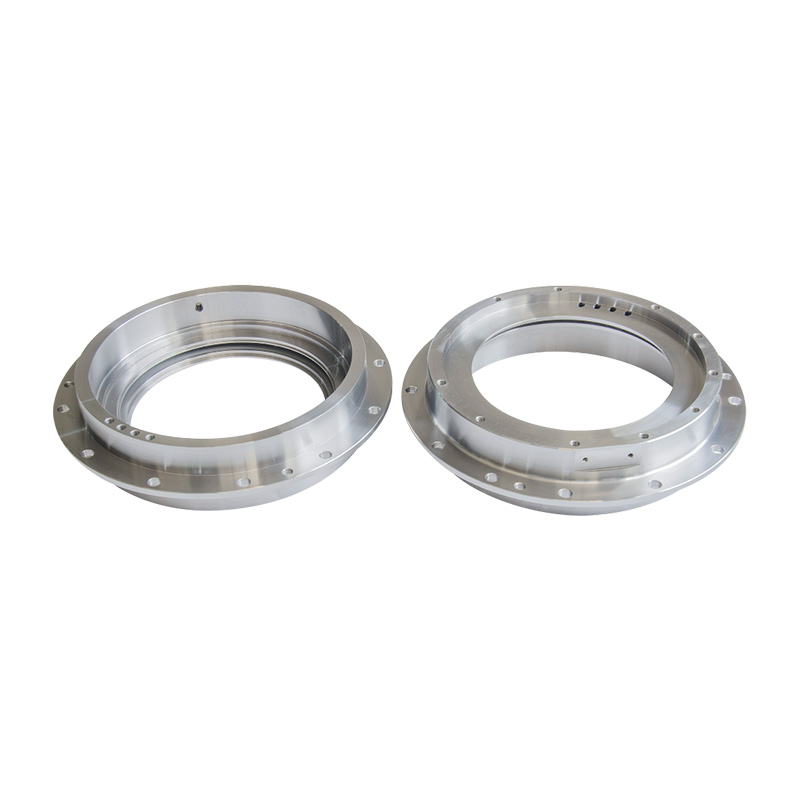 Heat-Resistant Stainless Steel Bearing Cap for High-Temperature LoadsThis bearing cap, cast by centrifugal casting, provides strength and wear resistance under concentrated mechanical stress and heat, ensuring load capacity over many thermal cycles in fans and furnace carriages.View Product →
FAQ
What is 253 MA stainless steel equivalent to?
253 MA is equivalent to UNS S30815 under the ASTM system and EN 1.4835 / X9CrNiSiNCe21-11-2 in the European system. These designations all refer to the same austenitic heat-resistant steel.
What is the maximum temperature for 253 MA?
In dry air, 253 MA can operate continuously up to about 1150°C. In cyclic service, the practical limit is around 1050°C because thermal expansion and contraction repeatedly strain the protective oxide layer.
Can 253 MA be welded?
Yes. 253 MA can be welded with matching or nickel-based filler metals. Preheating is generally not required, but heavy sections may need controlled interpass temperatures to avoid hot cracking.
Is 253 MA better than 310S?
For strength and cyclic oxidation resistance above 900°C, yes. 253 MA has higher creep strength and a higher practical temperature limit. 310S may still be chosen when field experience or availability is the deciding factor.
Is 253 MA available as castings?
253 MA is mainly supplied as wrought products such as pipe, sheet, plate, and bar. Foundries with experience in heat-resistant austenitic steels can also produce cast components from equivalent alloys, provided the casting process is controlled for segregation and shrinkage.
What are the main risks when buying 253 MA components?
The most common risks are off-spec chemistry, poor casting solidification, and insufficient post-casting inspection. Buyers should ask for heat analysis certificates and non-destructive test reports before accepting a batch.