Shunda Road, Lincheng Town Science and Technology Industrial Park, Xinghua City, Jiangsu Province

 English
 русский
 Español
 عربى

Your impact crusher suddenly produces coarser output, draws more power, or drops throughput. The first place to check is the blow bars. These rotating hammers take the direct hit from every rock, so their wear state controls product size, energy use, and downtime. Choosing the right blow bar material and maintaining it properly is the fastest way to protect your crushing budget.
Content
What Is a Blow Bar in an Impact Crusher?
A blow bar is a heavy, wear-resistant rectangular bar mounted on the rotor of an impact crusher. When the rotor spins at high speed, the blow bars strike incoming feed material and throw it against breaker plates. This impact action breaks rock along natural cracks and produces a cubical product. Because the blow bars are the first point of contact, they absorb most of the abrasive and impact forces.
An impact crusher may use two, four, or more blow bars per rotor. The number, weight, and metallurgy of the bars influence rotor inertia, crushing ratio, and wear pattern. If a bar wears unevenly or breaks, the rotor becomes unbalanced, causing vibration and bearing damage. That is why blow bar selection is not a commodity purchase; it is a performance decision.
Blow Bar Materials: Which One Fits Your Application?
The best blow bar material depends on feed hardness, abrasiveness, feed size, and the required product shape. No single alloy wins everywhere. High manganese steel tolerates large feed and tramp iron, while high chrome cast iron resists abrasive wear but can crack under impact. Martensitic alloy steel offers a balance, and ceramic composites push wear life further in fine crushing.
| Material | Typical Hardness | Wear Resistance | Impact Toughness | Best For |
|---|---|---|---|---|
| High manganese steel (Mn13, Mn18) | 200-250 HB (work-hardened to 500 HB) | Moderate | Excellent | Primary crushing, large feed, tramp iron risk |
| High chrome cast iron (Cr20, Cr26) | 58-65 HRC | Excellent | Low to moderate | Secondary crushing, abrasive rock, fine product |
| Martensitic alloy steel | 45-52 HRC | Good | Good | Mixed feed, recycling, general quarrying |
| Ceramic composite (chrome + ceramic) | 60-65 HRC | Very high | Moderate | High-volume abrasive feed, long campaigns |
Use the table as a starting point, not a rule. A quarry crushing granite with a top size of 500 mm will destroy a high chrome bar in days if the feed contains uncrushable metal. Conversely, a recycling operation processing asphalt may find that a manganese bar wears too quickly because the material is not hard enough to work-harden the surface. In that case, a martensitic or ceramic composite bar reduces cost per ton.
Factors That Affect Blow Bar Wear Life
Blow bar wear is not random. It follows the physics of impact, abrasion, and heat. The following factors usually explain why one set of bars lasts 200 hours and another lasts 800 hours in the same machine.
- Feed size: Larger lumps require more impact energy and can break bar edges. A controlled top size reduces shock loads.
- Material hardness and abrasiveness: Quartz and granite contain hard minerals that scratch and chip the bar surface. Limestone is far less aggressive.
- Moisture content: Wet, sticky feed can build up on the rotor and breaker plates, causing uneven wear and reduced impact efficiency.
- Tramp iron and foreign objects: One excavator tooth or rebar piece can crack a high chrome bar instantly. Manganese steel deforms instead of cracking.
- Rotor speed and crusher settings: Higher speed increases reduction ratio but also accelerates wear. Incorrect breaker plate gaps create recirculation and heat.
- Feed distribution: Feeding off-center wears one side of the rotor faster. A full, centered feed curtain extends bar life.
Track these factors with a simple log: feed type, tons processed, product size, and hours on the bars. After two or three replacement cycles, you will see which variable drives your wear cost. That data is more valuable than any generic recommendation.
Maintenance and Replacement: Extending Blow Bar Service Life
Good maintenance turns a wear part into a controlled consumable. The goal is to replace bars on a planned schedule, not after a breakdown.
When to Replace Blow Bars
Replace blow bars when the wear edge reaches the manufacturer's minimum thickness, when product gradation drifts outside specification, or when rotor vibration exceeds normal levels. A bar worn past its limit can break and damage the rotor, breaker plates, and housing. Inspect bars every 40 to 80 operating hours, depending on feed abrasiveness.
Rotation and Flipping Strategy
Many blow bars are symmetrical and can be rotated or flipped. Rotating bars from one rotor position to another equalizes wear and can add 20 to 40 percent more service life. However, always follow the manufacturer's rotation pattern. Installing a worn bar opposite a new bar creates imbalance and may void the rotor warranty.
Safety During Replacement
Lock out and tag out the crusher before any work. Wait for the rotor to stop completely and cool down. Use proper lifting equipment for heavy bars, and never pry a bar loose while standing under the rotor. Check the rotor and wedges for cracks, and torque all bolts to specification. After replacement, run the crusher empty for a few minutes to confirm balance and listen for unusual noise.
Choosing a Blow Bar Supplier: Quality and Casting Capability
The supplier behind the blow bar matters as much as the alloy grade. A reliable foundry controls melting, pouring temperature, heat treatment, and dimensional tolerance. Small variations in chromium content or cooling rate can shift hardness by several points and change wear life by weeks. Ask for material certificates, hardness test reports, and a clear description of the casting process.
Lost foam casting, for example, produces complex wear parts with accurate dimensions and smooth surfaces. That precision reduces machining and helps the bar fit the rotor tightly, which lowers vibration. The same casting discipline applies to other high-wear components in crushing and hot material handling, such as grate cooler plates, liners, and sealing strips.
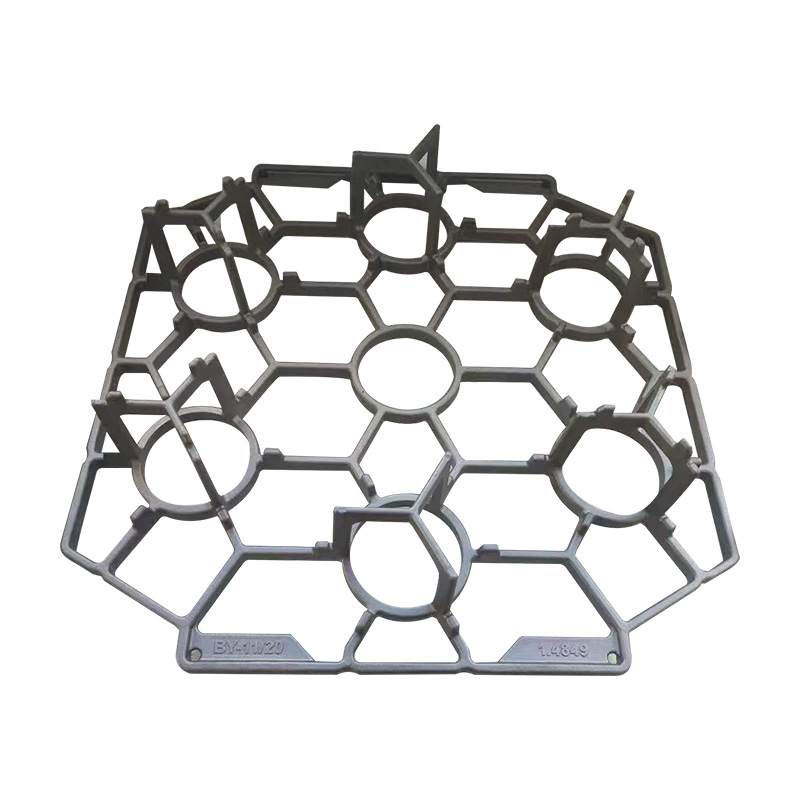
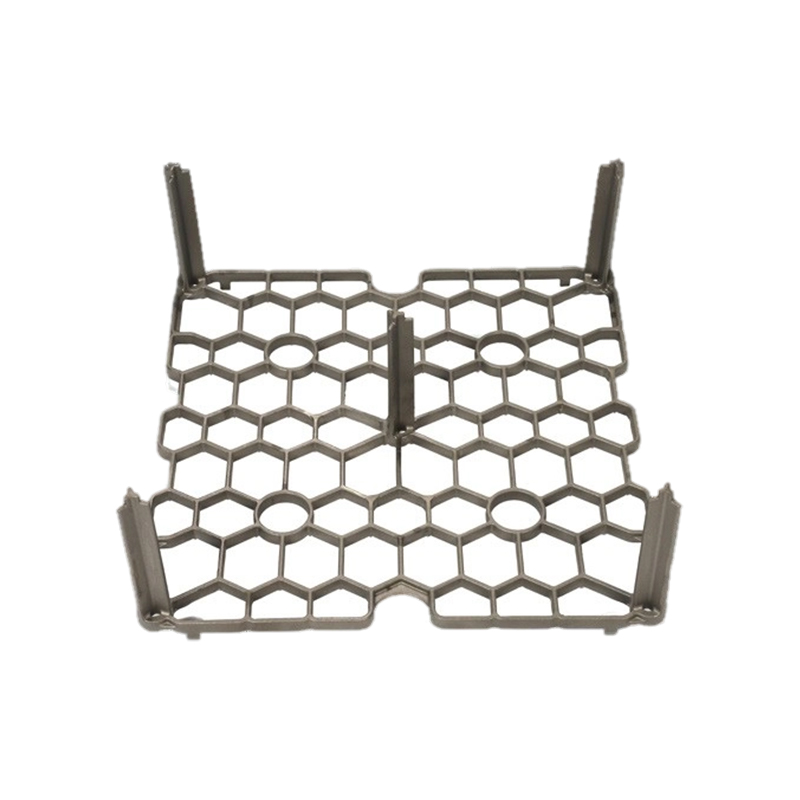
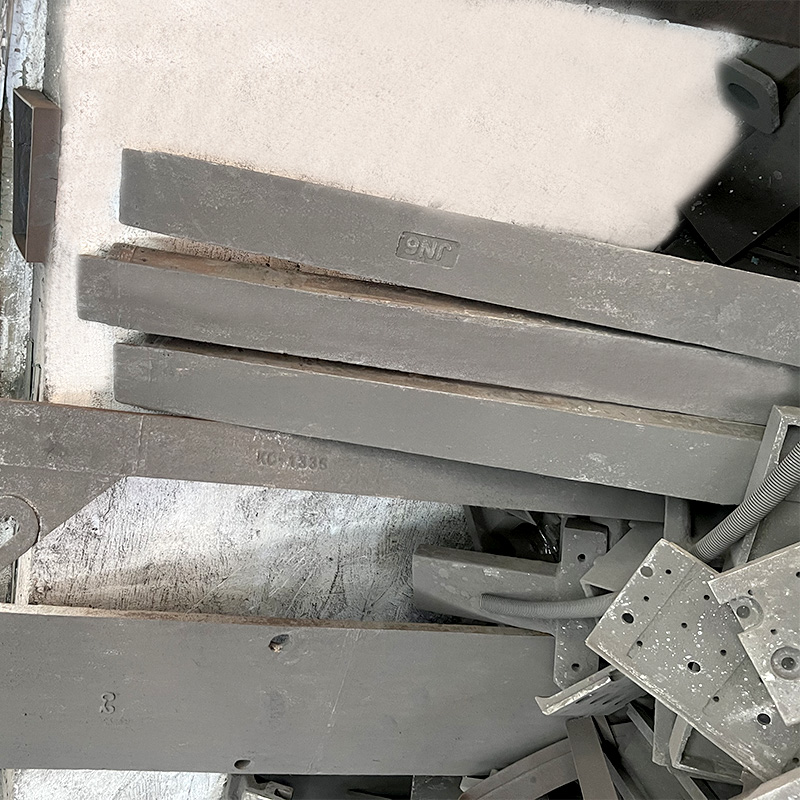 Heat-Resistant Steel Grate Cooler Plates, Bars, and LinersHeat-resistant steel castings for cooling systems in cement, metallurgy, and power generation, offering durability under thermal stress.View Product →
For applications where impact and abrasion combine, stainless steel cast liners and spreader plates can also benefit from controlled alloy chemistry and heat treatment. These parts share the need for a dense, defect-free structure that resists gouging and cracking.
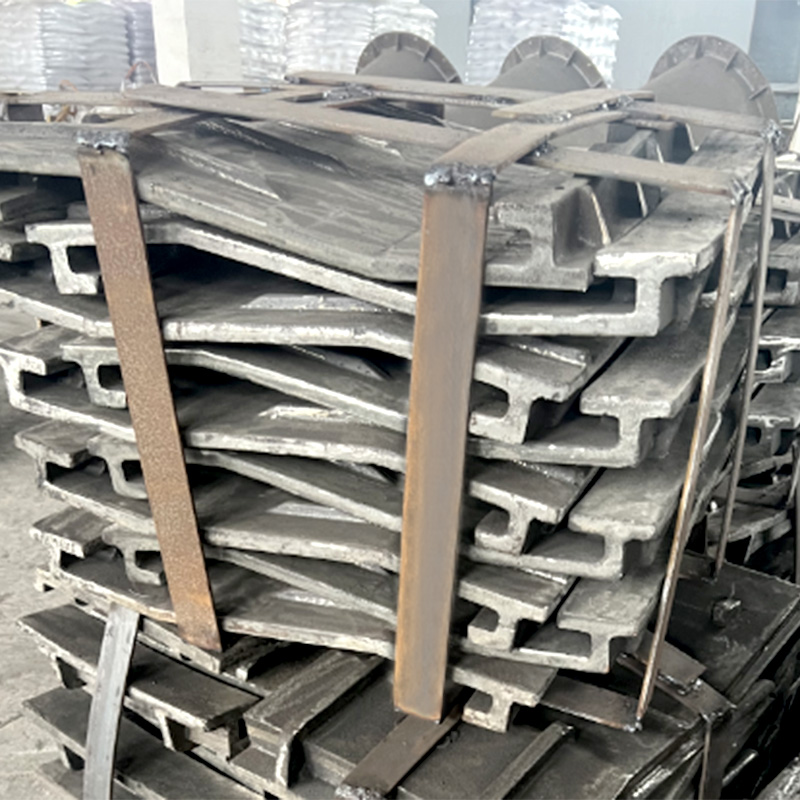 Lost Foam Casting Stainless Steel Castings and Steel CladdingStainless steel lost foam castings with cladding for complex, wear- and corrosion-resistant parts in demanding industrial applications.View Product →
Before placing an order, ask the supplier how they prevent common casting defects such as shrinkage porosity, cold shuts, and sand inclusion. A foundry that tracks these issues and documents corrective actions is more likely to deliver consistent blow bars. You can read more about defect control in our article on preventing common defects in precision lost wax casting.
 Lost Foam Cast Heat-Resistant Steel Spreader Plates and Spreader BoxesHeat-resistant steel components for uniform molten metal distribution in foundries, steel manufacturing, and casting production.View Product →
FAQ
What is the best material for blow bars?
There is no universal best material. High chrome cast iron suits abrasive, small-feed secondary crushing. High manganese steel suits primary crushing with large feed and tramp iron. Martensitic alloy steel is a good general-purpose choice. Test one alloy at a time and compare cost per ton.
How often should I replace blow bars?
Replace when wear reaches the minimum safe thickness or when product quality drops. In hard rock, this may be every 200 to 400 hours. In limestone, bars can last 800 hours or more. Regular inspection is the only way to know.
Can I rotate blow bars to extend life?
Yes, if the bars are symmetrical and the manufacturer allows rotation. Rotate them at planned intervals to even out wear. Never mix new and worn bars on the same rotor.
Key Takeaways
Blow bars are a high-impact wear part, so material choice must match feed conditions. Use a comparison table to narrow options, then track hours and tons to calculate real cost per ton. Maintain the rotor, rotate bars on schedule, and buy from a foundry that controls casting quality and heat treatment. For more information on heat-resistant and wear-resistant alloy steel castings, visit our homepage.