Shunda Road, Lincheng Town Science and Technology Industrial Park, Xinghua City, Jiangsu Province
 English
 русский
 Español
 عربى
عربى
Chute liners are the replaceable plates bolted or welded inside transfer chutes, hoppers, feed boxes, discharge spouts and silo outlets. They are sacrificial wear parts: the liner is consumed so the structural steel behind it is not. When an engineer asks which liner to buy for a clinker transfer point, a sinter feed chute or a hot material drop box, the decision usually comes down to four numbers: impact energy, sliding speed, lump size and working temperature.
The short answer is to match the liner to the dominant wear mechanism first and to the service temperature second; thickness, plate size and fixing pattern then follow the geometry of the chute. A 600 HB high-chrome plate that survives two years of dry, fine, fast-sliding abrasion can crack within three weeks where 300 mm lumps fall two metres onto the liner face. A tough austenitic manganese liner that absorbs that impact without complaint will polish away in a few months where the only duty is fine, hot material sliding at speed.
Impact energy. Lump mass and drop height decide whether you need toughness or hardness.
Sliding speed and angle. Fine material at speed and a shallow angle is the classic abrasion case.
Lump size and shape. Sharp, coarse feed cuts; rounded fines tend to polish.
Temperature. Above roughly 500 °C, oxidation and creep start to dominate.
Content
What a chute liner actually has to survive
A chute liner is a wear part rather than a structural member, and in practice it fails in one of four distinct ways.
- Sliding abrasion. Fine particles moving fast at a shallow angle scratch and polish the surface, thinning the plate from the hot face inward.
- Impact fracture. Large lumps falling near-vertically spall or crack brittle liners, especially at edges, bolt holes and unsupported spans.
- High-temperature degradation. Oxidation, scale spalling, creep and thermal cycling soften the alloy and loosen the fixing long before the wear allowance is used up.
- Build-up and plugging. Wet, sticky or clay-rich material adheres to the liner face, so the chute blocks while the plate still has plenty of thickness left.
Identifying the dominant mode is the whole selection exercise. A liner damaged by impact is not fixed by a harder alloy; it is fixed by a tougher one, by reducing the drop height, or by changing the impact angle so that material lands on a bed of itself rather than on bare metal.
Choose the alloy by wear mechanism, not by hardness
Hardness is the easiest number to quote and the least reliable one to select on, because the hardest liner in a chute is often the one that fails first.
| Material | Typical hardness | Impact tolerance | Practical temperature limit | Best-fit chute duty |
|---|---|---|---|---|
| Mild steel plate | 120-160 HB | Excellent | About 400 °C | Light duty, low throughput, temporary repairs |
| Quenched and tempered wear plate | 360-500 HB | Good | About 400 °C | Dry, fine abrasive sliding with moderate impact |
| High-chrome white iron cast liner | 550-650 HB | Low | About 500 °C | Fine dry material at speed, low impact angle |
| Austenitic manganese cast liner | 180-220 HB, work-hardens to about 500 HB | Excellent | About 500 °C | Coarse lumpy feed, high impact energy |
| Heat-resistant cast stainless steel | 180-320 HB | Moderate | 900-1100 °C | Hot clinker, sinter and kiln feed drop boxes |
Two conclusions follow. First, material cost per kilogram is the wrong metric; what matters is cost per tonne of material handled, or cost per month of chute availability. Second, a liner that is replaced because it cracked at a bolt hole has an installation problem, not a metallurgy problem. Countersunk bolts, correctly sized holes and adequate support behind the plate usually cost less than upgrading the alloy.
Thickness, plate geometry and the fixing pattern
Two chutes lined with the same alloy can deliver service lives that differ by a factor of two, purely because of plate size, plate thickness and the way the plates are fixed.
- Thickness is a wear allowance, not a stiffness requirement: 8-12 mm suits light duty, 16-25 mm covers abrasive clinker or ore duty, and 30-50 mm is normal for cast liners in high-impact or high-temperature chutes.
- Bolt spacing of roughly 200-300 mm keeps plates flat against the shell; wider spacing lets the plate flex and hammer itself loose.
- Countersunk bolt heads protect the fixing from the material stream, and captive nuts or welded bosses on the outside make replacement faster.
- Each plate should overlap its downstream neighbour by 20-30 mm so material never catches a leading edge, with a 3-5 mm gap between plates for thermal expansion.
- Staggered joints across the chute width prevent a single continuous wear line from forming.
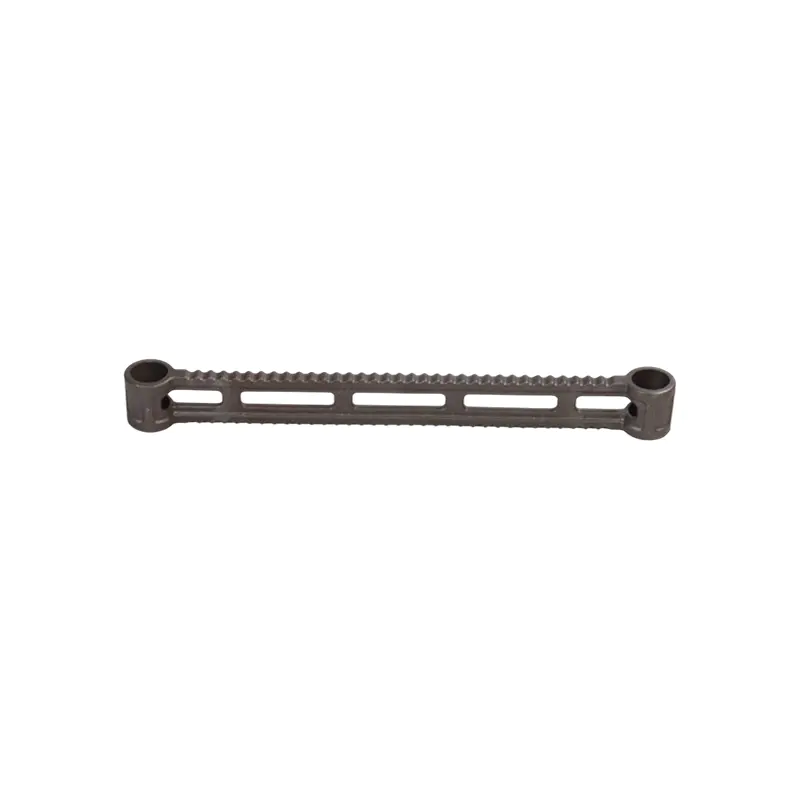
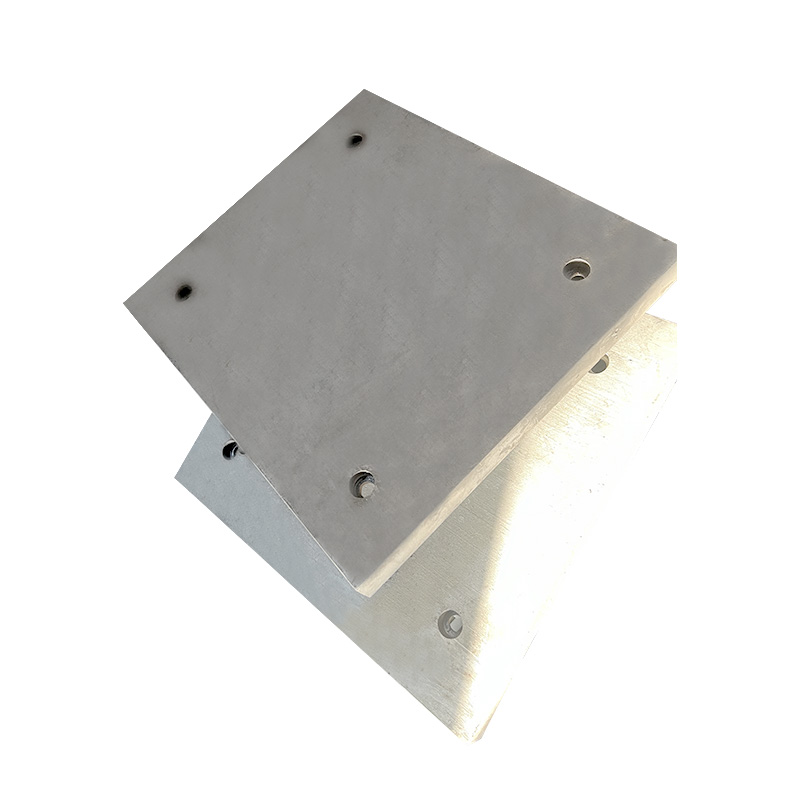
 Lost Foam Cast Stainless Steel Cladding ComponentsPrecision lost foam stainless steel cladding for wear-resistant chute components, helping balance impact-zone durability with cost-effective plate selection.View Product →
Where the budget is tight, line the impact zone in the tough or heat-resistant alloy and the straight run in a cheaper plate. That hybrid approach usually beats one uniform, over-specified material across the whole chute.
When temperature, not abrasion, sets the limit
Above roughly 500 °C the controlling damage mechanism stops being abrasion and becomes oxidation, creep and thermal fatigue.
A carbon or low-alloy liner that performs well at ambient temperature will scale and spall, thinning from the hot face inward, while differential expansion between a hot liner and a cooler shell loosens bolts and opens joints. Heat-resistant cast stainless steels, typically Cr-Ni grades with 20-35% chromium plus nickel, hold a stable oxide layer and retain strength at temperature, which is why they are specified for kiln feed chutes, sinter drop boxes and hot clinker transfer points. Xinghua Jinniu Machinery Manufacturing Co., Ltd. casts heat-resistant, wear-resistant and corrosion-resistant alloy steel components for cement, metallurgy, heat treatment and waste-to-energy lines, including protective plates for kiln mouths and kiln tails, where a chute or drop box sees heat and abrasion at the same time.
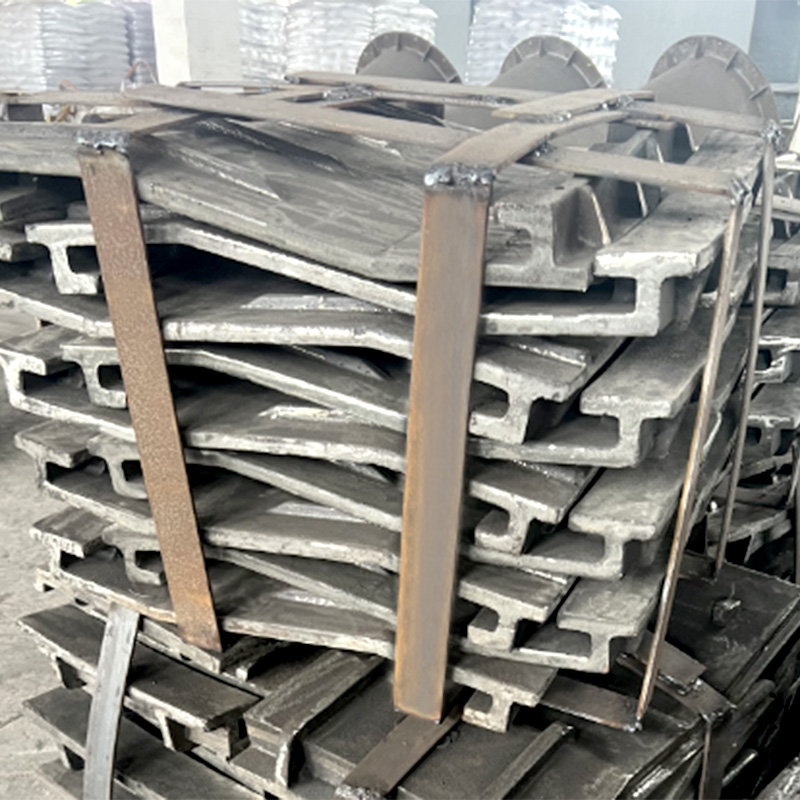
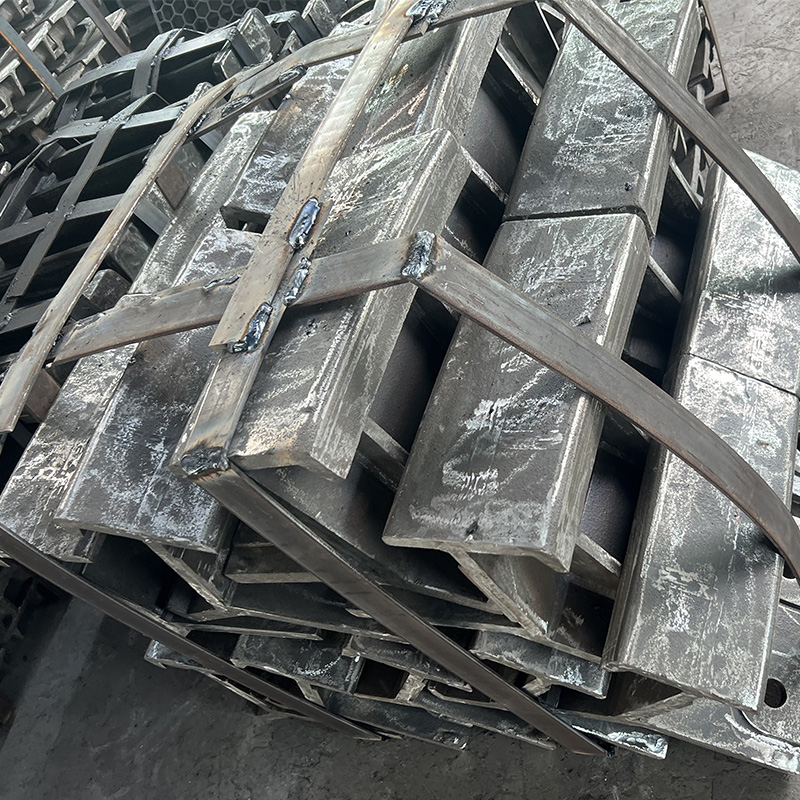 Heat-Resistant Kiln Mouth and Tail Protective PlatesLost foam cast heat-resistant steel plates for kiln mouth and tail protection in cement, metallurgy, and ceramics, resisting high-temperature erosion and wear.View Product →
Why the casting route affects liner quality
For cast liners, the process that produces the part influences service life almost as much as the chemistry does.
Lost foam casting moulds a foam pattern that vaporises as the metal is poured, so a liner can carry stiffening ribs, lifting lugs, wear bars and curved flow faces without draft angles or parting lines. Resin sand casting suits heavier, thicker blocks such as large liner sections and machine bases, while silica sol lost wax precision casting covers small, tight-tolerance items such as spacers, shims and sealing strips. It helps to understand how the lost foam casting process works before specifying a profile, because pattern design, wall thickness and gating all change what a foundry can promise on dimensional tolerance and surface finish.
A supplier that controls pattern making, melting, casting, heat treatment and machining in one plant is easier to hold to a delivery date than one that subcontracts the finishing steps, and it is also easier to hold to a hardness and microstructure specification. Xinghua Jinniu runs lost foam, resin sand, silica sol lost wax and centrifugal casting in-house, with an annual output of 6,000-8,000 tonnes of alloy steel castings under ISO 9001:2015 and ISO 14001:2015 certification.
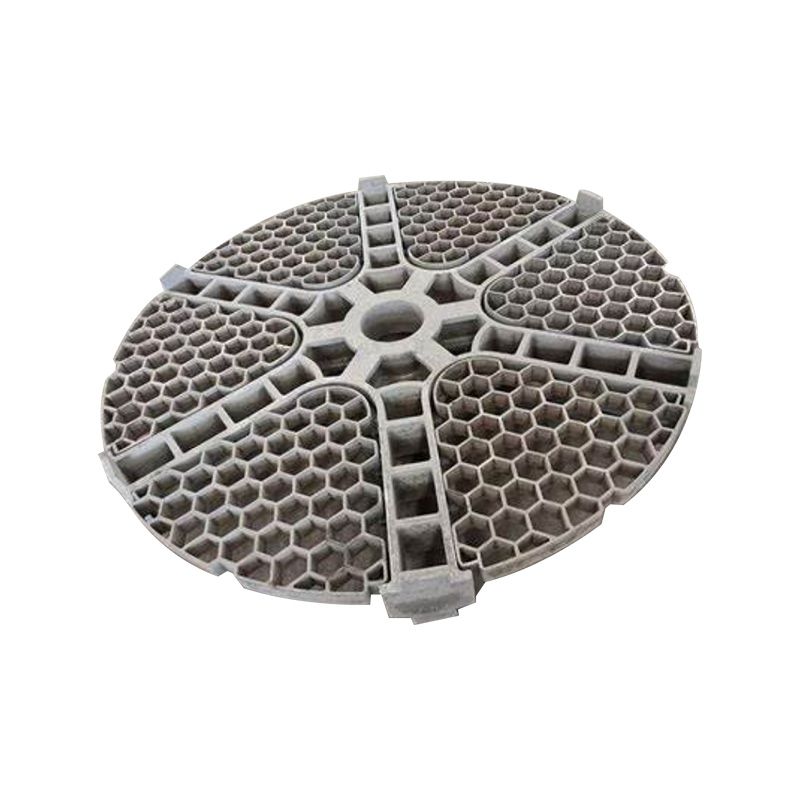
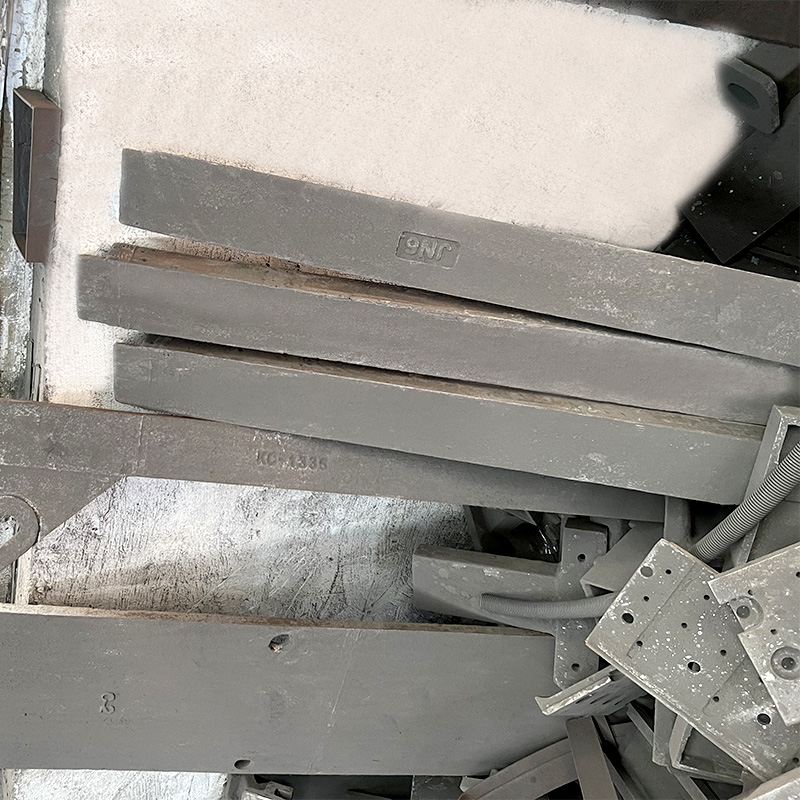 Heat-Resistant Steel Cast Grate Cooler ComponentsCast grate plates, bars, and liner plates for high-temperature cooling systems, offering thermal shock resistance, support, and wear protection in cement and metallurgy.View Product →
What to send with a liner enquiry
A complete enquiry shortens lead time and removes most of the risk of a first article being rejected.
- Duty description: material handled, bulk density, lump size range, throughput in tonnes per hour and drop height.
- Temperature: continuous and peak values, plus whether water spray or quench cooling is used.
- Geometry: a marked-up drawing with fixing positions, or the worn liner itself used as a pattern.
- Fixing method: countersunk bolt size and spacing, weld-on tabs or clamp bars.
- Wear allowance and target life in months, so the supplier can trade thickness against alloy.
- Documentation: material certificate, hardness check, dimensional report and any non-destructive testing required.
Chute liner FAQ
How thick should a chute liner be?
Thickness is a wear allowance rather than a strength requirement. Start at 8-12 mm for light duty, 16-25 mm for abrasive clinker or ore, and 30-50 mm for cast liners in high-impact or high-temperature service where 12-24 months of life is the target.
Can I mix liner materials in one chute?
Yes, and it is often the cheapest way to extend life. Use the tough or heat-resistant alloy only at the impact zone and the straight run behind it in a lower-cost wear plate, then review the wear pattern after the first replacement cycle.
How do I tell when a liner needs replacing?
Measure rather than judge by eye. Ultrasonic thickness readings taken at marked points every few weeks show the wear rate in millimetres per month, so the next replacement can be scheduled during a planned shutdown instead of after a hole appears in the chute shell.
Are cast liners better than rolled wear plate?
Neither is universally better. Casting lets you build in ribs, lugs and curved profiles, and heat-resistant stainless grades are supplied as castings by default; rolled quenched and tempered plate is usually quicker to obtain and cheaper for simple, low-temperature abrasive duty.
Chute liners are a consumable, but they are not a commodity. The plant that treats them as an engineered part, with a defined wear mechanism, a measured thickness and a documented replacement interval, will spend less on liners and lose fewer production hours than the plant that reorders the same plate every time simply because it was the last one used.
Fix the mechanism, then the alloy, then the geometry and fixings, and the price per kilogram stops being the deciding factor.