Shunda Road, Lincheng Town Science and Technology Industrial Park, Xinghua City, Jiangsu Province
 English
 русский
 Español
 عربى
عربى
In modern industrial manufacturing, precision and reliability during high-temperature processing are essential. Whether used in automotive components, aerospace parts, tool manufacturing, or metallurgy, selecting the right tray for furnace operations can significantly impact product quality and operational efficiency. A Heat Treatment Tray is specifically engineered to withstand extreme temperatures, heavy loads, and repeated thermal cycling—making it a superior choice compared to ordinary steel trays or general-purpose metal containers.
Content
Understanding the Role of a Heat Treatment Tray
A Heat Treatment Tray is a specialized high-temperature-resistant container designed for use in annealing, quenching, tempering, carburizing, nitriding, and other thermal processes. Unlike standard trays, it is manufactured using heat-resistant alloys or cast materials that maintain structural integrity under temperatures ranging from 800°C to over 1200°C.
Core Functions
- Securely hold workpieces during heating and cooling cycles
- Ensure uniform heat distribution around components
- Prevent deformation or contamination during processing
- Maintain dimensional stability under thermal stress
By contrast, conventional trays are often not designed for repeated exposure to extreme temperatures, leading to premature failure and inconsistent processing results.
Key Advantages of Using a Heat Treatment Tray
1. Superior High-Temperature Resistance
The primary advantage of a Heat Treatment Tray lies in its ability to withstand extreme furnace temperatures without warping, cracking, or scaling excessively. High-grade alloys such as heat-resistant stainless steel or nickel-chromium compositions allow the tray to maintain its mechanical properties even after prolonged exposure.
- Resists oxidation and scaling
- Maintains structural strength above 1000°C
- Reduces risk of sudden mechanical failure
2. Enhanced Structural Stability
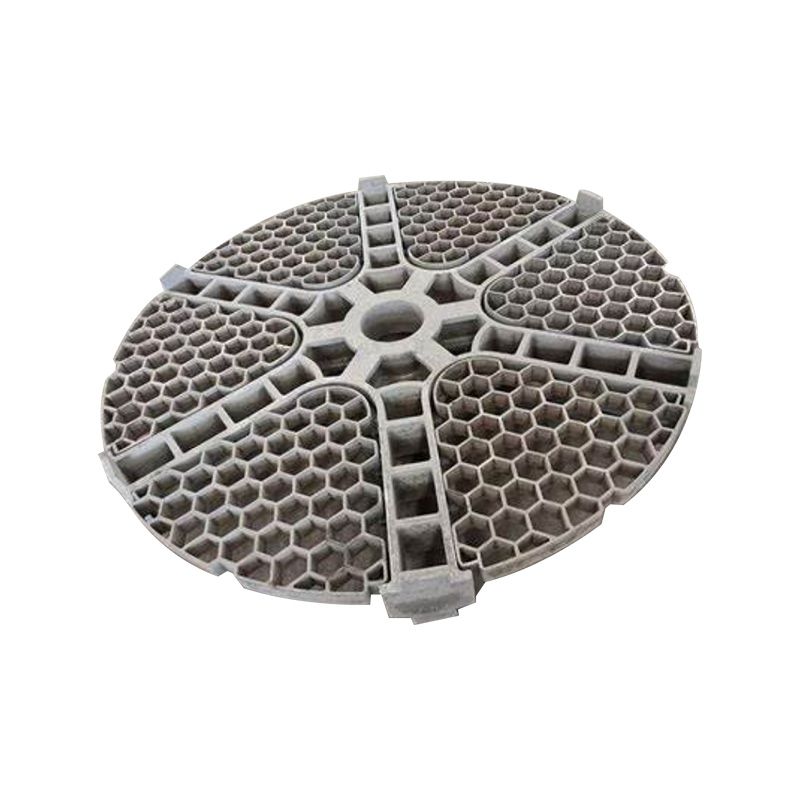
Thermal cycling causes expansion and contraction. Ordinary trays often bend or distort over time, affecting product positioning. A Heat Treatment Tray is engineered with reinforced ribs, thicker load-bearing sections, and optimized geometry to prevent distortion.
- Minimizes sagging under heavy loads
- Improves part alignment consistency
- Extends service life significantly
3. Improved Heat Circulation and Uniformity
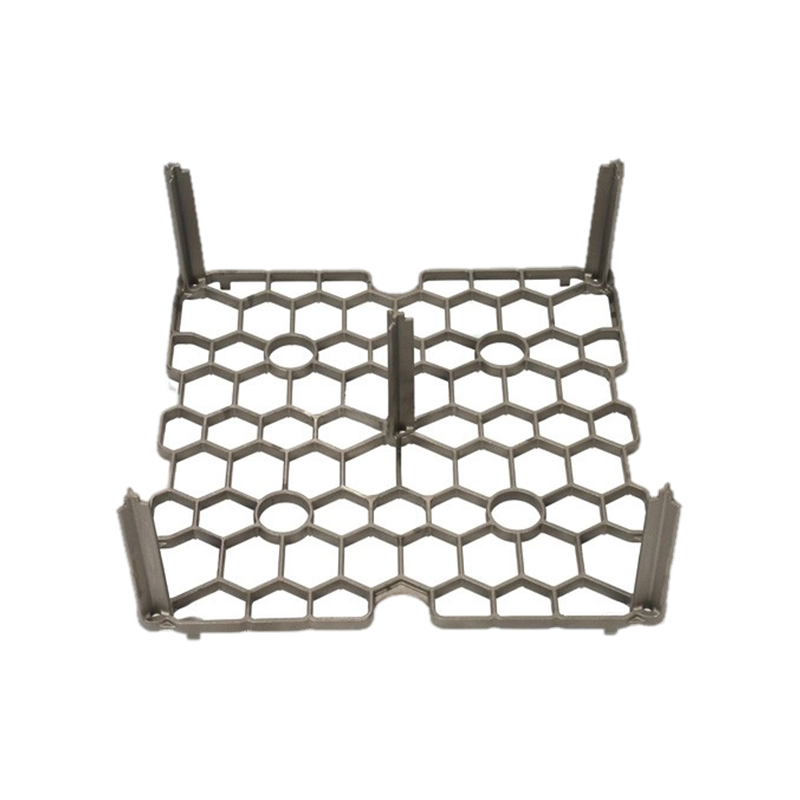
Heat uniformity directly impacts metallurgical outcomes. A well-designed Heat Treatment Tray incorporates ventilation slots or grid structures that allow air or protective gas to circulate freely around the parts.
- Promotes consistent hardness and microstructure
- Reduces temperature gradients
- Minimizes rework or rejection rates
4. Longer Operational Lifespan
Although the initial investment may be higher, a Heat Treatment Tray offers long-term savings due to its durability. Frequent replacement of conventional trays increases downtime and operational costs.
- Lower replacement frequency
- Reduced maintenance costs
- Better return on investment (ROI)
5. Higher Load-Bearing Capacity
Industrial components can be heavy and densely packed. A Heat Treatment Tray is designed to support substantial weight without deformation, ensuring safe and efficient batch processing.
- Handles dense component stacking
- Prevents collapse during furnace transport
- Improves batch productivity
Comparison: Heat Treatment Tray vs. Conventional Trays
| Comparison Factor | Heat Treatment Tray | Conventional Steel Tray |
|---|---|---|
| Temperature Resistance | Up to 1200°C+ | Typically below 600–800°C |
| Thermal Stability | High resistance to warping | Prone to distortion |
| Service Life | Long-term durability | Shorter lifespan |
| Heat Circulation | Optimized airflow design | Limited airflow |
| Cost Efficiency | High ROI over time | Frequent replacement cost |
Applications Across Industries
The versatility of a Heat Treatment Tray makes it essential in various sectors:
- Automotive Industry – Gear hardening, shaft tempering, engine components
- Aerospace – High-strength alloy treatment
- Tool Manufacturing – Cutting tools and dies
- Metallurgy – Casting and forging processes
Economic and Operational Benefits
Reduced Downtime
Durable trays mean fewer breakdowns and less unplanned maintenance.
Improved Product Quality
Stable positioning and uniform heating reduce defects and improve metallurgical consistency.
Safer Handling
High structural integrity minimizes the risk of tray failure during loading and unloading operations.
Frequently Asked Questions (FAQ)
Q1: Why is a Heat Treatment Tray more expensive than a regular tray?
The materials and engineering involved in manufacturing a Heat Treatment Tray are specialized for extreme environments. However, the extended service life and reduced downtime offset the initial investment.
Q2: Can a Heat Treatment Tray be customized?
Yes. Dimensions, load capacity, alloy composition, and structural reinforcement can be tailored to specific furnace types and processing requirements.
Q3: How long does a Heat Treatment Tray typically last?
Depending on operating conditions, alloy grade, and maintenance practices, a Heat Treatment Tray can last several years, significantly outperforming ordinary trays.
Q4: What maintenance practices extend tray lifespan?
- Regular inspection for cracks or deformation
- Proper cleaning to remove scale buildup
- Avoiding overload beyond design specifications
Conclusion
Choosing a Heat Treatment Tray over conventional alternatives provides clear technical and economic advantages. From superior high-temperature resistance and structural integrity to improved heat uniformity and long-term cost savings, these trays are indispensable in modern industrial heat processing. For manufacturers seeking reliability, efficiency, and consistent metallurgical quality, investing in a high-performance Heat Treatment Tray is a strategic and future-oriented decision.