Shunda Road, Lincheng Town Science and Technology Industrial Park, Xinghua City, Jiangsu Province
 English
 русский
 Español
 عربى
عربى
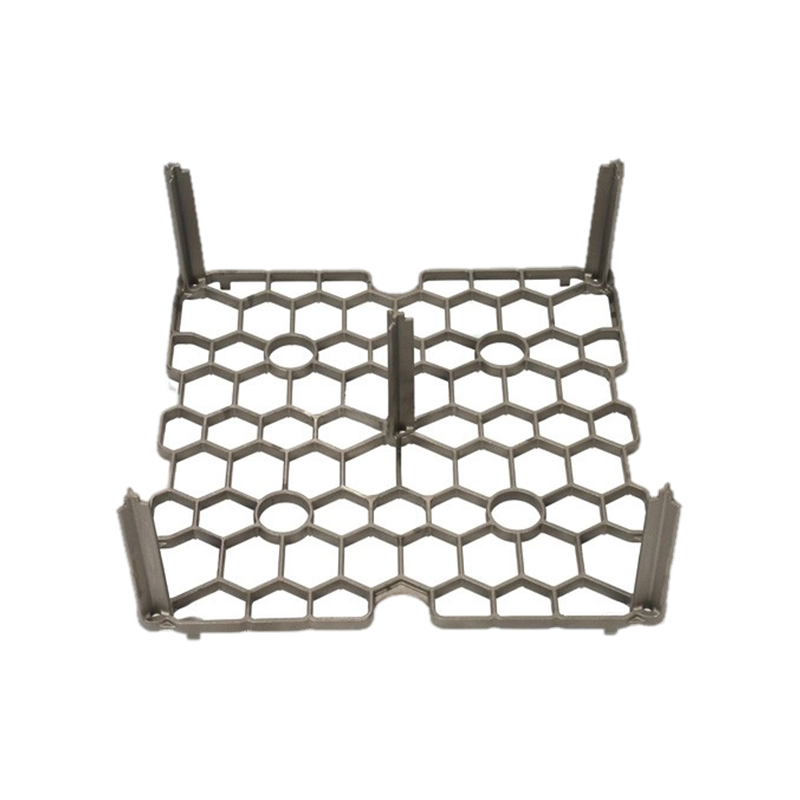
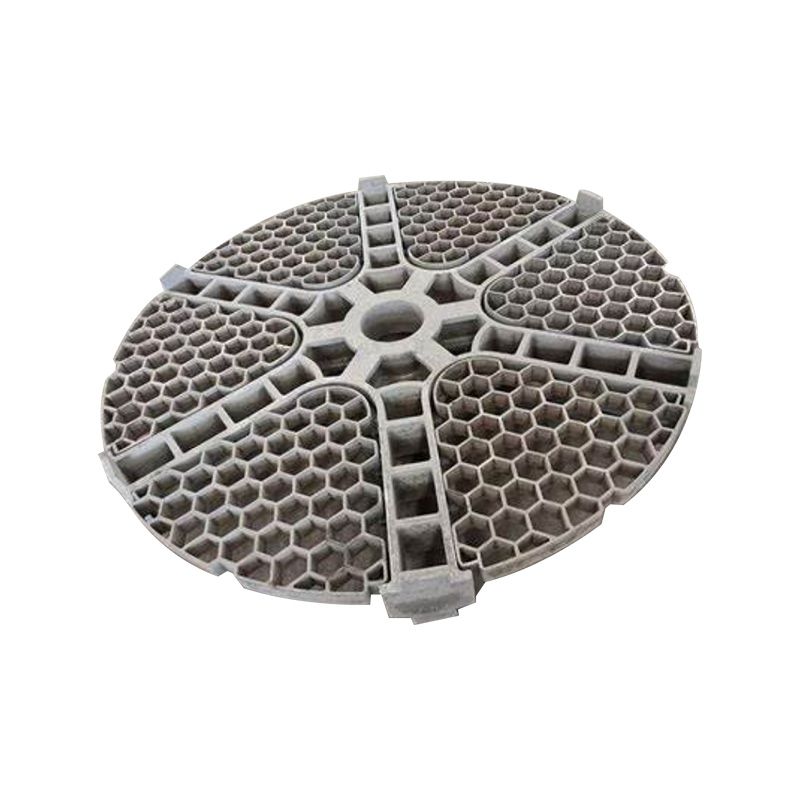
Selecting the right Heat Treatment Tray is one of the most critical decisions in industrial thermal processing. Whether you are running a small batch furnace or a large continuous conveyor system, the tray's dimensions and load-bearing capacity directly affect throughput, energy efficiency, and product quality. This guide breaks down every major size and load capacity option available on the market, with side-by-side comparisons and expert guidance to help you make the best choice.
Content
- 1 Why Size and Load Capacity Matter for a Heat Treatment Tray
- 2 Standard Size Options for Heat Treatment Trays
- 3 Load Capacity: Static vs. Dynamic Ratings Explained
- 4 How Material Choice Affects Size and Load Capacity
- 5 Custom Size Options: When Standard Trays Are Not Enough
- 6 How to Calculate the Right Load Capacity for Your Heat Treatment Tray
- 7 Key Factors That Influence Heat Treatment Tray Sizing
- 8 Frequently Asked Questions (FAQ)
- 9 Choosing the Right Heat Treatment Tray: Final Recommendations
Why Size and Load Capacity Matter for a Heat Treatment Tray
A Heat Treatment Tray must withstand extreme thermal cycles—often exceeding 1,000 °C—while supporting heavy workloads without warping, cracking, or collapsing. Choosing the wrong size leads to wasted furnace space, uneven heating, and premature tray failure. Choosing a tray with insufficient load capacity risks catastrophic part damage and costly downtime.
The key parameters you must evaluate before purchasing include: outer dimensions (length × width × height), wall thickness, static load capacity, and dynamic load capacity.
Standard Size Options for Heat Treatment Trays
Most manufacturers offer a range of standardized dimensions designed to fit the most common furnace chamber sizes. Below is a comprehensive overview of the standard Heat Treatment Tray sizes available across the industry.
Small-Format Trays
Small-format Heat Treatment Trays are ideal for laboratory furnaces, R&D environments, and precision component processing.
| Size Label | Dimensions (mm) | Wall Thickness (mm) | Max Load (kg) |
| XS | 200 × 150 × 50 | 4 | 15 |
| S | 300 × 200 × 60 | 5 | 30 |
| SM | 400 × 300 × 75 | 6 | 50 |
Medium-Format Trays
Medium-format Heat Treatment Trays are the most commonly used in batch furnaces across automotive, aerospace, and tooling industries.
| Size Label | Dimensions (mm) | Wall Thickness (mm) | Max Load (kg) |
| M | 500 × 400 × 100 | 8 | 100 |
| ML | 600 × 450 × 120 | 10 | 150 |
| L | 700 × 500 × 150 | 12 | 200 |
Large-Format Trays
Large-format Heat Treatment Trays are engineered for continuous belt furnaces, pusher furnaces, and heavy industrial applications where high throughput is essential.
| Size Label | Dimensions (mm) | Wall Thickness (mm) | Max Load (kg) |
| XL | 900 × 600 × 150 | 14 | 300 |
| XXL | 1200 × 800 × 200 | 16 | 500 |
| Industrial | 1500 × 1000 × 250 | 20 | 800+ |
Load Capacity: Static vs. Dynamic Ratings Explained
When evaluating the load capacity of a Heat Treatment Tray, it is essential to distinguish between two types of ratings:
- Static Load Capacity: The maximum weight the tray can support when stationary inside a furnace chamber. This applies to batch and pit furnaces.
- Dynamic Load Capacity: The maximum weight the tray can carry while moving through a conveyor or pusher system. This is typically 60–75% of the static rating due to vibration and mechanical stress.
| Application | Load Type | Recommended Capacity | Safety Factor |
| Batch Furnace | Static | 100–500 kg | 1.5× |
| Conveyor Furnace | Dynamic | 50–300 kg | 2.0× |
| Pusher Furnace | Dynamic | 150–600 kg | 2.0× |
| Roller Hearth | Dynamic | 200–800 kg | 1.8× |
How Material Choice Affects Size and Load Capacity
The material from which a Heat Treatment Tray is fabricated is inseparable from its size and load performance. Different alloys and composites behave very differently at high temperatures, and their selection determines both the maximum feasible dimensions and the realistic load rating.
Material Comparison Table
| Material | Max Temp (°C) | Typical Load Range | Best For | Limitation |
| Heat-Resistant Steel (HH/HK) | 1,050 | Up to 500 kg | General annealing, carburizing | Moderate creep resistance |
| Nickel-Chrome Alloy (IN600/IN601) | 1,150 | Up to 700 kg | Bright annealing, sintering | Higher cost |
| Molybdenum | 1,700 | 50–200 kg | Vacuum & hydrogen furnaces | Brittle below 300 °C, high cost |
| Graphite Composite | 2,000+ | 20–150 kg | Vacuum, inert atmosphere | Oxidizes in air, lower load |
| Silicon Carbide (SiC) | 1,600 | 30–300 kg | Ceramics, glass sintering | Brittle, limited large formats |
Custom Size Options: When Standard Trays Are Not Enough
Many industrial operations require a Heat Treatment Tray with non-standard dimensions. Custom fabrication allows manufacturers to match exact furnace chamber dimensions, accommodate unusually shaped parts, or maximize load density.
Common Reasons to Request a Custom Heat Treatment Tray
- Furnace chamber with non-standard internal dimensions that standard trays cannot fill efficiently
- Parts with complex geometries that require custom fixtures or internal dividers
- Operations requiring stacking systems where tray height must be precisely controlled
- High-volume production needing maximum load per cycle with optimized tray mass
- Special atmosphere or vacuum environments requiring specific alloy grades not available in standard sizes
Standard vs. Custom Heat Treatment Tray: Head-to-Head
| Factor | Standard Tray | Custom Tray |
| Lead Time | 1–2 weeks | 4–12 weeks |
| Unit Cost | Lower | Higher (20–60% premium) |
| Fit to Furnace | Approximate | Exact |
| Load Optimization | General-purpose | Part-specific optimization |
| Availability | Stock or fast order | Engineering required |
How to Calculate the Right Load Capacity for Your Heat Treatment Tray
Use the following step-by-step method to determine the minimum required load capacity for your Heat Treatment Tray:
- Weigh all parts per batch — calculate the total weight of components placed on a single tray per cycle.
- Add fixture and basket weight — include any internal fixtures, dividers, or sub-baskets used.
- Apply the safety factor — multiply the total by 1.5× for static applications, 2.0× for dynamic/conveyor use.
- Verify material creep limits — confirm your chosen material can sustain this load at operating temperature without permanent deformation.
- Consult the manufacturer — provide the calculated value and request load certification documentation.
Key Factors That Influence Heat Treatment Tray Sizing
Beyond the raw numbers, several operational factors should guide your Heat Treatment Tray size selection:
- Thermal uniformity: Oversized trays in smaller furnaces create cold zones at the edges. Match the tray to at least 85% of the usable chamber width for even heat distribution.
- Atmosphere circulation: Trays must not block gas circulation ports. Leave a minimum 50 mm clearance on all sides.
- Stacking compatibility: If trays are stacked, ensure the bottom tray rating covers the combined load of all upper trays and their parts.
- Thermal mass: Larger, thicker trays add thermal mass and extend heat-up and cool-down cycles, affecting energy consumption and cycle time.
- Service life expectation: Higher load capacity often implies thicker walls and heavier trays, which improve longevity but increase replacement cost when the tray eventually fails.
Frequently Asked Questions (FAQ)
Choosing the Right Heat Treatment Tray: Final Recommendations
Selecting the correct Heat Treatment Tray requires balancing four interdependent variables: furnace chamber dimensions, part weight and geometry, operating temperature, and process atmosphere. Standard size options cover the majority of industrial needs from 15 kg laboratory trays up to 800 kg+ heavy industrial formats. When standard options fall short, custom-fabricated trays deliver precision fit and optimized load performance at a premium.
Always apply the appropriate safety factor to your load calculations, verify material creep behavior at your peak operating temperature, and request certified load documentation from your supplier. A properly specified Heat Treatment Tray will deliver consistent process results, maximized service life, and a lower total cost of ownership across thousands of thermal cycles.