Shunda Road, Lincheng Town Science and Technology Industrial Park, Xinghua City, Jiangsu Province
 English
 русский
 Español
 عربى
عربى
If your plant heat-treats thousands of shafts, tubes, or forgings every day, a roller hearth furnace is usually the most practical equipment choice. A roller hearth furnace is a continuous industrial furnace that moves parts through heated zones on powered rollers, providing repeatable heat treatment at high production rates. Because the workload enters and exits in a steady stream, the furnace avoids the temperature cycling of batch furnaces and fits naturally into automated lines.
Content
- 1 What Is a Roller Hearth Furnace?
- 2 How a Roller Hearth Furnace Works
- 3 Key Components and Materials
- 4 Roller Hearth Furnace vs. Alternative Furnaces
- 5 Common Applications of Roller Hearth Furnaces
- 6 Choosing Roller Hearth Furnace Components
- 7 Maintenance and Efficiency Considerations
- 8 Frequently Asked Questions About Roller Hearth Furnaces
- 9 Bottom Line
What Is a Roller Hearth Furnace?
A roller hearth furnace is a continuous-type furnace in which a powered roller conveyor carries the workload through multiple temperature-controlled zones to achieve consistent metallurgical results.
The furnace consists of a long insulated chamber divided into heating zones, each with its own burners or electric elements, thermocouples, and atmosphere supply. Parts are loaded at one end, transported on rollers through the furnace, and discharged at the other end. This design supports annealing, normalizing, hardening, tempering, stress relieving, and sintering of products with a regular cross-section.
How a Roller Hearth Furnace Works
A roller hearth furnace works by moving parts on motor-driven rollers through successive heating, soaking, and cooling zones while temperature and atmosphere are precisely controlled.
In each zone, gas burners or electric heating elements maintain the required setpoint. An external drive system rotates the rollers; the control system adjusts roller speed to match the desired time-at-temperature. Protective gases such as nitrogen, endothermic gas, or hydrogen can be supplied to reduce scaling or alter the surface chemistry. After heating and soaking, the part enters a cooling section where air, inert gas, or water mist controls the cooling rate. The whole sequence is usually managed by a PLC or distributed control system.
Key Components and Materials
For a roller hearth furnace to deliver stable output, the material quality of heated components matters as much as the temperature control system.
| Component | Role in the furnace | Typical material requirement |
|---|---|---|
| Furnace roller | Supports and moves the workload through the heated zone | High creep resistance, oxidation resistance, and dimensional stability; often heat-resistant alloy steel |
| Roller sleeve or pipe | Protects the roller body in severe heat or corrosive atmosphere | Heat-resistant stainless steel with good thermal shock resistance |
| Bearing cap / roll support | Keeps roll ends aligned under load | Wear-resistant heat-resistant steel with stable high-temperature strength |
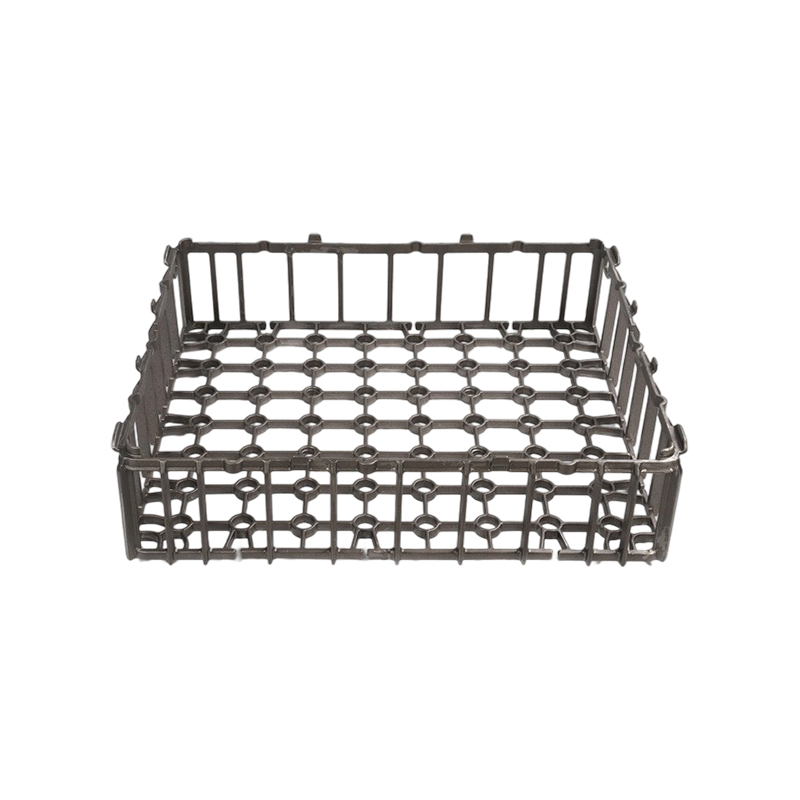
| Heat-treatment tray or basket | Carries small or difficult-to-convey parts | Heat-resistant stainless steel casting with low scaling and long service life |
The roller itself is often a centrifugally cast tube because this process produces a dense, sound structure with few internal defects. Many plants rely on heat-resistant centrifugal casting furnace rollers for high-temperature zones where creep resistance is critical.
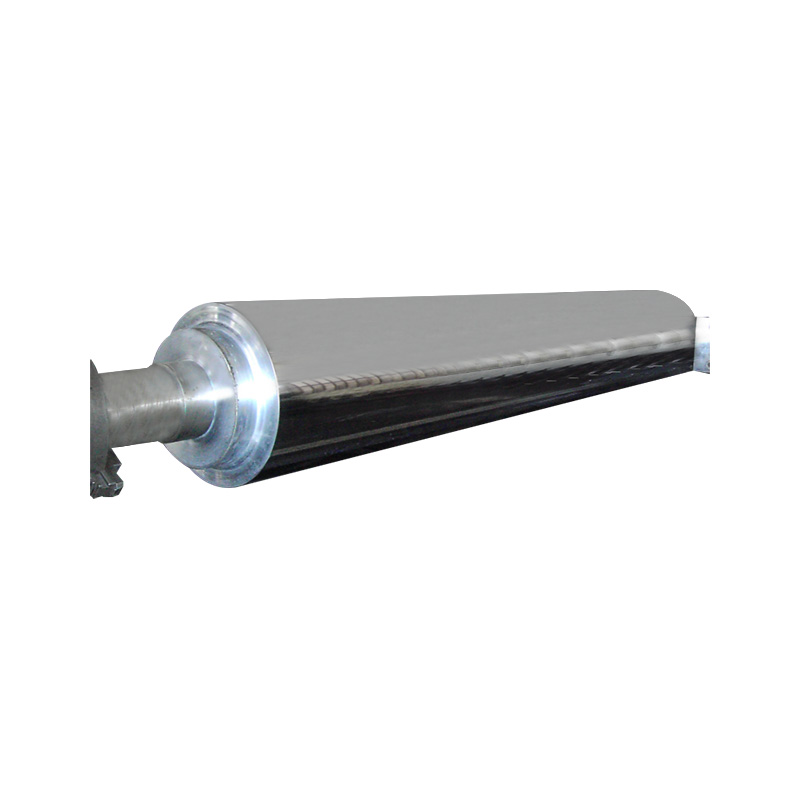 Centrifugal Casting Heat-Resistant Rollers Supplier, CompanyXinghua Jinniu Machinery Manufacturing Co., Ltd. is China centrifugal casting heat-resistant rollers supplier and company, specializing i...View Product →
Roller Hearth Furnace vs. Alternative Furnaces
Compared with pusher furnaces, walking-beam furnaces, and batch furnaces, roller hearth furnaces provide the best combination of temperature uniformity, automation, and gentle handling for straight or flat parts, but they require a higher investment and disciplined roller maintenance.
| Furnace type | Best workload | Main strengths | Main limitations |
|---|---|---|---|
| Roller hearth | Long tubes, bars, plates, profiles, uniform castings | Excellent temperature uniformity, continuous flow, low part damage | High initial cost, critical roller maintenance |
| Pusher | Heavy billets, slabs, large forgings | Heavy load capacity, simple rugged design | Skid marks, lower flexibility, possible surface scratching |
| Batch | Mixed products, small batches, complex cycles | Process flexibility, lower capital cost, easy atmosphere control | Higher labour cost, slower cycles, furnace cools between batches |
The selection depends mainly on product shape and throughput. For heavy billets, pusher or walking-beam designs are often better; for tubes and bars, a roller hearth furnace remains the industry benchmark.
Common Applications of Roller Hearth Furnaces
Roller hearth furnaces are most widely used for continuous heat treatment of steel tubes, bars, plates, automotive components, and castings where straightness and uniform properties are critical.
- Steel tube and pipe mills for annealing, normalizing, hardening, and tempering.
- Automotive plants for heat-treating shafts, gears, fasteners, and suspension parts.
- Long-product producers for rails, structural sections, and profiles that need low distortion.
- Foundries and forge shops for stress relieving and normalizing of castings and forgings.
- Glass and ceramics lines for firing, sintering, and annealing.
- Small-parts producers that use trays or baskets to feed the furnace continuously.
Choosing Roller Hearth Furnace Components
When specifying rollers and wear components, evaluate alloy grade, casting method, dimensional tolerance, and expected service life together instead of looking only at price.
- Confirm the alloy composition and high-temperature mechanical properties for the planned operating temperature.
- Use centrifugal casting when the roller must be dense, free from internal voids, and creep resistant.
- Set practical tolerances such as roller straightness within 0.5 mm/m and journal concentricity within 0.2 mm.
- Define surface finish, non-destructive testing requirements, and allowable repair methods.
- Review roller cooling and seal arrangement to prevent hot spots at the journal end.
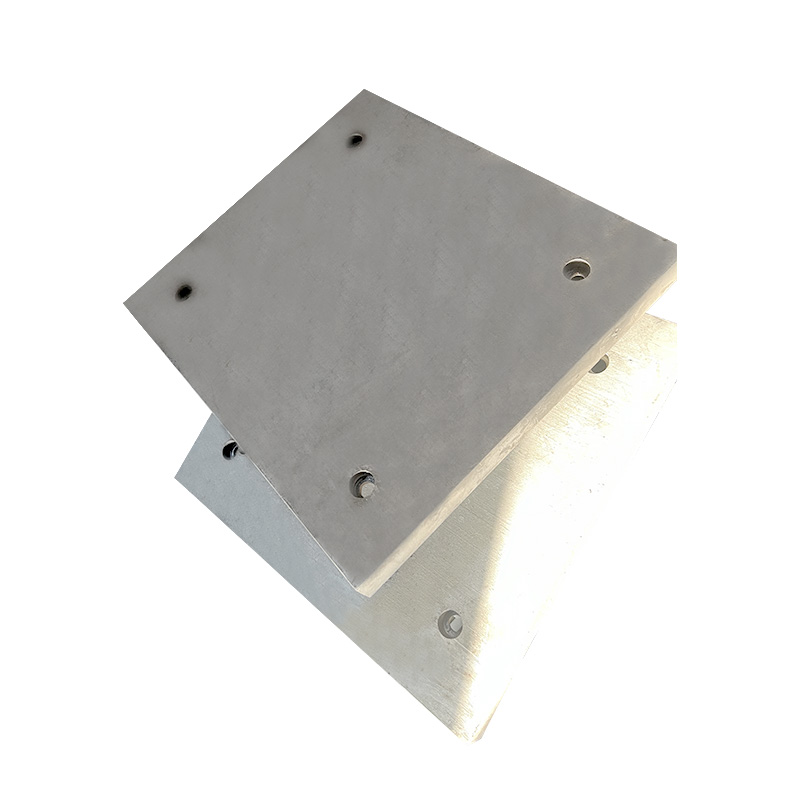
At the roll-end support, alignment is as important as material grade. Most high-load lines use heat-resistant stainless steel bearing caps to keep journals in position and prevent uneven wear.
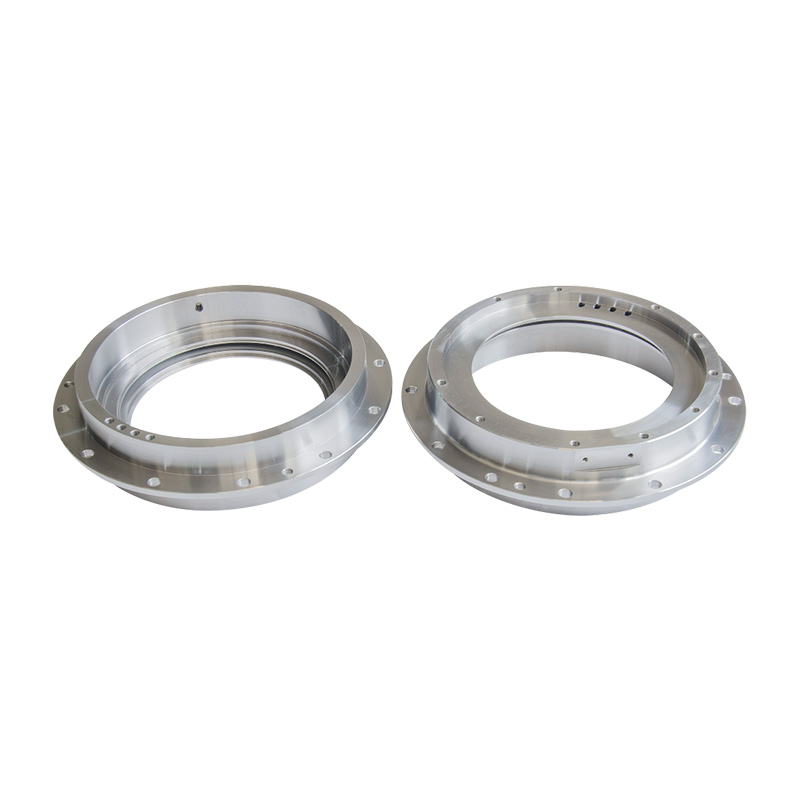 Durable Centrifugal Casting Bearing Caps Supplier, CompanyXinghua Jinniu Machinery Manufacturing Co., Ltd. is China durable centrifugal casting bearing caps supplier and company, specializing in ...View Product →
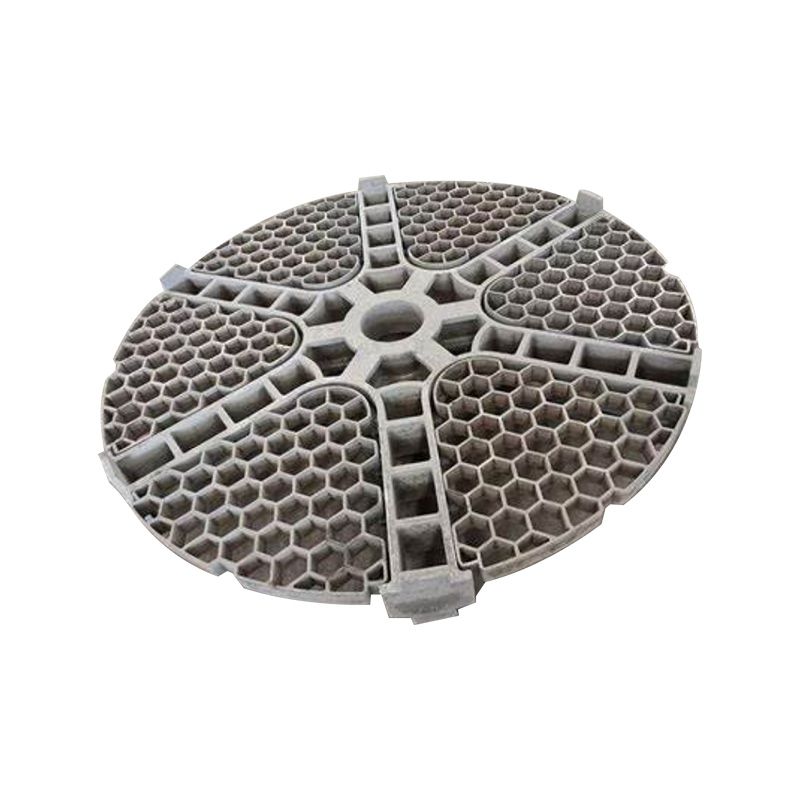
Fixture design also influences furnace performance. If work is loaded on heat-treatment trays, the tray structure must allow heat to flow freely. In many lines, optimizing heat treatment tray design improves temperature uniformity and lowers energy use.
Maintenance and Efficiency Considerations
A roller hearth furnace meets its production targets only when rollers, seals, bearings, and temperature controls are maintained as a system.
- Monitor roller drive current to detect binding or misalignment early.
- Inspect roller surfaces for oxide scale, cracking, and diameter loss.
- Check bearing caps and seals on a fixed schedule.
- Verify atmosphere composition, dew point, and gas flow after every shutdown.
- Calibrate thermocouples and control loops regularly.
- Record part travel time and zone temperatures to identify gradual drift.
Surface wear is the reason many users keep spare sleeves on hand. When a roller body becomes worn or corroded, a heat-resistant stainless steel sleeve can restore the diameter and extend service life without replacing the entire roller.
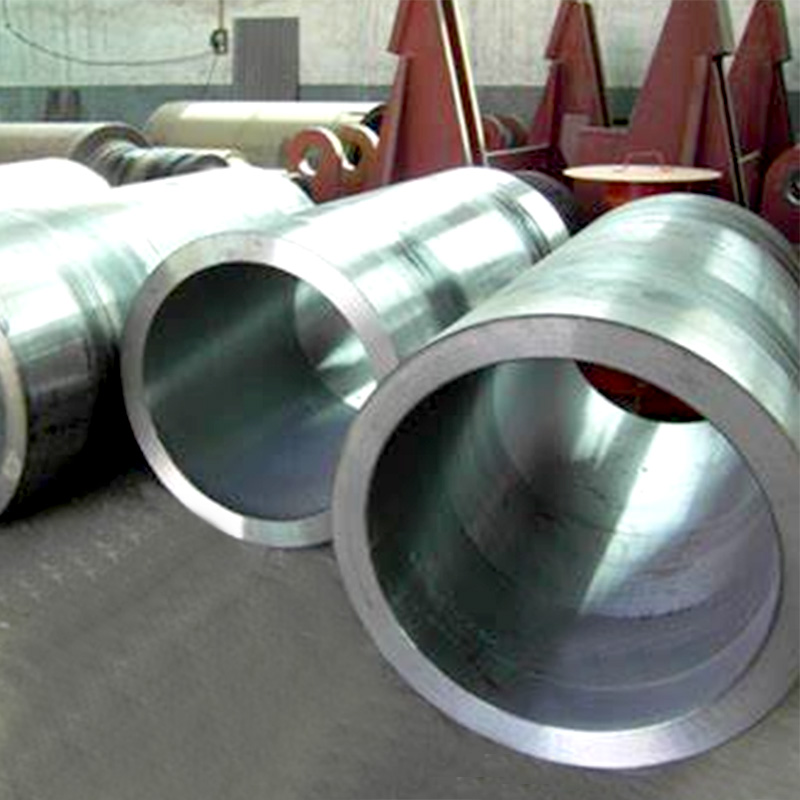 OEM/ODM Heat Resistant Stainless Steel Sleeve Supplier, CompanyAs China Heat Resistant Stainless Steel Sleeve supplier and OEM/ODM company, Xinghua Jinniu professional custom Heat Resistant Stainless ...View Product →
Frequently Asked Questions About Roller Hearth Furnaces
The most important purchasing questions are maximum operating temperature, roller material, automation compatibility, and total lifecycle cost.
What temperature range can a roller hearth furnace handle?
Metallic roller hearth furnaces typically operate up to about 950°C, while furnaces with ceramic rollers can reach 1,400°C for special processes. The exact limit depends on the roller material, atmosphere, and load.
What materials are used for roller hearth furnace rollers?
Heat-resistant alloy steels are the standard choice because they combine high-temperature strength, oxidation resistance, and dimensional stability. Centrifugal casting is preferred for rollers because it creates a dense, void-free wall structure.
Is a roller hearth furnace good for small parts?
Yes, provided the small parts are loaded on trays or baskets so they cannot fall between rollers. The furnace then operates in a semi-continuous mode with fixtures moving through the line.
Can a roller hearth furnace be fully automated?
Yes, the roller conveyor is naturally synchronized, so loading robots, process control, and unloading stations can be integrated into a single automated production line.
Bottom Line
For high-volume heat treatment of similar parts in continuous production, a roller hearth furnace is one of the most dependable and energy-efficient solutions available.
It delivers stable uniformity, high throughput, and low handling damage when the furnace is built and maintained with quality components. The biggest operating risks are related to roller material, alignment, and atmosphere control. Working with a supplier that can provide centrifugally cast rollers, bearing caps, sleeves, and heat-treatment tooling from one source simplifies maintenance and keeps the line running.