Shunda Road, Lincheng Town Science and Technology Industrial Park, Xinghua City, Jiangsu Province
 English
 русский
 Español
 عربى
عربى
Alloy steel rolls for furnaces are heat-resistant cylindrical components that support and move strip, sheet, or workpieces through continuous furnaces, annealing lines, and galvanizing lines. The right grade, casting process, and surface treatment determine roll life and strip quality. For most high-temperature applications, 310 stainless steel, HK40, or HP modified alloy offers the best balance of cost and service life; nickel-base alloys should be reserved for extreme conditions.
Content
- 1 Why Standard Steel Cannot Be Used for Furnace Rolls
- 2 Which Alloy Grades Are Used for Furnace Rolls?
- 3 How Are Alloy Steel Furnace Rolls Manufactured?
- 4 How Furnace Roll Surface Treatments Extend Service Life
- 5 Common Failure Modes of Alloy Steel Furnace Rolls and How to Prevent Them
- 6 Key Specifications to Define When Ordering Alloy Steel Furnace Rolls
- 7 Frequently Asked Questions About Alloy Steel Rolls for Furnaces
- 7.1 What is the difference between HK40 and HP modified alloys for furnace rolls?
- 7.2 How often should alloy steel furnace rolls be replaced?
- 7.3 Can alloy steel furnace rolls be repaired rather than replaced?
- 7.4 What causes buildup on furnace rolls and how is it removed?
- 7.5 What quality tests should alloy steel furnace rolls pass before delivery?
- 8 Conclusion
Why Standard Steel Cannot Be Used for Furnace Rolls
Standard carbon steel loses most of its load-bearing strength above roughly 400°C and oxidizes rapidly in furnace atmospheres. Furnace rolls must resist creep, thermal fatigue, and scaling while supporting strip loads for thousands of hours.
- Temperature resistance: the roll surface often reaches 700-1150°C, far beyond the useful range of plain carbon steel.
- Oxidation: scale formation changes the roll diameter and can mark the strip.
- Creep: prolonged load at high temperature causes sagging and bending.
- Thermal fatigue: repeated heating and cooling cycles create surface cracks that grow with time.
Which Alloy Grades Are Used for Furnace Rolls?
Grade selection depends on operating temperature, atmosphere, and mechanical load. A higher alloy content generally improves high-temperature strength and oxidation resistance, but it also increases cost and machining difficulty.
310 Stainless Steel (25Cr-20Ni)
25Cr-20Ni stainless steel resists oxidation to about 1050°C and suits moderate temperatures and light loads. Its creep strength is lower than cast HK or HP grades, so sagging can occur in very hot furnaces.
HK40 Alloy (25Cr-35Ni)
25Cr-35Ni cast alloy provides better rupture strength than 310. It is a common choice for furnace rolls at 950-1050°C, but its carbide structure coarsens after long service.
HP Modified Alloys (25Cr-35Ni with Microalloying)
25Cr-35Ni with niobium, titanium, tungsten, or rare earths improves creep rupture strength. It is preferred for heavily loaded rolls above 1050°C and usually pays back its higher cost through longer life.
Nickel-Base Superalloys for Extreme Service
Nickel-base alloys handle severe overheating, carburizing atmospheres, or temperatures above about 1100°C, but they are costly and difficult to machine.
Lower-Alloy Grades for Sub-700°C Applications
Below roughly 700°C, lower-chromium steels such as 1.25Cr-0.5Mo can be adequate and are easier to fabricate.
| Alloy grade | Cr-Ni content | Usable temperature range | Typical furnace roll use |
|---|---|---|---|
| 310 stainless steel | 25Cr-20Ni | Up to about 1050°C | Moderate temperature, light load |
| HK40 | 25Cr-35Ni | 950-1050°C | General furnace rolls, lower cost |
| HP modified | 25Cr-35Ni with Nb, Ti, or W | 1000-1150°C | Heavy-duty rolls, high-temperature lines |
| Nickel-base superalloy | Ni-base | 1100-1250°C | Extreme thermal or carburizing service |
| Low-alloy steel | 1.25Cr-0.5Mo class | Below about 700°C | Cooler furnace zones and heat-treatment equipment |
How Are Alloy Steel Furnace Rolls Manufactured?
Centrifugal casting is the preferred route for furnace rolls because it produces dense cylindrical castings with good concentricity. Static casting and fabricated construction are alternatives for complex geometries, large diameters, or repair work.
Centrifugal Casting
Molten alloy is poured into a rotating steel mold, and centrifugal force removes gas and porosity while creating a dense pipe-shaped body. The outer and inner surfaces can then be machined to tight tolerances. Many plants use a heat-resistant centrifugal casting furnace roller for strip-support rolls because it keeps the wall uniform and the grain structure aligned.
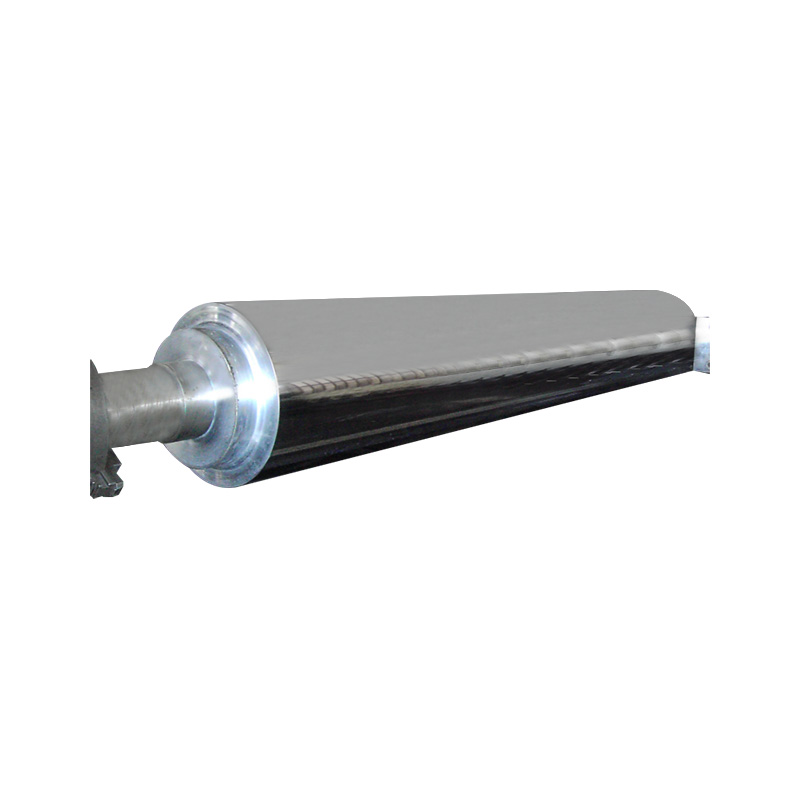 Centrifugal Casting Heat-Resistant Rollers Supplier, CompanyXinghua Jinniu Machinery Manufacturing Co., Ltd. is China centrifugal casting heat-resistant rollers supplier and company, specializing i...View Product →
Static Casting with Precision Machining
Sand or investment casting suits shorter rolls, complex end shapes, and one-off designs. The as-cast surface is rougher, so finish machining is usually needed.
Fabricated Roll Construction
Fabricated rolls are assembled from cast or wrought tubes, shafts, and flanges. The shell often starts as a heat-resistant stainless steel pipe that provides the required creep and oxidation properties; weld overlay and post-weld heat treatment join the sections.
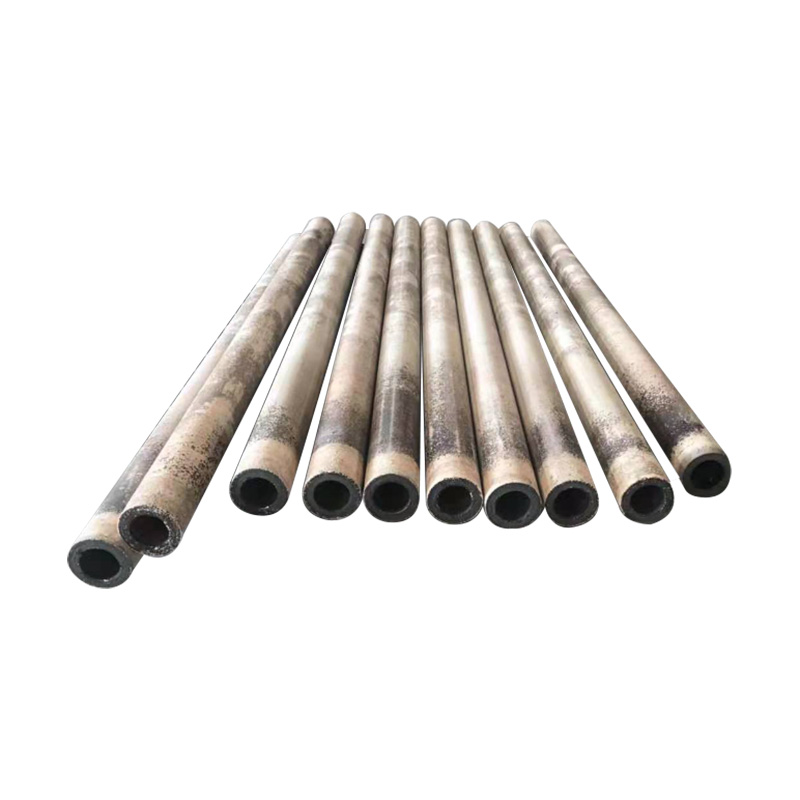 OEM/ODM Heat Resistant Stainless Steel Pipe Supplier, CompanyAs China Heat Resistant Stainless Steel Pipe supplier and OEM/ODM company, Xinghua Jinniu professional custom Heat Resistant Stainless St...View Product →
| Method | Structure and density | Machining requirement | Best suited for |
|---|---|---|---|
| Centrifugal casting | Dense, columnar grains | Moderate machining to final OD/ID | Roll bodies under thermal and mechanical load |
| Static casting | Equiaxed grains; porosity control depends on feeding | Higher machining allowance often needed | Complex shapes, cast-end rolls, low volume |
| Fabricated/welded | Combines cast or wrought components | Machining after welding | Large-diameter rolls, repairs, retrofits |
How Furnace Roll Surface Treatments Extend Service Life
Roll life is often controlled by the surface, not only the base metal. A coating reduces scale, wear, and strip pickup.
Thermal Spray Coatings
Alumina or chrome-carbide coatings reduce wear and high-temperature buildup. Final surface roughness must match the strip quality requirement.
Weld Overlay (Hard Facing)
Hard facing with a more oxidation-resistant alloy is effective for rebuilt rolls, but dilution from the base metal must be controlled to avoid cracking.
Diffusion Coatings
Pack or chemical vapor diffusion enriches the surface with aluminum or chromium, improving oxidation resistance without a thick mechanical coating.
Common Failure Modes of Alloy Steel Furnace Rolls and How to Prevent Them
Most furnace roll failures follow recognizable patterns; the right grade, coating, or operating change prevents them.
- Overheating: operating above design temperature accelerates oxidation and creep. Monitor zone temperatures and avoid localized hot spots.
- Creep sagging: prolonged stress at high temperature bends the roll. Use an HP modified grade or reduce unsupported length.
- Oxide scaling: breakaway oxidation reduces the roll diameter. Use a higher Cr/Ni alloy or a protective coating.
- Surface buildup: condensed zinc, aluminum, or oxide fumes stick to the roll. Use a release coating or install cleaning rolls.
- Thermal fatigue: repeated heating and cooling creates surface cracks. Minimize temperature swings and avoid cold dips.
- Wear and abrasion: strip edges can score the roll surface. Apply hard facing or replace the worn sleeve before damage becomes deep.
Key Specifications to Define When Ordering Alloy Steel Furnace Rolls
A complete specification prevents mismatched material and unclear acceptance criteria. Include the following items in the purchase order or technical inquiry:
- Roll outer diameter, wall thickness, overall length, and journal dimensions.
- Alloy grade and the intended continuous service temperature.
- Casting or forming method, including any required machining allowances.
- Surface finish and tolerance for the roll body and journal surfaces.
- Coating or hard-facing requirement, including coating material and thickness.
- Quality tests and acceptance criteria, such as chemical analysis, hardness, ultrasonic inspection, and dimensional report.
Frequently Asked Questions About Alloy Steel Rolls for Furnaces
What is the difference between HK40 and HP modified alloys for furnace rolls?
HK40 has lower creep strength and is best for lighter duty at 950-1050°C. HP modified alloys add microalloying elements to raise rupture strength, so they can run hotter and carry higher loads for a higher price.
How often should alloy steel furnace rolls be replaced?
There is no fixed interval. Replacement depends on measured diameter loss, cracking, bowing, and strip quality; typical service life is two to five years in continuous lines.
Can alloy steel furnace rolls be repaired rather than replaced?
Yes, if the remaining wall thickness is adequate. Shallow cracks or wear can be weld-repaired, remachined, and inspected before reuse.
What causes buildup on furnace rolls and how is it removed?
Buildup comes from zinc, aluminum, oxide fumes, or residue condensing on the hot roll. Grinding, brushing, or chemical cleaning removes it, depending on the contaminant and roll coating.
What quality tests should alloy steel furnace rolls pass before delivery?
At minimum, supply chemical analysis, hardness or tensile data, dimensional inspection, and ultrasonic or dye-penetrant testing on critical areas.
Conclusion
Defining the operating temperature, atmosphere, roll diameter, and surface quality before you order lets you select a grade and manufacturing route that match the real duty. This approach reduces roll failure, keeps the strip surface clean, and lowers total furnace operating cost.