Shunda Road, Lincheng Town Science and Technology Industrial Park, Xinghua City, Jiangsu Province

 English
 русский
 Español
 عربى

Cone crusher liners are the replaceable wear surfaces that form the crushing chamber in a cone crusher. The right set is not simply the hardest alloy available; it is the combination of cavity profile, mantle and bowl liner alloy, backing support, and fit that keeps throughput stable and cost per ton predictable. If a liner change is being planned, start with the wear pattern and feed conditions you expect, then choose the material and supplier that can hold those conditions.
Content
What cone crusher liners do in the crushing chamber
Cone crusher liners protect the crusher frame and transfer crushing force into the rock, so their profile controls both reduction and wear. The mantle sits on the main shaft and rotates eccentrically; the bowl liner, also called the concave, is fixed in the upper frame. Together they create the cavity where rock is nipped, compressed, and released. The rest of the liner kit protects surfaces that see spillage, heat, or tramp metal.
Wear is rarely uniform. Feed that enters on one side, a misaligned cavity, or a backing gap can produce a narrow wear band, a cracked mantle, or a bowl liner that wears flat before its time. That is why a liner inspection should record location and depth, not just “worn out.”
| Component | Main job | Common wear signal | Buying check |
|---|---|---|---|
| Mantle | Moving wear surface on the main shaft | Even depth loss; cracking near top or bottom | Cavity profile, alloy, and fit to cone |
| Bowl liner or concave | Fixed wear surface in the upper frame | Flat spots, uneven wear band, loose fit | Dimension check against frame and cavity |
| Feed plate | Protects the top of the mantle from direct feed impact | Dished center or off-center wear | Feed distribution and plate thickness |
| Torch ring | Protects the upper frame area from falling material | Burning, cracking, or severe erosion | Fit, alloy, and clearance to moving parts |
| Arm guards | Shield frame arms from rock flow | Thin sections and impact cracks | Access for inspection and replacement |
| Main frame liners | Protect the frame from abrasion and spillage | Localized gouging or wear-through | Coverage area and attachment method |
Material selection: manganese, chrome, or alloy steel
Manganese steel remains the default for high-impact cone crushing, while high-chrome and alloy grades suit abrasive, lower-impact duties. Manganese steel work-hardens under load, so it can absorb tramp metal and large feed without failing immediately. High-chrome iron offers strong abrasion resistance but is less forgiving in high-impact secondary or tertiary crushing. Martensitic alloy steel can fill the gap when a buyer needs more hardness than manganese but better toughness than chrome.
Grade names matter less than the combination of hardness, toughness, and heat treatment. A “high manganese” claim without controlled chemistry and casting practice can produce a liner that wears quickly or cracks at the feed opening. Ask for the actual grade, impact test results, and wear history in a comparable cavity.
| Material family | Best duty | Main risk | Procurement note |
|---|---|---|---|
| Manganese steel | High-impact secondary and tertiary crushing | Poor work-hardening if feed is too fine | Check chemistry, impact toughness, and casting soundness |
| High-chrome iron | Abrasive, controlled feed with low tramp metal | Brittle fracture under impact | Confirm heat treatment and crack inspection |
| Martensitic alloy steel | Balanced abrasion and toughness | Inconsistent hardness through section | Ask for a hardness map and test coupon |
- Use manganese where feed contains occasional uncrushable material or the cavity sees high impact.
- Use high-chrome or alloy steel where the feed is fine, abrasive, and well controlled.
- Do not compare liners by Brinell hardness alone; toughness and microstructure decide cracking risk.
- Match mantle and bowl liner life where possible; one very hard part can shift wear to its partner.
Cavity and feed: why the same alloy can last twice as long
Cavity selection and feed control usually change liner life more than a one-step alloy upgrade. A coarse cavity accepts larger feed and produces more reduction per pass; a fine cavity needs a tighter feed and gives a better-shaped product. If the feed is too coarse for the cavity, the crusher may run at low power, produce slabby material, and wear the mantle top. If the feed is too fine or segregated, the cavity may not choke properly, and wear can concentrate in the lower zone.
Choke feeding is the practical target for most cone crushers. It keeps the chamber full, spreads load across the liner, and reduces the chance of a narrow wear band. Feed segregation, a worn feed distributor, or a conveyor that drops material on one side will undo a good liner choice.
- Check that the feed opening is matched to the cavity and the blast pattern.
- Keep the chamber full and stable; avoid running the crusher starved.
- Record power draw and product gradation weekly, not only at changeout.
- Inspect the feed distributor and reject any liner with an uneven wear profile.
Fit, backing, and changeout tolerances
A liner that fits poorly will crack or wear unevenly even when the alloy is correct. Backing compound is not a filler; it supports the liner, fills the gap between the liner and the frame or cone, and helps distribute crushing force. A void, a soft patch, or a contaminated pour can let the liner move, which leads to cracking and premature failure.
Before installation, clean the seating surface, check for distortion, and confirm the liner sits without rocking. Follow the backing material's cure time and temperature limits. On changeout, measure the wear depth at fixed points and photograph the pattern. That record is more useful than a supplier claim when the next liner is specified.
- Check contact area and seat condition before pouring backing.
- Confirm the correct backing compound for the crusher model and ambient temperature.
- Torque fasteners to the manufacturer's sequence, not by feel.
- Record wear depth, crack location, and feed conditions at every changeout.
Procurement checklist for cone crusher liners
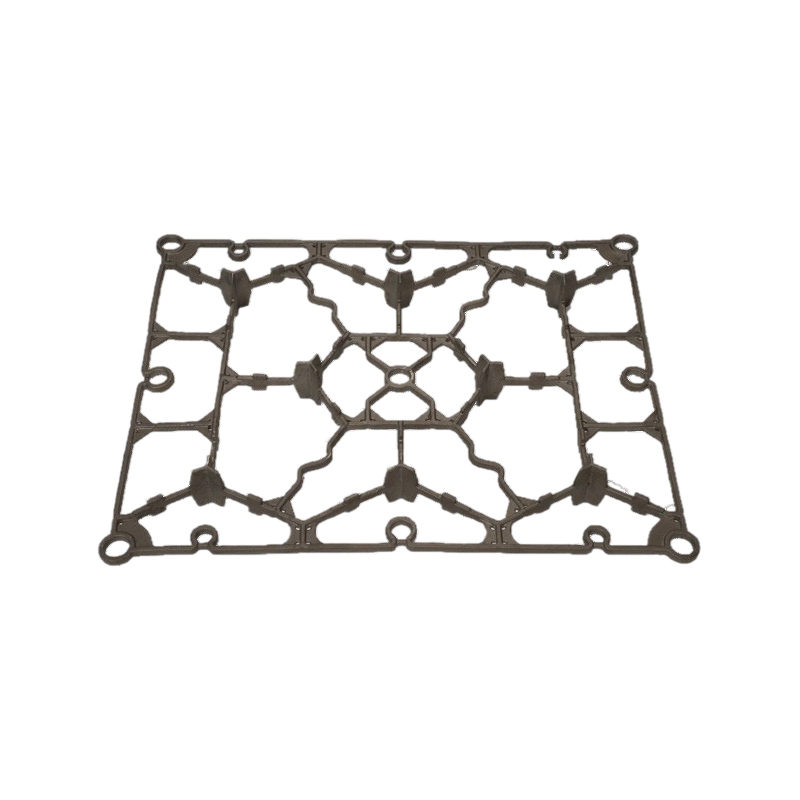
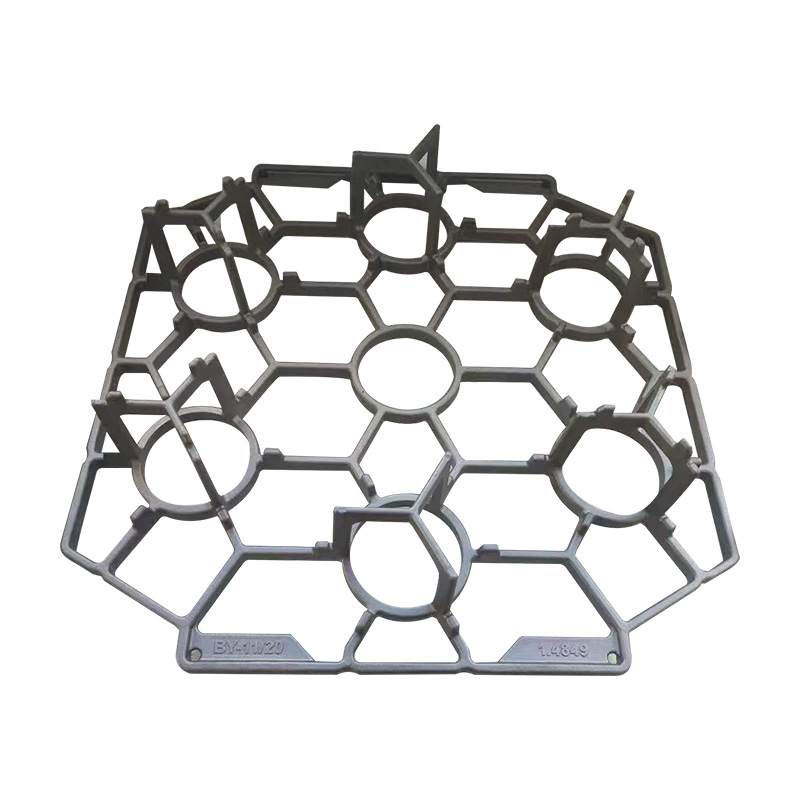
Buy cone crusher liners by application data, not by a single hardness number. A supplier needs the crusher model, cavity, feed size distribution, rock type, moisture, throughput target, and the last liner's wear pattern. Without that, any quote is a guess. A foundry that casts heat-resistant and wear-resistant alloy steel can support both new liner development and replacement batches, provided it controls pattern quality, chemistry, and inspection.
For custom cast wear parts, review the foundry's lost foam casting capability and its process controls, including pattern quality, sand compaction, and dimensional inspection. The same route is explained in this overview of how lost foam casting works, which helps a buyer ask better questions about wall thickness and surface finish.
The same lost foam family also covers cast steel cladding and liner plates for other wear zones; this example is useful when a plant is consolidating cast wear parts from one foundry.
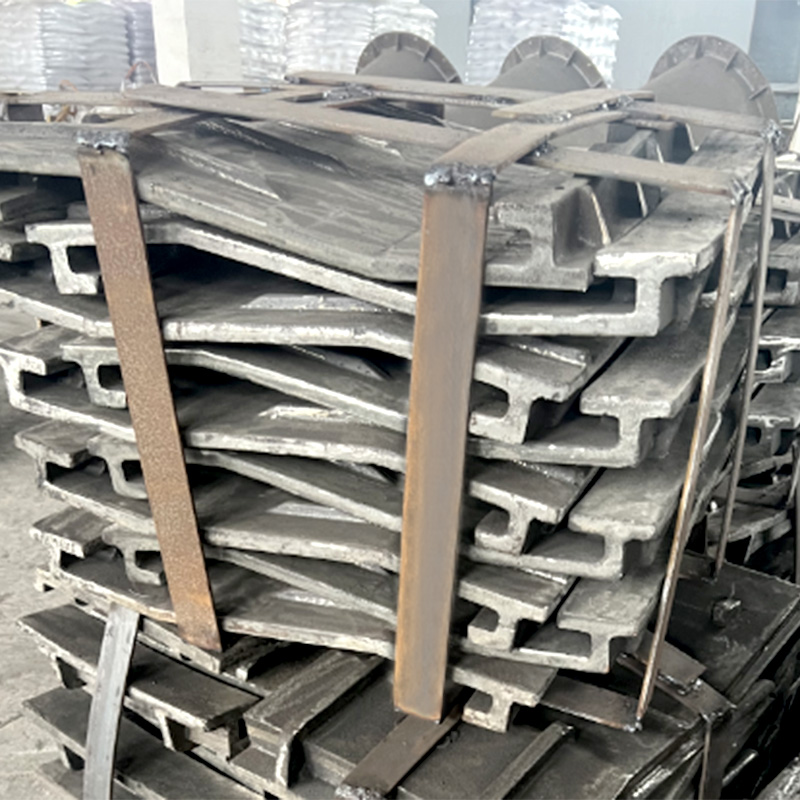 Lost Foam Casting Stainless Steel Castings Steel CladdingLost foam casting stainless steel castings with steel cladding is an advanced manufacturing technique that combines the precision of lost foam casting with the durabil...View Product →
- Provide crusher model, cavity, feed gradation, rock type, and moisture.
- Share the last liner's wear photos and measured wear depth.
- Ask for alloy grade, heat treatment, and inspection records.
- Confirm dimensional tolerances and backing recommendations.
- Compare cost per ton, not price per liner.
FAQ
How often should cone crusher liners be replaced?
Replace cone crusher liners on measured wear and performance, not on a fixed calendar. Daily checks of power draw, throughput, product gradation, and wear depth show when the cavity is losing efficiency. A liner that is still dimensionally usable but causing poor shape or rising power is already costing money.
Can I use a high-chrome mantle with a manganese bowl liner?
Mixing alloys is possible, but it usually shifts wear to the softer or less supported part. The mantle and bowl liner work as a pair; if one wears much faster, the cavity profile changes and the other liner may crack or wear unevenly. Match wear life first, then adjust alloy.
What causes a cone crusher liner to crack?
Cracking usually comes from poor backing support, incorrect fit, tramp metal, or thermal and mechanical shock. A void in the backing compound lets the liner move under load; a distorted seat does the same. Inspect the seat and backing before blaming the alloy.
Does feed size affect liner life?
Yes, feed size and feed distribution are two of the strongest drivers of liner life. Feed that is too coarse for the cavity wears the mantle top; feed that is too fine or segregated prevents proper choke feeding and concentrates wear lower in the chamber. Keep the feed graded and the chamber full.
What should I include in a liner inquiry?
Send the crusher model, cavity, feed gradation, rock type, moisture, throughput, and photos of the last wear pattern. Include the wear depth and the operating power draw. A supplier who quotes without these details is only guessing at alloy and profile.